Paint penetration testing and measuring equipment
In coating laboratories and quality control workflows, understanding how a liquid coating behaves after application is just as important as checking dry film properties. When a paint or coating system needs to be evaluated for movement through a film, substrate interaction, or barrier performance, reliable paint penetration testing and measuring equipment helps teams generate consistent data for formulation, comparison, and process control.
This category is intended for users who need practical tools for paint and coating permeability-related testing, especially in R&D, incoming material verification, and controlled lab assessment. The focus is not only on obtaining a measurement, but on doing so with repeatable test conditions that support technical decisions.

Why penetration and permeability testing matters
Paint performance is influenced by more than appearance, thickness, or hardness. In many applications, a coating must also manage the transfer of moisture, solvent vapor, or other substances through the film. That makes permeability testing relevant when comparing formulations, checking consistency between batches, or assessing whether a coating system is suitable for a particular service environment.
These tests are especially useful in industries where protective coatings are expected to act as a barrier while still maintaining process-specific characteristics. Depending on the product and test method, the result can help engineers and lab personnel understand how coating structure, curing condition, or film build may affect overall performance.
Typical equipment found in this category
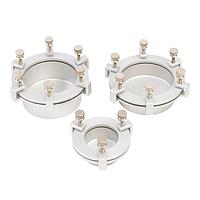
A key product type in this range is the Payne permeability cup, widely used in laboratory coating evaluation. This type of device provides a controlled test area and volume so that permeability or transmission-related behavior can be assessed under defined conditions. For technical users, this makes it easier to compare one sample against another without introducing unnecessary variation from the test fixture itself.
Within this category, representative options include the ELCOMETER 5100 Payne Permeability Cup in several configurations. Examples include the 10 cm2, 15 cm3 version for smaller-scale testing, as well as 30 cm2 variants with 50 cm3 and 75 cm3 capacities for other testing needs. These differences matter because test area and cup volume can influence the practicality of a setup and the way a lab standardizes its procedure.
Choosing the right test cup for your workflow
Selection usually starts with the test method your team follows and the type of coating being evaluated. A smaller cup may be suitable where sample volume is limited or when compact test setups are preferred. Larger test area options can be useful when the procedure benefits from broader film coverage or when a laboratory wants to align with an established internal method.
It is also important to consider repeatability in day-to-day use. In a professional coating lab, the right equipment should fit naturally into sample preparation, conditioning, and result recording steps. If your workflow already includes checks for film build using a coating thickness meter, penetration or permeability testing becomes part of a more complete coating evaluation process rather than an isolated measurement.
Featured solutions from ELCOMETER
ELCOMETER is a recognized name in coating inspection and test equipment, and the ELCOMETER 5100 series in this category illustrates that laboratory-oriented approach well. The available Payne permeability cup versions provide users with options based on test area and cup capacity, allowing the setup to be matched more closely to the coating system and procedure being used.
For example, the ELCOMETER 5100 Payne Permeability Cup with 10 cm2 area and 15 cm3 volume can suit lower-volume sample work, while the 30 cm2 models with 50 cm3 or 75 cm3 volume may be preferred where larger test configurations are required. Rather than treating these as interchangeable items, it is better to choose according to method consistency, sample preparation practice, and reporting requirements.
How this category fits into a broader coating test program
Penetration and permeability-related measurements are often most valuable when interpreted alongside other coating test results. A coating may show acceptable barrier behavior, but engineers may also need to confirm film build, surface durability, or bond quality before drawing conclusions about field suitability. For that reason, many buyers review this category together with tools for adhesion testing or surface resistance evaluation.
In practical terms, the category supports a wider quality assurance ecosystem within paint and coating control. A lab may use permeability cups during formulation comparison, then verify cured film characteristics with coating hardness testers to build a more complete technical profile. This kind of combined approach is often more useful than relying on any single result alone.
Common application contexts
Equipment in this category is relevant for coating manufacturers, industrial finishers, materials testing laboratories, and technical service teams. It is commonly used when comparing product variants, checking whether a reformulated paint behaves differently from a reference sample, or supporting controlled product development work.
It can also be valuable in investigations where coating performance needs to be understood more deeply than simple visual inspection allows. If a system is being assessed for protective use, permeability-related testing may complement other inspection methods such as a holiday detector for detecting discontinuities in protective films, depending on the coating type and inspection stage.
What to look for when buying
For B2B buyers, the most important considerations are usually method compatibility, dimensional suitability, and ease of standardization across repeated tests. A cup with the right area and volume helps reduce inconsistency in the test setup, which is essential for meaningful comparison over time. It is also worth considering how the device fits with your sample preparation routine and reporting format.
Where multiple teams or sites are involved, using the same equipment type can improve alignment between labs. That is especially useful in supplier qualification, product development, and technical dispute resolution, where repeatable test conditions support clearer communication between stakeholders.
Supporting more reliable coating evaluation
When coating data needs to be credible, the test setup matters. This category brings together equipment designed to support structured paint penetration and permeability assessment, with representative solutions such as the ELCOMETER 5100 Payne Permeability Cup range offering practical options for different laboratory needs.
If you are selecting equipment for formulation work, QA testing, or comparative coating studies, focus on the test method, sample handling requirements, and the level of repeatability your workflow demands. A well-matched tool in this category can help turn coating behavior into usable technical information for better product and process decisions.
Get exclusive volume discounts, bulk pricing updates, and new product alerts delivered directly to your inbox.
By subscribing, you agree to our Terms of Service and Privacy Policy.
Direct access to our certified experts