BIOMEDICAL TRAINER
Hands-on biomedical education depends on more than theory. In teaching labs, technical colleges, and research-oriented training environments, learners need equipment that helps them connect physiology, instrumentation, signal measurement, and experimental workflow in a practical way. This is where the BIOMEDICAL TRAINER category becomes especially useful, bringing together systems and accessories that support real laboratory exercises and applied learning.
Within this category, the focus is on instruments and training platforms that help users explore biomedical measurement, data acquisition, assay workflow, and laboratory process understanding. The product range shown here is relevant for universities, vocational training centers, biomedical engineering programs, and research training facilities that require equipment suited to demonstration, experimentation, and skill development.
Designed for practical biomedical learning
Biomedical training equipment is typically selected to support applied instruction rather than passive observation. Instructors often need systems that let students measure biological signals, understand instrument response, follow a structured experiment, and interpret results with confidence. That makes ease of use, repeatable operation, and compatibility with teaching objectives just as important as pure technical capability.
Depending on the curriculum, a biomedical trainer setup may support topics such as physiology, biosignal acquisition, enzyme-related processes, analytical measurement, or software-based data handling. For broader academic environments that combine multiple disciplines, it can also be helpful to explore related areas such as basic practice equipment for science education when building a complete training lab.
Typical equipment found in this category
The category includes more than one type of training resource. Some products are complete educational systems intended for structured lab exercises, while others are analytical instruments or support modules that extend experimental capability in a biomedical or life science setting. This combination is valuable because modern biomedical education often overlaps with biochemistry, instrumentation, and laboratory automation.
For example, the Biopac BSLBME-W Student Lab Biomed Engineering Systems is clearly aligned with biomedical engineering teaching. Its bundled approach, including data acquisition hardware, sensors, and lesson-oriented software, makes it suitable for demonstrating physiological measurement and helping students understand how signals are captured and analyzed in a controlled lab environment.
Analytical systems for assay and plate-based laboratory workflows
Biomedical teaching is not limited to biosignal recording. Many programs also include exposure to assay development, plate-based analysis, and instrument control in laboratory workflows. In this context, equipment from Accuris adds useful depth to the category, especially for institutions introducing students to microplate reading and software-managed experimentation.
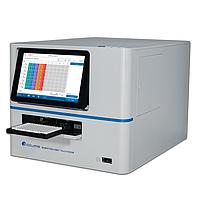
The Accuris MR9620 SmartReader Multimode is a good example of a platform that supports multiple common detection methods, including absorbance, fluorescence, and luminescence. In a training environment, that kind of versatility helps learners compare measurement principles, understand how assay format affects instrument choice, and gain experience with a touchscreen-driven analytical system used in real lab settings.
Supporting items such as the Accuris MR9620-AIM1 Automatic Injection Module, MR9620-PC PC Software, MR9610-SDP Accessory Plate, and MR9610-CFR PC Security Software also show how a training setup can evolve beyond the base instrument. These components help illustrate the wider ecosystem around analytical instruments, including automation, accessory integration, software workflow, and data security considerations.
Process-oriented training and biochemical experimentation
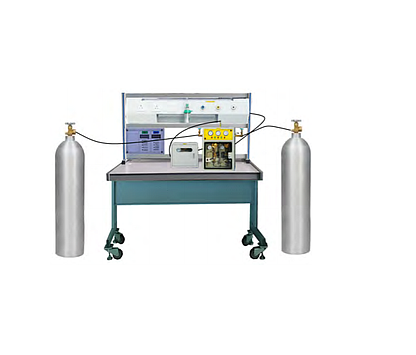
Some biomedical programs benefit from equipment that demonstrates process behavior rather than only measurement output. Batch enzyme reactor systems are useful in this respect because they allow learners to observe controlled reactions, process variables, and the relationship between biochemical activity and operating conditions. This makes them relevant in courses that overlap biomedical engineering, biotechnology, and applied bioprocess education.
The Armfield BE1-A and Armfield BE1-G Batch Enzyme Reactor models provide this kind of educational value. For institutions developing a broader engineering teaching environment, Armfield equipment can support process-focused instruction where students need to understand how biological or enzymatic systems behave under defined laboratory conditions.
How to choose the right biomedical trainer setup
The best selection usually starts with the learning outcome, not the product name. If the goal is to teach physiological acquisition and student experimentation, a structured educational platform with sensors and teaching software may be the most suitable option. If the objective is to introduce assay analysis, optical detection methods, or software-driven plate reading, a multimode analytical instrument may be more appropriate.
Buyers should also consider the level of the users, whether the equipment is intended for instructor-led demonstration or individual student practice, and how easily the system fits into the available lab space and teaching schedule. In technical education, workflow clarity, software accessibility, and repeatable operation often matter as much as advanced features.
Where institutions need a wider academic ecosystem, it may be useful to compare this category with application training equipment or adjacent educational categories that support interdisciplinary learning. This is especially relevant for schools building labs that serve biomedical, chemical, and engineering programs together.
Key considerations for educational and research environments
When evaluating biomedical training equipment for procurement, several practical factors deserve attention. One is the balance between training simplicity and technical realism. Students should be able to learn the core concept without excessive setup complexity, but the equipment should still reflect the kinds of tools and methods they are likely to encounter in professional laboratories.
Another important point is system expandability. Accessories, modules, and software options can make a major difference over time, especially when a department wants to scale from introductory teaching to advanced project work. Products in this category demonstrate that a well-chosen training platform can support not only immediate classroom use but also broader instructional development.
For programs focused more specifically on teaching medical instrumentation and human signal measurement, the related biomedical trainer range can be considered alongside dedicated training equipment in neighboring educational segments. This helps procurement teams align equipment selection with both curriculum content and lab growth plans.
Why this category matters for curriculum development
Biomedical education increasingly spans multiple domains: physiology, instrumentation, analytical testing, software, and experimental process control. A strong category page should therefore support more than simple product browsing. It should help technical buyers and educators identify which type of system fits introductory instruction, advanced lab training, or multidisciplinary teaching.
By bringing together educational systems from Biopac, analytical platforms and accessories from Accuris, and process-oriented teaching equipment from Armfield, this category supports a more realistic view of how biomedical training is delivered in practice. The result is a more flexible path for institutions that need to equip teaching labs with tools suited to both demonstration and hands-on learning.
Final considerations
Choosing biomedical training equipment is ultimately about matching the instrument or platform to the teaching objective, student level, and lab workflow. Some users will need an integrated biomedical engineering teaching system, while others may be looking for analytical capability, software-supported experimentation, or enzyme process demonstration in an educational setting.
This category provides a practical starting point for comparing those needs in one place. With the right combination of measurement capability, instructional usability, and expandable lab support, biomedical trainer equipment can help create more effective and technically relevant learning environments.
Get exclusive volume discounts, bulk pricing updates, and new product alerts delivered directly to your inbox.
By subscribing, you agree to our Terms of Service and Privacy Policy.
Direct access to our certified experts