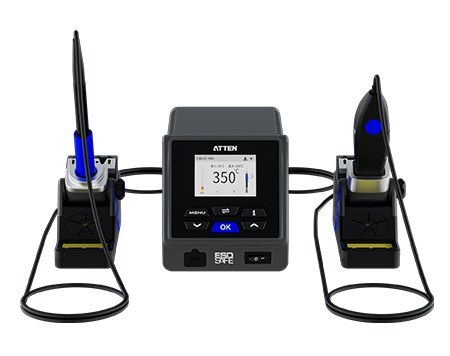
The GT-6120A soldering station is designed for electronics work where repeatable heat control matters. Its described features include intelligent temperature regulation, rapid thermal response, compatibility with multiple soldering tips, and customizable temperature profiles.
These functions can support more consistent solder joints when operators work with delicate circuit boards, fine-pitch components, or changing soldering tasks. The available information does not specify temperature ranges, accuracy values, or supported tip models.
Summary: GT-6120A is intelligent heat regulation and rapid response. Multiple tip compatibility supports varied joint sizes. Stored temperature profiles can simplify repeatable task setup. USB interfaces are described for firmware updates and automated-system integration.
What makes the GT-6120A suitable for consistent electronics soldering?
The GT-6120A use intelligent temperature regulation that monitors and adjusts heat output to maintain stable, accurate temperatures. Consistent heat is especially relevant in electronics assembly and repair, where excess heat can affect sensitive components or contribute to unreliable joints.
For work involving fine-pitch components, an operator needs a controlled thermal process rather than repeated manual adjustment. The station’s regulation feature is presented as a way to reduce temperature variation between soldering operations.
How does rapid thermal response affect a soldering workflow?
Rapid thermal response means the GT-6120A is intended to reach a selected target temperature quickly and respond to heat demand during use. This can reduce waiting time between tasks and help maintain a steadier process when soldering multiple connections.
In practice, thermal response matters when the iron transfers heat into a joint and then must continue with the next operation. The source presents this feature as supporting workflow efficiency, but it does not provide a heat-up time or recovery-time measurement.
When are customizable temperature profiles useful on the GT-6120A ?
Customizable temperature profiles are useful when an operator repeatedly changes between soldering tasks that require different thermal settings. The GT-6120A is allowing users to create and store profiles, so a saved setting can be recalled rather than manually entered each time.
This approach can help standardize setup across recurring work, including electronics repair and manufacturing processes that use different components or solder alloys. It also provides a more repeatable starting point for tasks where thermal requirements vary.
| Work situation | Relevant GT-6120A feature | Practical purpose described |
|---|---|---|
| Fine-pitch circuit-board work | Intelligent temperature regulation | Supports stable heat control for delicate components. |
| Successive soldering operations | Rapid thermal response | Helps the tool reach and respond to the selected temperature promptly. |
| Repeated tasks with different settings | Customizable temperature profiles | Allows stored settings to be recalled for greater setup consistency. |
How can multiple soldering tips support different electronics tasks?
The GT-6120 is described as being compatible with multiple soldering tips, enabling use across broader joints and more precise microelectronics work. Tip selection can help align the working end of the tool with the size and access requirements of a particular joint.
That flexibility is relevant to prototype development, repair, and electronics manufacturing workflows that include varied assemblies. The source does not list the specific compatible tip types, so users should confirm fit and task suitability from product documentation before selecting accessories.
What connectivity and modular features are described for the GT-6120A ?
The source describes a modular design and expandable connectivity options, including USB interfaces. These interfaces are presented for firmware updates and potential integration into automated systems, which may be relevant where a soldering process evolves over time.
The same modular approach is described as supporting maintenance or component changes with less disruption than a fixed workflow. No details are provided about communication protocols, compatible automation systems, or the exact scope of replaceable components.
What should buyers confirm before choosing the GT-6120A soldering station?
Buyers should first match the station’s stated capabilities to their actual electronics tasks: required tip options, temperature settings, profile needs, and any planned use of USB-based connectivity. For production environments, it is also sensible to define the settings that operators need to repeat across products.
Note: The available information describes features and intended uses, but it does not provide numeric specifications, accessory lists, or compatibility details. Confirm those requirements against the applicable product information before purchase or deployment.
For a workflow centered on controlled, repeatable soldering, the key value described for the GT-6120A is the combination of heat regulation, responsive heating, tip versatility, and stored settings. Those features address the practical need to apply appropriate heat more consistently across changing soldering equipment.