Smart Hot Air Rework Stations can help reduce rework time in electronics applications by allowing users to adjust temperature and airflow appropriately, handle small components more safely, and minimize interruptions caused by missing accessories.
Efficiency is not simply a matter of heating speed. It also depends on delivering the right amount of heat to the target area, accurately picking and positioning components, and maintaining an organized workflow.
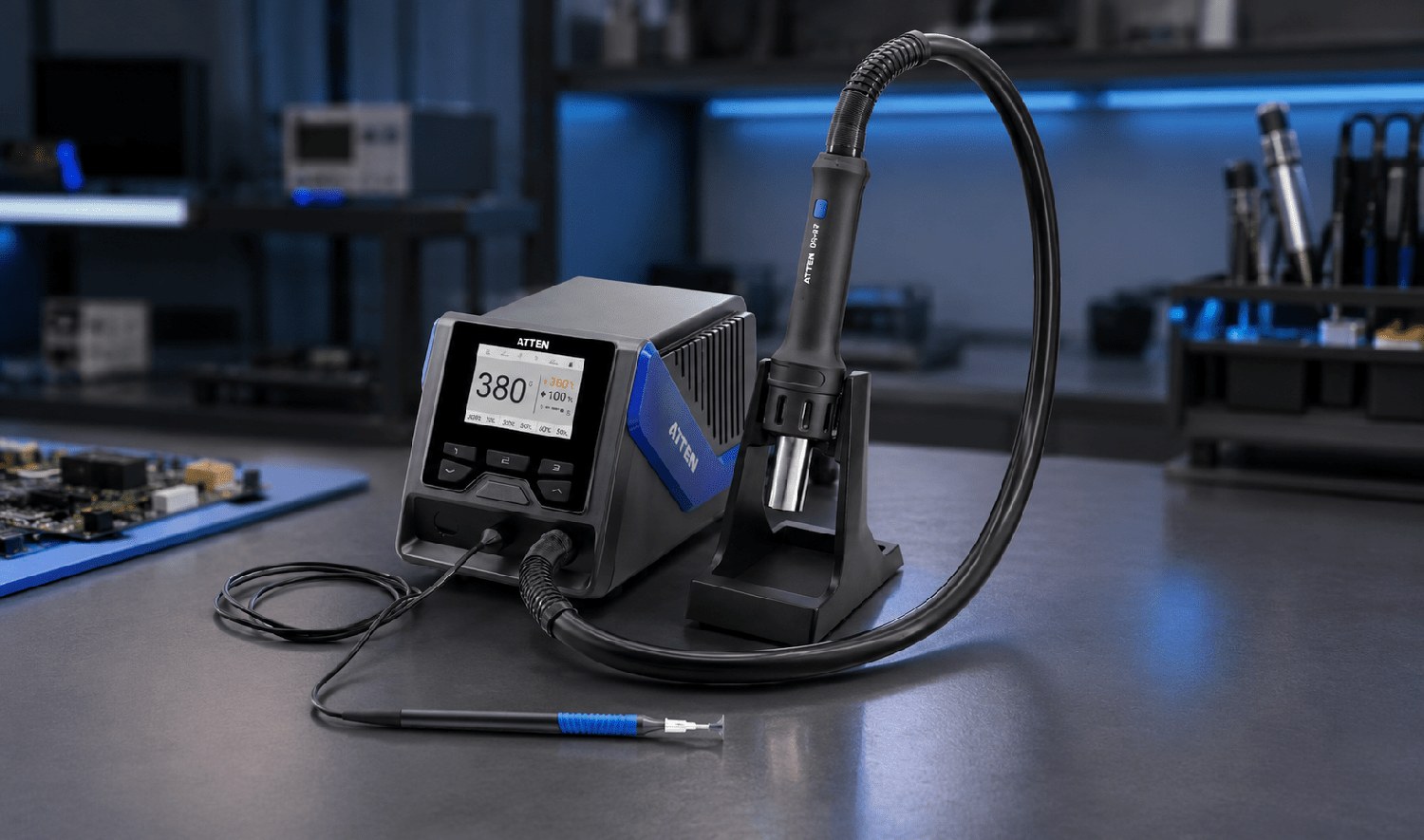
Overview: Temperature and airflow adjustments help control thermal exposure. A vacuum pickup pen assists in handling small components while minimizing direct contact. A readily available accessory kit reduces the time spent searching for and changing tools during rework.
How Do Smart Hot Air Rework Stations Help Reduce Rework Time?
Smart hot air rework stations help streamline rework procedures by integrating temperature control, airflow adjustment, and component handling into a continuous workflow. By reducing the risk of excessive heating, surface damage, and incorrect component placement, operators can minimize the number of steps that need to be repeated.
During electronic repair and assembly, circuit boards, chips, and small components require careful handling. Adjustable equipment allows technicians to modify operating settings according to the requirements of each task rather than relying on a fixed temperature or airflow level for every application.
Why Is Temperature and Airflow Adjustment Important When Reworking Components?
Adjusting temperature and airflow helps establish more suitable thermal conditions for components being soldered or desoldered. According to the available source data, this level of control is intended to minimize risks such as warping, cracking, or melting of circuit boards and chips caused by inappropriate heat exposure.
Stable airflow also contributes to more consistent heat distribution across the working area. This is important when protecting solder joints and avoiding additional rework caused by overheating-related defects.
| Control Parameter | Role in Rework Operations | Risks It Helps Minimize |
|---|---|---|
| Temperature | Adjusts heating levels to suit component requirements | Overheating, warping, cracking, or melting |
| Airflow | Helps achieve more consistent heat distribution | Uneven thermal exposure and potential solder joint damage |
| Preset or customizable modes | Provides operating settings suited to different tasks | Using unsuitable settings for heat-sensitive components |
How Does a Vacuum Pickup Pen Help with Small Component Repair?
A vacuum pickup pen helps lift, move, and position small components while minimizing direct physical contact. This is particularly useful when handling resistors, capacitors, and IC chips, where improper handling or unsuitable tools may scratch, bend, or displace components.
The available source data indicates that vacuum pickup pens can use different suction tips and cups to control component gripping and release. When working with fine-pitch components, accurate positioning is essential for reducing alignment errors.
When Do Hot Air and Vacuum Pickup Functions Make the Workflow More Efficient?
Combining hot air and vacuum pickup functions is particularly useful when components need to be heated for removal and then carefully transferred. Instead of separating these operations into multiple stages or switching between several tools, technicians can integrate heating, component removal, and positioning into a single workflow.
The GT-1028 is identified in the source data as a device combining hot air and vacuum functions with adjustable settings. However, the appropriate configuration should still be selected based on the component type and actual application requirements.
How Do Accessories Affect Repair Efficiency?
A comprehensive accessory kit helps minimize interruptions caused by searching for suitable hot air nozzles, suction tips, or other compatible tools during a repair operation. According to the source data, equipment kits often include hot air nozzles in various sizes, handpieces, and holders to accommodate different soldering and rework requirements.
When accessories are readily available and properly organized, technicians can switch between different repair tasks more systematically. Accompanying instruction manuals and supporting materials, where provided, also help users understand the equipment's operating procedures more clearly.
What Should You Consider When Selecting a Smart Hot Air Rework Station to Reduce Defects?
Priority should be given to temperature and airflow adjustability, vacuum pickup solutions for handling small components, and the suitability of the supplied accessories for the intended applications. These three factors directly affect thermal control, component surface protection, and workflow continuity.
Having multiple functions should not be regarded as a guarantee of successful rework in every situation. Technicians still need to select the appropriate hot air rework station settings based on component heat sensitivity, positioning requirements, and the characteristics of each solder joint.
Note: The ability to reduce rework time depends on selecting appropriate temperature, airflow, and handling methods for each component.