Memory Accessories
Reliable storage and data handling often depend on more than the memory device itself. In many industrial and embedded applications, the surrounding hardware used to mount, connect, protect, or access memory-related components is just as important for system stability, serviceability, and long-term use. This is where Memory Accessories become relevant, especially in environments that require secure identification, portable data capture, or ruggedized field deployment.
On this page, the category is best understood as a practical support layer around memory-enabled devices and 1-Wire form factors. That includes clips, capsules, cable interfaces, and mounting options that help integrate memory components into real equipment, handheld tools, access systems, and temperature logging workflows. For buyers comparing broader semiconductor options, related product areas such as Integrated Circuits (ICs) or Memory Cards may also be relevant depending on the application architecture.
What falls into the Memory Accessories category?
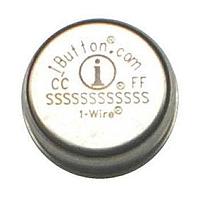
In a technical purchasing context, memory accessories are not simply add-ons. They are the parts that make memory-based devices easier to deploy, read, protect, and handle within a larger system. This can include connection cables, PCB clips, mechanical enclosures, and key ring mounts designed for compact memory carriers such as iButton devices.
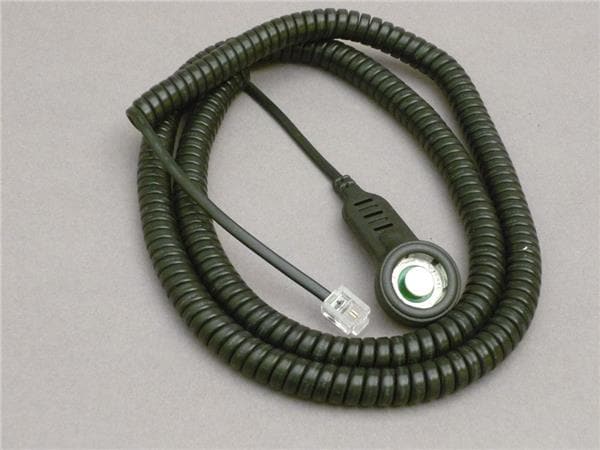
Several products in this category illustrate that role clearly. The Analog Devices DS1402-RPL+ cable supports probe-to-RJ11 connection, while the DS9094F+ clip provides a through-hole PCB mounting option for iButton packages. Accessories such as the DS9107+ capsule and DS9093AB+ key ring mount are aimed at mechanical protection and convenient handling rather than memory storage by themselves.
How these accessories support real-world deployment
Memory-related accessories are often selected because the use case goes beyond bench testing. In industrial maintenance, cold-chain monitoring, asset tracking, and access control, devices may be exposed to repeated handling, vibration, moisture, or outdoor conditions. A suitable accessory helps the memory element stay readable and physically secure while simplifying user interaction.
For example, a protective housing can reduce the risk of damage during field use, while a dedicated mount can make a compact device easier to attach to equipment, keys, or fixtures. Connection accessories are equally important when data must be transferred consistently between readers, probes, and host systems. In this sense, mechanical integration and reliable connectivity are often just as important as memory capacity.
Typical product roles within this category
Not every item in Memory Accessories serves the same purpose, so it helps to evaluate them by function. One group focuses on connectivity accessories, such as interface cables used to link probes or readers to a system. Another group focuses on mounting and retention, including clips for PCB installation or snap-in holders for portable use.
A third group is centered on environmental and physical protection. The DS9107+ capsule, for instance, is intended to protect temperature logger iButton devices in the DS1921 and DS1922 series. Accessories like these are especially useful when memory-enabled loggers are deployed in transport, warehousing, process monitoring, or inspection environments where the device must survive repeated exposure and handling.
Examples of memory-enabled devices used with these accessories
This category also makes more sense when viewed as part of a broader ecosystem. Many accessories here are designed to work alongside memory or logging devices such as the DS1971-F5+, DS1972-F5+, DS1973-F5+, and DS1985-F3+ add-only iButton. These products use the 1-Wire interface and provide different memory types and capacities, so the accessory choice depends on how the device will be installed and accessed.
There are also logger-oriented devices such as the DS1922L-F5#, DS1922E-F5#, and DS1925L-F5#, as well as the DS1904L-F5# RTC iButton. In these cases, the accessory is part of the deployment strategy: a clip may support fixed installation, a capsule may improve survivability, and a key ring mount may make the device easier to carry and identify. If your project spans processor or edge-system integration as well, it may be useful to review Embedded Computers for the host side of the solution.
Key selection criteria for B2B buyers
When sourcing memory accessories for industrial or OEM use, the first question is usually compatibility. Buyers should confirm the intended package format, connection style, and whether the accessory is meant for permanent installation, portable use, or protective enclosure. A part designed for an iButton F5 MicroCan package, for example, should be matched accordingly to avoid fit and handling issues.
The second consideration is operating context. A simple PCB clip may be suitable for controlled indoor electronics, while a capsule or key ring mount may be more appropriate for field handling or mobile identification. It is also worth considering how often the device will be read, replaced, or moved, because that affects the value of quick-access mounts and durable connection accessories.
For larger design programs, procurement teams may also compare supplier ecosystems. Within this page, Analog Devices is a key reference because many of the featured parts belong to the same iButton and 1-Wire environment. In some projects, the broader component selection may also overlap with adjacent semiconductor categories such as Discrete devices when building the full hardware platform.
Why system context matters more than the accessory alone
A memory accessory should not be chosen in isolation. The right option depends on whether the underlying device is used for identification, data logging, timestamping, or simple non-volatile data storage. It also depends on whether the memory element will be fixed to a board, carried by personnel, attached to an asset, or exposed to demanding thermal conditions.
This is particularly true for 1-Wire ecosystems, where the physical method of access can influence usability in the field. A well-matched accessory can reduce handling errors, improve repeatability during reads, and extend the usable life of the deployed device. For OEM and maintenance buyers, that often translates into smoother operation and lower replacement effort over time.
Choosing a suitable range for your application
If you are selecting from this category, it helps to start with the end-use scenario rather than the part name. For board-level integration, clips and fixed mounts are usually the most relevant. For mobile or operator-facing workflows, key ring mounts and compact handling accessories may be more practical. For temperature logging or harsh deployment, protective housings deserve closer attention.
It is also sensible to review whether the accessory is supporting a memory-only iButton, a logger, or an RTC-based device. That distinction affects not just fit, but also how the product will be carried, protected, and read in daily operation. A small accessory choice can have a meaningful impact on deployment efficiency and maintenance convenience.
Final considerations
Memory Accessories play a supporting but important role in making memory-enabled devices usable in real industrial settings. Whether the need is secure mounting, easier connectivity, field protection, or portable handling, the right accessory helps bridge the gap between a memory component and a practical working system.
For engineers, buyers, and system integrators, the best approach is to evaluate these products in terms of compatibility, mechanical use, and deployment environment. That leads to a more dependable selection process and helps ensure that the memory device performs as intended once it leaves the lab and enters day-to-day operation.
Get exclusive volume discounts, bulk pricing updates, and new product alerts delivered directly to your inbox.
By subscribing, you agree to our Terms of Service and Privacy Policy.
Direct access to our certified experts