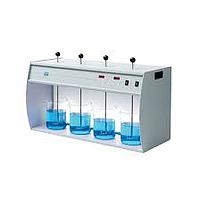
Flocculator
Water treatment work often depends on one practical question: how much coagulant or flocculant should be used to achieve stable clarification without over-dosing. In laboratory and process support environments, a Flocculator helps answer that question through controlled jar testing, allowing operators and analysts to compare mixing conditions and chemical response before applying them in real systems.
This category focuses on flocculation equipment used for routine testing in water and wastewater applications. These instruments are especially useful when evaluating coagulation performance, observing suspended solids behavior, and building a repeatable testing method for process optimization.

Why flocculation testing matters in the laboratory
Jar testing is a widely used laboratory approach for simulating coagulation and flocculation steps under controlled conditions. By running several samples at the same time, users can compare chemical dosage, stirring speed, and mixing time to see how particles aggregate and settle. This helps reduce guesswork when adjusting treatment programs for raw water or wastewater.
A flocculator is valuable not only for visual comparison, but also for improving consistency. Instead of relying on manual stirring, the instrument maintains defined mixing parameters so test results are easier to repeat, document, and compare over time. In many labs, it becomes part of a broader workflow alongside general mixing equipment and other bench instruments.
Typical applications of a flocculator
Flocculation testing is commonly used in municipal water treatment, industrial wastewater monitoring, environmental laboratories, and research settings. It supports evaluation of alum or other treatment chemicals, helping users understand how suspended matter responds under different operating conditions.
Depending on the process, these instruments can also support studies related to pollutant removal, clarification behavior, and pretreatment adjustments before discharge or downstream filtration. In practical terms, they are often selected by laboratories that need a straightforward way to simulate process chemistry at bench scale while keeping the method organized and repeatable.
What to look for when selecting a flocculator
Selection usually starts with the number of test positions needed and the level of control required for mixing. A multi-position system allows side-by-side comparison of different dosages or treatment conditions, which is important when optimizing process windows rather than testing one sample at a time.
Other useful considerations include speed control, timer functions, visibility of settings, paddle and shaft construction, and resistance to chemical exposure in regular lab use. Materials such as stainless steel and chemically resistant finishes can be important in environments where the instrument is used frequently with treatment reagents. If the unit will be part of a shared bench setup, ease of operation and quick parameter adjustment are also worth considering.
Featured equipment in this category
One representative model in this range is the VELP JLT4 Flocculator, designed for controlled jar-test procedures. It provides four stirring positions, microprocessor-based control, adjustable speed, and preset timing functions, making it suitable for comparative flocculation testing in laboratory routines.
This model illustrates the kind of features many users look for in a practical jar test system: clear front-panel operation, adjustable mixing speed, and durable components intended for repeated laboratory use. The four-position layout is especially useful when comparing multiple chemical conditions in parallel, which is one of the main advantages of dedicated jar-test equipment.
VELP flocculators in laboratory workflows
VELP is a recognized name in laboratory equipment, and its flocculation systems are often chosen where users need a balance of simple operation and reliable parameter control. For routine process checks, educational labs, or water analysis applications, this can help teams run tests with less variability between operators.
In a broader lab environment, flocculators are usually not isolated instruments. They may be used alongside sample preparation tools, transfer accessories, and basic protective laboratory apparels depending on the workflow and the chemicals involved. That broader context matters when planning a safe and efficient testing area.
How controlled mixing improves result comparison
The purpose of flocculation testing is not simply to stir samples, but to create comparable test conditions. Controlled rpm settings and defined mixing time make it easier to evaluate how changes in dosage affect floc formation, settling characteristics, and overall clarification response. This is especially important when operators need to justify process changes with visible and repeatable lab evidence.
A stable instrument setup also helps reduce variation caused by manual handling. When the same procedure is repeated over many batches or water sources, consistent operating conditions improve confidence in trend analysis and day-to-day decision-making. For laboratories supporting production or treatment plants, that consistency often matters as much as the test itself.
Choosing the right category for your lab needs
If your main goal is process optimization in water or wastewater treatment, a dedicated flocculator is a more appropriate choice than general-purpose mixers because it is designed around parallel jar testing and observation. The right configuration depends on how many samples you run, how often tests are performed, and how precisely your team needs to control mixing parameters.
For buyers comparing options, it is useful to focus on application fit rather than only headline specifications. A well-matched unit should support your testing routine, simplify repeat procedures, and provide enough control to make treatment decisions more informed. Explore the available flocculators in this category to find equipment suited to bench-scale coagulation and flocculation studies.
Get exclusive volume discounts, bulk pricing updates, and new product alerts delivered directly to your inbox.
By subscribing, you agree to our Terms of Service and Privacy Policy.
Direct access to our certified experts