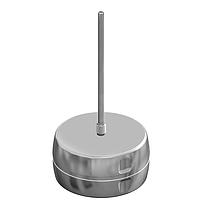
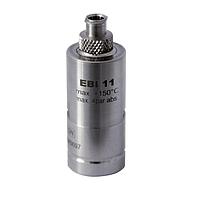
Temperature chart recorder
When temperature history matters as much as the current reading, a recorder becomes more useful than a simple handheld meter. In production lines, coating and curing processes, storage rooms, laboratories, and environmental monitoring points, recorded data helps teams verify stability, investigate deviations, and document process conditions over time.
This Temperature chart recorder category brings together instruments and related consumables used to capture temperature trends continuously. Depending on the application, that may mean a classic chart-based instrument with replaceable paper and pens, or a digital logger that stores multi-channel temperature data for later analysis and reporting.
Why temperature recording is important in industrial and laboratory work
A single spot measurement only shows what is happening at one moment. In contrast, a recorder creates a timeline, allowing operators and quality teams to see how temperature changes during a batch, shift, test cycle, or storage period. This is especially useful when process consistency, traceability, or troubleshooting is required.
Continuous recording also supports validation and maintenance tasks. A drifting oven, an unstable chamber, or unexpected thermal spikes may not be visible during periodic checks, but they become clear when data is logged across hours or days. For users who only need real-time values without long-term recording, the broader range of temperature meters and indicators may be a better fit.
What you can find in this category
This category covers more than one recorder format. Some applications still rely on traditional chart-based systems, where the temperature trace is drawn on circular or strip charts using a dedicated pen. Others require digital temperature logging with downloadable files, multi-channel inputs, and software-based analysis.
You may also see supporting items that keep legacy recording systems in operation. For example, the skSATO 7210-84 32-day Chart for Thermohygrograph is a consumable chart paper for long-duration recording, while the skSATO 7238-02 Purple Cartridge Pen serves as a replacement pen for compatible recorders. These accessories are essential in facilities that continue using mechanical or electromechanical chart recorders for routine documentation.
Typical recorder types and where they fit
Chart recorders remain useful where operators want a direct visual record on paper, especially in routine environmental monitoring or facilities with established paper-based workflows. They are straightforward to review on site and can be practical when digital infrastructure is limited.
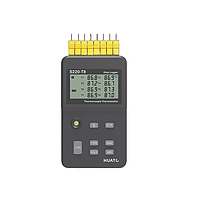
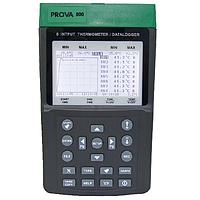
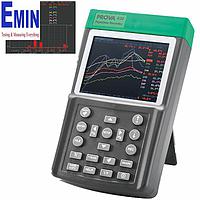
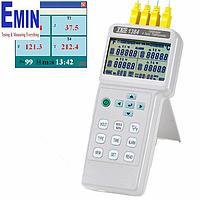
Digital data loggers are often preferred for engineering, validation, and quality control tasks. Instruments such as the skSATO SK-L400T 4-ch Datalogger, PICO TC-08 Thermocouple Data Logger, and OMEGA HH147AU Thermocouple Types Datalogger support data capture over time and can simplify export, analysis, and record keeping. Multi-channel models are particularly useful when several points in a chamber, machine, or product need to be tracked simultaneously.
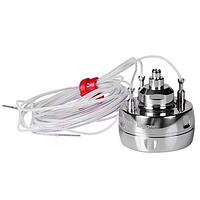
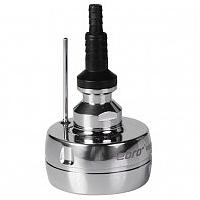
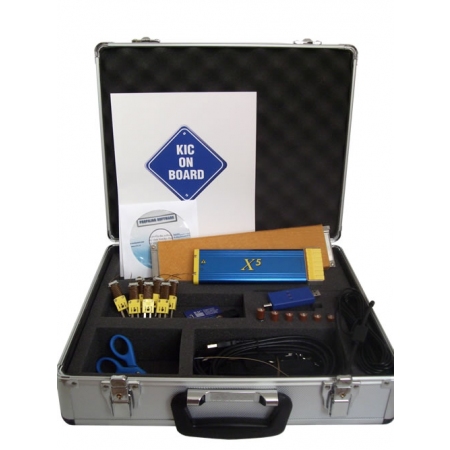
For high-temperature industrial processes, specialized systems are available. The DEFELSKO OTLKIT Oven Temperature Logger and ELCOMETER 215 Temperature datalogger are examples suited to process verification where thermal profiling inside ovens or curing equipment is required. In these setups, the recorder is often used together with dedicated probes and protective accessories.
How to choose a temperature chart recorder
The first question is whether you need a paper chart, a downloadable electronic file, or both. If your workflow depends on physical records that can be reviewed immediately, a chart-based recorder and the correct consumables may be the right option. If you need trend analysis, data export, or integration into quality documentation, a digital logger is usually more practical.
Next, consider the measurement range and sensor type. Applications involving ovens, furnaces, or thermal processing may require thermocouple-based instruments that handle wide ranges, while laboratory or ambient monitoring may prioritize accuracy and stability over extreme temperature capability. The number of channels also matters: a single-point check is very different from profiling six or eight positions in one test.
Sampling interval, memory capacity, and operating environment are also important. Fast-changing processes benefit from short logging intervals, while long-duration monitoring may need extended battery life or large memory. If the recorder will be used with external probes, clamps, or replacement components, it is worth reviewing compatible temperature accessories early in the selection process.
Probes, consumables, and system compatibility
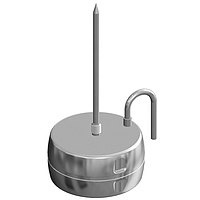
Many temperature recording setups depend on more than the base instrument. Probe choice affects response time, installation method, and the kind of surface or medium being measured. For example, ELCOMETER T21521280 Clamp Surface Probe and ELCOMETER T21521277 Clamp Air Probe are supporting components that help adapt a recorder to different measurement points in thermal process work.
Consumables are equally important in chart-based systems. Recorder pens and chart papers are not interchangeable across all brands and models, so compatibility should always be checked carefully. In digital systems, the equivalent concern is sensor input type, connector format, and cable suitability. If your application requires extension leads or sensor cabling, related options in temperature wire and cable can help complete the measurement chain.
Examples of brands and solutions in this range
This category may include solutions from established measurement brands such as OMEGA, PICO, DEFELSKO, ELCOMETER, PCE, and skSATO, depending on the intended use case. Some focus on compact handheld logging, others on multi-channel test setups, and others on process profiling or chart-based recording support.
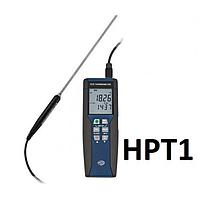
For instance, the PCE HPT 1 Digital Thermometer is aligned with precise sensor-based temperature measurement, while OMEGA HH306A Data Logger Thermometer offers a compact format for logged readings. The OMEGA iTHX-SD-2D Temperature and Humidity Virtual Chart Recorder extends the concept further by combining environmental monitoring with virtual chart recording, which can be useful when temperature needs to be tracked alongside humidity.
Rather than comparing brands in a generic way, it is usually more useful to match the recorder type to the task: ambient monitoring, oven profiling, portable diagnostics, or legacy chart recording support. That approach leads to a more reliable shortlist and reduces compatibility issues later.
Applications commonly served by temperature recording devices
Temperature recorders are widely used in heat treatment, coating, drying, food processing, warehouse monitoring, HVAC checks, research labs, and equipment qualification. In each of these settings, the goal is not only to measure temperature but to preserve a usable record that can support process control or compliance documentation.
They are also useful in maintenance and failure analysis. A recorded trend can reveal warm-up behavior, overshoot, cycle instability, or uneven heating across different points. In cases where non-contact inspection is more suitable than contact logging, users may also explore a thermal imaging camera for comparative thermal pattern analysis.
Finding the right setup for your workflow
The most suitable recorder depends on how you intend to use the data after capture. Some teams need a simple visual trace, some need downloadable files for reports, and others need a complete setup with logger, probes, barrier protection, software, and accessories. Looking at the full measurement chain often matters more than focusing on the recorder body alone.
If you are selecting for a new installation or replacing an older unit, it helps to confirm the required temperature range, channel count, sensor compatibility, recording duration, and whether consumables or probes must match an existing system. With the right configuration, a temperature chart recorder becomes a practical tool for process visibility, documentation, and day-to-day quality control.
Get exclusive volume discounts, bulk pricing updates, and new product alerts delivered directly to your inbox.
By subscribing, you agree to our Terms of Service and Privacy Policy.
Direct access to our certified experts