A protection relay is an automatic device that detects faults or abnormal operating conditions in components of an electrical power system. It can issue a signal or trip command to a circuit breaker to isolate the affected section, allowing the remaining parts of the system to continue operating.
Relay test sets are used to simulate electrical signals and operating conditions, enabling the response of protection devices to be checked against their operating logic and configured settings. This process supports the diagnosis, testing, and calibration of protection devices.
Summary: Protection relays monitor electrical systems and respond to faults. Their four core requirements are selectivity, speed, sensitivity, and reliability. Relay test sets generate simulated current, voltage, and frequency signals to evaluate relay responses.
What Is the Difference Between Primary and Secondary Electrical Systems?
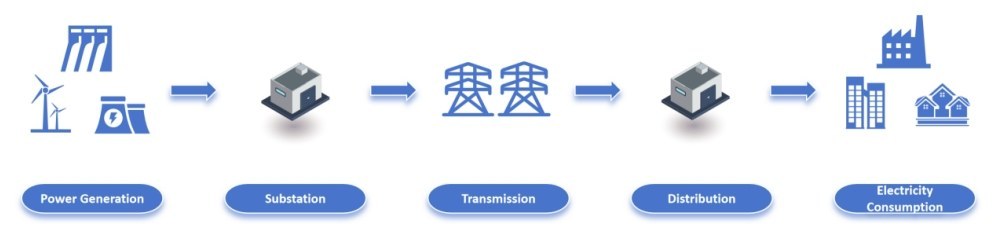
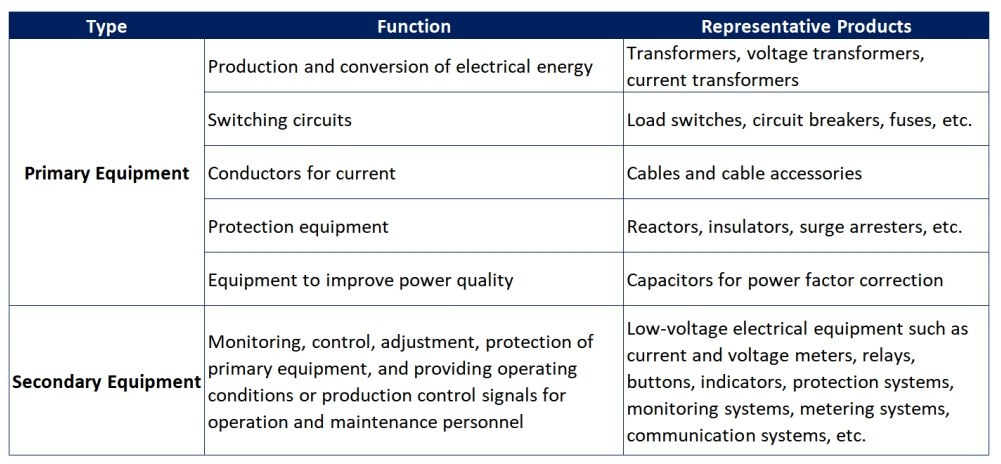
Primary systems directly handle electricity generation, transmission, and distribution, while secondary systems are responsible for protecting, controlling, and monitoring primary equipment. This distinction is based on the functions performed by each group of devices within the electrical power system.
| System Category | Devices Included | Primary Function |
|---|---|---|
| Primary System | Generators, transformers, transmission lines, and switching equipment | Generating, transmitting, and distributing electrical energy |
| Secondary System | Protection relays, automatic control devices, automation terminal units, automation systems, and communication systems | Fault protection, operational control, and monitoring of primary equipment |
During long-distance power transmission, increasing the voltage reduces the current and minimizes transmission losses. Substations change voltage levels and redistribute electrical energy before it is delivered to end-use areas.
How Do Protection Relays Respond to Faults or Abnormal Operating Conditions?
Protection relays detect faults or abnormal conditions in electrical components and then trip circuit breakers or issue signals as required by operational and maintenance procedures. Their purpose is to limit damage, prevent faults from spreading, and help unaffected sections return to normal operation more quickly.
When a fault occurs, a key function is to isolate the faulty component from the system. In response to abnormal operating conditions, a relay may issue an alarm or initiate a time-delayed trip, depending on the configured requirements.
What Are the Four Basic Requirements of Protection Relays?
A relay protection system must meet four key requirements: selectivity, operating speed, sensitivity, and reliability. Together, these requirements ensure that the correct component is protected under the right conditions and that the protection system responds at the appropriate time.
- Selectivity: Only the component or transmission line within the fault zone should be isolated. If the primary protection fails to operate, nearby or remote backup protection can clear the fault.
- Operating Speed: Protection should operate quickly to improve system stability, reduce the duration of voltage dips, and limit damage to faulty components.
- Sensitivity: The relay must be capable of responding to faults and abnormal conditions within its designed protection zone, including under unfavorable operating conditions.
- Reliability: The device must operate when required and remain inactive when operation is not necessary.
Reliability is affected by component quality, design, manufacturing, wiring and connection systems, as well as installation, commissioning, operation, and maintenance. Therefore, protection system evaluation should extend beyond the relay itself.
What Are the Typical Operating Times of Fast Protection and Circuit Breakers?
Fast protection typically operates within 0.06 to 0.12 seconds, with the shortest stated operating time ranging from 0.01 to 0.04 seconds. Circuit breakers typically have an operating time of 0.06 to 0.15 seconds.
| Item | Typical Operating Time | Shortest Stated Time |
|---|---|---|
| Fast Protection | 0.06–0.12 seconds | 0.01–0.04 seconds |
| Circuit Breaker | 0.06–0.15 seconds | 0.02–0.06 seconds |
| Fault Isolation | Not specified | 0.03–0.1 seconds |
Note: The time ranges above are the stated figures for fast protection, circuit breakers, and fault isolation. They should not be considered universal values applicable to every system configuration.
How Does a Relay Test Set Work?
A relay test set simulates various fault types and operating conditions to evaluate the performance of protection devices. It generates signals such as current, voltage, and frequency, applies them to the relay under test, and then captures trip signals and response parameters for analysis.
The evaluation is based on mathematical models of the electrical power system, fault characteristic analysis, operating logic, and the relay's configured settings. Simulated conditions may include short circuits, overloads, overvoltage, and undervoltage.
What Criteria Should Be Considered When Evaluating Relay Test Sets?
Key evaluation criteria include output accuracy and stability, output range, test speed, response time, user interface, communication capabilities, and data storage. The selection process should match these criteria to the operating range and testing requirements of the protection devices being evaluated.
- The accuracy and stability of the output current, voltage, and frequency directly affect test results.
- The output range must cover the operating range of the relay or protection device being tested.
- Test speed and response time help simulate transient processes in electrical power systems.
- An intuitive interface simplifies testing and data processing, while communication and data storage functions support information exchange and recordkeeping.
What Are the Key Development Trends for Relay Test Sets?
Protection relay test sets are evolving toward greater intelligence, multifunctionality, network connectivity, and improved output accuracy. These developments aim to meet the demand for testing different protection functions, exchanging data, enabling remote monitoring, and achieving higher-precision protection.
For example, multifunctional capabilities can expand testing applications to include line, transformer, and generator protection. Network connectivity is being developed to support data transmission, remote monitoring, remote testing, and fault diagnosis.