A plasma cutter may use clean compressed air, oxygen, nitrogen, or an argon-hydrogen mixture. The appropriate gas depends primarily on the material being cut, its thickness, the required edge quality, and the operating-cost target.
For general work on carbon steel, stainless steel, and aluminum, cleaned air is an economical option. Oxygen is presented as the preferred choice for high-speed carbon-steel cutting, while nitrogen and argon-hydrogen are used where stainless steel or aluminum cut quality is a priority.
Summary: Clean, dry air is a common economical option. Oxygen is suited to carbon steel. Nitrogen supports stainless steel and aluminum cutting. Argon-hydrogen is intended for thicker stainless steel or aluminum where a smoother cut is required.
What gases can a plasma cutter use?
The gases identified for plasma cutting are cleaned air, oxygen, nitrogen, and argon-hydrogen mixtures. These options do not perform the same way across carbon steel, stainless steel, and aluminum.
Gas choice can affect cutting speed, edge appearance, dross formation, consumable wear, and operating cost. The gas supply should also be compatible with the cutting system and its manufacturer-specified operating requirements.
When is clean compressed air suitable for plasma cutting?
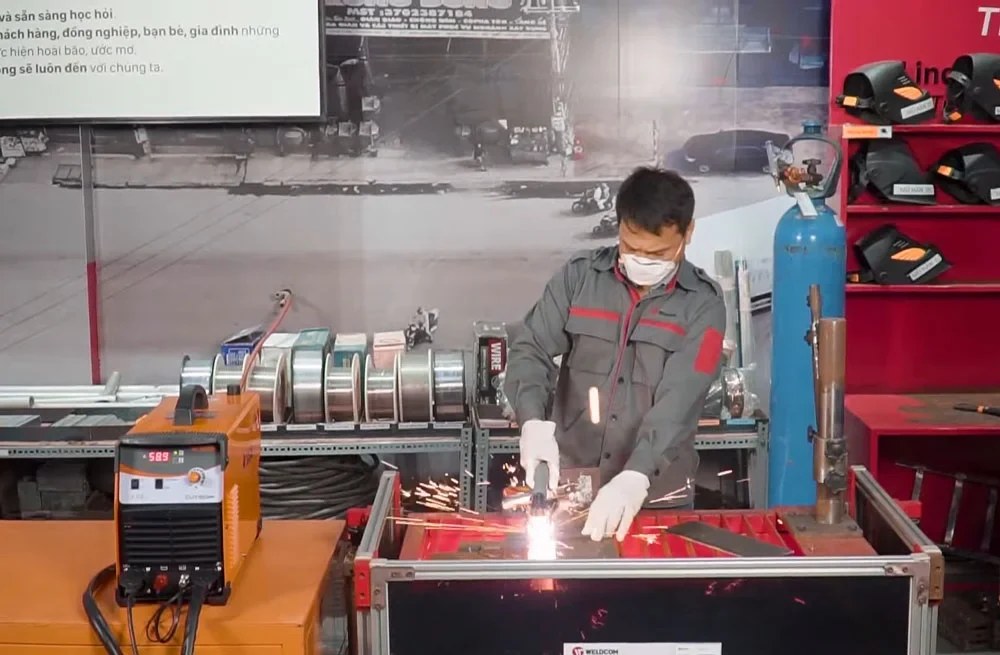
Clean compressed air is a common, lower-cost choice for carbon steel, stainless steel, and aluminum. The source describes it as providing good cutting speed and quality for these materials, making it relevant to smaller workshops and home use.
Air must be filtered to remove dust and moisture. Moist or contaminated air can reduce cut quality, increase dross, and contribute to electrode and torch-tip damage.
Why is oxygen used for carbon-steel plasma cutting?
Oxygen is identified as the leading option for carbon steel when the goal is the fastest cutting speed and high cut quality with minimal dross. Its reaction with carbon in the steel is described as helping produce a smoother cut edge.
However, oxygen has a higher cost and may result in shorter equipment life than air or nitrogen. The supplied comparison advises against using oxygen/air for stainless steel and aluminum.
When should nitrogen be selected for stainless steel or aluminum?
Nitrogen is a common choice for stainless steel and aluminum because it is associated with good cut quality and longer equipment life. It may be paired with air, carbon dioxide, or water depending on the cutting approach.
Nitrogen with carbon dioxide or water is described as delivering excellent quality on stainless steel and aluminum, while nitrogen/air is also associated with good quality and high equipment life. For aluminum thicker than 1.2 cm, nitrogen alone is not presented as the optimal option.
| Gas setup | Carbon steel | Stainless steel | Aluminum |
|---|---|---|---|
| Air/Air | Good speed and cut quality; economical | Good speed and cut quality; economical | Good speed and cut quality; economical |
| Oxygen/Air | Best speed and cut quality; very little dross | Not recommended | Not recommended |
| Nitrogen/Air | Average quality; little dross | Good quality; high equipment life | Good quality; high equipment life |
| Nitrogen/CO₂ or Nitrogen/H₂O | Average quality; little dross | Excellent quality; high equipment life | Excellent quality; high equipment life |
| Argon-hydrogen/N₂ | Not recommended | Excellent for material over 1/2 inch thick | Excellent for material over 1/2 inch thick |
When is an argon-hydrogen mixture used in plasma cutting?
An argon-hydrogen mixture of 65% Ar and 35% H₂ is described for stainless steel or aluminum thicker than 1.2 cm when a smooth, high-quality cut is needed. Nitrogen is commonly used as the shielding gas in this application.
This approach is suited to thicker material and appearance-sensitive work, but the source notes higher equipment and operating costs. Accurate gas mixing and a stable shielding-gas line are important when using this mixture.
What should be checked before using plasma cutting gas?
Use gas that is clean, dry, and supplied at stable pressure according to the equipment manufacturer’s requirements. Check filters, pressure gauges, regulators, valves, hoses, and fittings before operation to identify contamination, malfunction, or gas leakage.
Keep the torch, electrode, and gas lines clean, and inspect cylinders and filtration equipment regularly. Ground leads and cables should not obstruct the work area, helping reduce electrical and fire-related hazards.
Note: Gas selection should be verified against the plasma cutter manufacturer’s specified gas and pressure requirements before operation.