Vacuum lifting equipment
Handling boxes, bags, panels, and other awkward loads safely often comes down to choosing the right lifting method. In many warehouses, packing lines, and industrial workstations, vacuum lifting equipment is used to reduce manual strain while improving speed and consistency during repetitive material handling tasks.
This category is intended for buyers who need a practical solution for lifting products that are difficult to grip by hand but suitable for vacuum-based handling. It is especially relevant where operators must move loads frequently, maintain good ergonomics, and protect the surface of the product during transfer.
Where vacuum lifting equipment fits in industrial handling
Unlike conventional lifting methods that rely on hooks, clamps, or direct mechanical gripping, vacuum systems use suction to hold a load during lifting and movement. This makes them useful for cartons, sealed packages, sheet-like items, and other products with surfaces that can be handled reliably by vacuum tools.
In day-to-day operations, these systems are often selected when a business wants to improve operator ergonomics, reduce repetitive lifting injuries, and maintain better flow between picking, packing, palletizing, or machine feeding steps. They can also help lower product damage in applications where a softer contact method is preferred.
Typical applications and handling needs
Vacuum lifters are commonly used in logistics, general manufacturing, food and consumer goods packaging, and internal material transport. They are well suited to repetitive movements where an operator needs assistance lifting and positioning loads quickly without the complexity of a large hoist system.
Common use cases include lifting cartons, moving packaged goods, and transferring loads between conveyors, pallets, shelving, or work tables. In some setups, businesses may combine vacuum handling with other lifting technologies depending on the load type, workspace, and stroke requirements. For applications centered on fluid power movement, related equipment such as hydraulic cylinders may be considered in other parts of the lifting system.
Key points to evaluate before selecting a system
Choosing the right unit starts with the load itself. Buyers should review the item’s weight, dimensions, surface condition, porosity, and whether the product shape stays consistent from one lift to the next. Vacuum handling performance depends heavily on how well the suction tool can seal against the load.
It is also important to consider lift frequency, working height, operator reach, and available installation space. Some facilities need a compact workstation arrangement, while others require a jib-mounted setup for wider movement. If the application includes broader lifting infrastructure, it may also be useful to review adjacent handling equipment such as a hand pallet truck for horizontal transport within the same material flow.
Another practical factor is the complete system layout, including vacuum generation, air lines, controls, mounting structure, and the lifting interface. For B2B purchasing, the goal is usually not just to buy a lifting head, but to match the overall configuration to the operator task and plant layout.
Example solution in this category
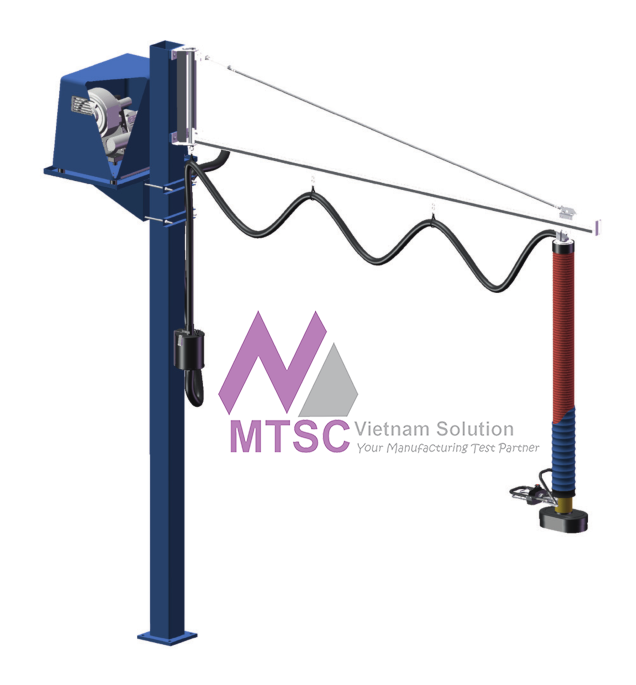
A representative product in this category is the VacuEasyLift VM120 vacuum lifter. This setup illustrates how vacuum lifting equipment is often delivered as a working system rather than as a single standalone component. The available product information indicates a configuration that includes the lifting unit, vacuum tool, pump, air tube, electrical cabinet, and jib crane support elements.
For buyers, this is a useful example because it reflects a real-world requirement: integrating the lifter with the workstation. Instead of evaluating only nominal lifting ability, it is usually more effective to assess the complete handling task, including operator control, mounting method, vacuum source, and the type of load contact tool required for cartons or similar packaged goods.
TAWI solutions and category relevance
TAWI is a recognized name in vacuum handling and ergonomic lifting applications. Within this category, the brand is relevant for users who need solutions designed around repetitive manual handling processes where speed and ease of use matter just as much as lifting capability.
When reviewing brand-based options, purchasers should focus less on the logo alone and more on how well the system matches the task: load characteristics, operator workflow, mounting arrangement, and maintenance expectations. A suitable vacuum lifter should support stable handling in the actual production environment, not just in ideal test conditions.
How vacuum lifting compares with other lifting methods
Vacuum lifting is not a universal replacement for every industrial lifting task. It is most effective where the product can be picked by suction and where the workflow benefits from fast, repetitive, human-guided movement. For irregular, high-force, or structurally different jobs, other technologies may be more appropriate.
For example, facilities working with force-intensive linear movement or heavy-duty hydraulic operations may also look at a hydraulic pump or other hydraulic lifting devices in parallel categories. The right choice depends on whether the application is primarily about ergonomic handling of unit loads, controlled lifting force, long stroke movement, or specialized rescue and maintenance tasks.
What buyers should prepare before requesting a quotation
To evaluate vacuum lifting equipment efficiently, it helps to collect a few essential details in advance. These include the load weight range, dimensions, material or packaging type, lift frequency, pick-and-place positions, available power supply, and the desired mounting method.
- Weight and size of the load
- Surface condition and whether the product is suitable for vacuum gripping
- Required lifting height and reach
- Workstation layout, including wall, column, or crane support options
- Daily duty cycle and number of operators
- Any constraints related to product protection or hygiene
Providing this information early helps narrow down the correct vacuum handling system more quickly and reduces the risk of selecting a configuration that is inefficient for the real operating environment.
Choosing the right category for your lifting project
Vacuum lifting equipment is a strong option when the goal is to improve manual handling without adding unnecessary complexity to the process. It supports safer and more efficient movement of suitable loads, especially in operations where repetitive lifting, packaging flow, and ergonomic performance are key priorities.
If your application involves cartons, packaged goods, or other products that can be lifted by suction, this category provides a focused starting point. Reviewing the load characteristics and workstation setup carefully will make it easier to identify a practical solution, whether you are planning a new installation or upgrading an existing material handling process.
Get exclusive volume discounts, bulk pricing updates, and new product alerts delivered directly to your inbox.
By subscribing, you agree to our Terms of Service and Privacy Policy.
Direct access to our certified experts