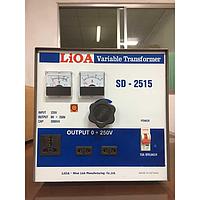
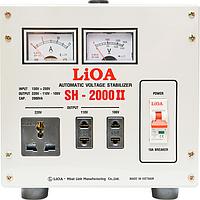
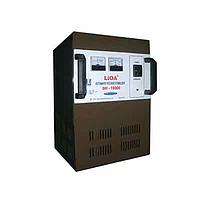
Voltage stabilizer-transformer LiOA
Stable power quality is a practical requirement in many workshops, buildings, testing areas, and automation systems. When incoming voltage is inconsistent or when equipment needs the correct output level for safe operation, the right combination of transformer and voltage conditioning equipment helps reduce downtime, protect connected loads, and keep measurement or control performance more predictable.

This page focuses on Voltage stabilizer-transformer LiOA products within the broader control and monitoring ecosystem. It is a suitable category for buyers looking for practical power conversion and voltage support devices for industrial, commercial, laboratory, and building applications, especially where supply conditions may vary or where equipment must operate at a specific voltage standard.
Where voltage stabilizers and transformers are commonly used
In real operating environments, voltage problems are not limited to complete outages. More often, facilities face under-voltage, over-voltage, line fluctuation, or mismatched supply levels between the power source and the load. These issues can affect motors, control panels, testing instruments, HVAC equipment, and other sensitive devices that depend on a stable electrical input.
A transformer is generally used to convert voltage from one level to another, while a voltage stabilizer is intended to maintain a more consistent output when the input supply changes. In many projects, these functions are part of the same selection process because engineers must consider both the available power source and the operating tolerance of the connected equipment.
Why this category matters for control and monitoring systems
Power quality has a direct influence on control accuracy, signal stability, and device lifespan. In systems that include controllers, meters, transmitters, or monitoring instruments, unstable voltage can lead to nuisance trips, unreliable readings, or premature wear of components. That is why power conditioning is often treated as a supporting but essential part of system design.
For applications that also involve controllers or meters and indicators, selecting the correct transformer or stabilizer helps create a more dependable electrical foundation. This is especially relevant in mixed-load environments where control devices operate alongside fans, pumps, compressors, or other equipment that can introduce fluctuations on the supply line.
Typical product types you may find in this range
This category sits around LiOA transformer and voltage support solutions, with examples such as the LiOA 2510 transformer for users who need a straightforward conversion device in a compact form. Depending on the installation, buyers may be looking for single-phase transformer options, voltage stabilization units, or larger power transformer solutions suited to higher load demands.
Related products from other manufacturers also help illustrate the wider application context. For example, the Dwyer range includes compact DC power supplies, open-frame power supplies for transmitters, and isolated AC transformers used in HVAC and building automation environments. These examples show how power conversion products support instrumentation, sensors, and control hardware beyond simple voltage stepping.
Selection factors that affect performance and compatibility
Choosing a suitable unit starts with the basics: input voltage, required output voltage, load current, and installation type. A mismatch in any of these areas can lead to poor performance or unnecessary oversizing. For B2B buyers, it is also important to review whether the application is continuous duty, whether the load is resistive or inductive, and whether the site has significant supply variation during the day.
Beyond electrical ratings, practical details matter as well. Mounting style, wiring method, available protection, and environmental conditions can all influence the final choice. In automation or facility projects, engineers often compare transformer and stabilizer requirements alongside process control and monitoring devices to ensure the electrical support layer matches the behavior of the overall system.
Examples from the available product landscape
The products highlighted in this dataset show several common use cases. The LiOA 2510 transformer represents the basic need for voltage conversion, while Dwyer models such as the BPS-005 compact DC power supply are aligned with regulated low-voltage DC output requirements. Open-frame options like the Dwyer A-700 series are relevant where pressure, temperature, or velocity transmitters need a dedicated power source.
Dwyer APT series isolated AC transformers illustrate another common scenario: supplying 24 Vac power for HVAC or building automation devices. Variants with different input ranges and VA ratings help match site power conditions and installation constraints. Although these products serve different purposes, they all reinforce the same buying logic: the power source must fit the electrical and operational needs of the connected equipment.
How to evaluate stabilizer versus transformer requirements
A transformer is usually the right starting point when the main challenge is voltage conversion between supply and load. A stabilizer becomes more relevant when the input supply itself is unstable and the connected equipment needs a narrower output range. In many facilities, the decision is not either-or; it depends on whether the load is primarily sensitive electronics, general-purpose equipment, or a combination of both.
For buyers working across maintenance, utilities, and automation, this distinction helps avoid overcomplicating the specification. If the concern is clean and appropriate supply for accessories and low-power devices, it may also be useful to review control and monitoring accessories that interact with the same electrical infrastructure.
Brands and application context
LiOA is the central brand in this category, particularly for users searching for familiar transformer and voltage stabilization solutions in everyday industrial and commercial use. At the same time, the broader platform also includes manufacturers such as Dwyer, SCHNEIDER, PCE, Trotec, YATO, DaiHan, MOTWANE, NOISEKEN, and Preen, which may be relevant in adjacent measurement, testing, or power-related workflows.
That wider mix is useful for procurement teams handling more than one subsystem at a time. A project may require transformer or stabilizer equipment at the power layer, then add instrumentation, control devices, or monitoring hardware elsewhere in the panel or facility. Looking at the category in that broader context can simplify sourcing and improve compatibility planning.
Finding the right option for your installation
If you are selecting within this category, begin with the electrical requirement of the load rather than the product name alone. Confirm the source voltage available on site, the target output, the expected load profile, and whether the application needs conversion, stabilization, or both. This approach is more reliable than choosing only by form factor or brand familiarity.
For straightforward conversion tasks, a transformer such as the LiOA 2510 may be enough. For instrumentation-related systems, regulated or isolated power devices like the Dwyer power supply and transformer examples may better reflect the application. A careful match between load behavior and power support equipment will usually lead to more stable operation, simpler maintenance, and fewer avoidable electrical issues over time.
Whether the requirement is basic voltage conversion or better support for sensitive control equipment, this category provides a useful starting point for evaluating practical power solutions. Reviewing the electrical conditions of the site and the operating needs of connected devices will help narrow the selection and lead to a more suitable LiOA transformer or voltage stabilization setup.
Get exclusive volume discounts, bulk pricing updates, and new product alerts delivered directly to your inbox.
By subscribing, you agree to our Terms of Service and Privacy Policy.
Direct access to our certified experts