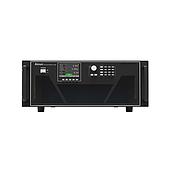
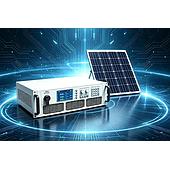
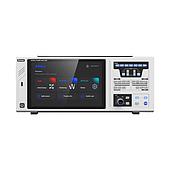
A bidirectional DC power supply for EV testing by both delivering power to a device under test and absorbing power returned from it. This two-way capability helps reproduce charging, discharging, and regenerative operating conditions with fewer separate instruments.
For EV batteries, inverters, chargers, and battery management systems, the value is not only power flow. A programmable bidirectional platform can also support repeatable dynamic sequences and, in regenerative operation, return absorbed energy to the electrical grid rather than dissipating it as heat.
Summary: Bidirectional operation supports source and sink modes in one instrument. It can model charge-discharge transitions and regenerative braking. Regenerative operation can reduce heat dissipation during battery cycling. Programmability supports automated EV, BMS, and charging tests.
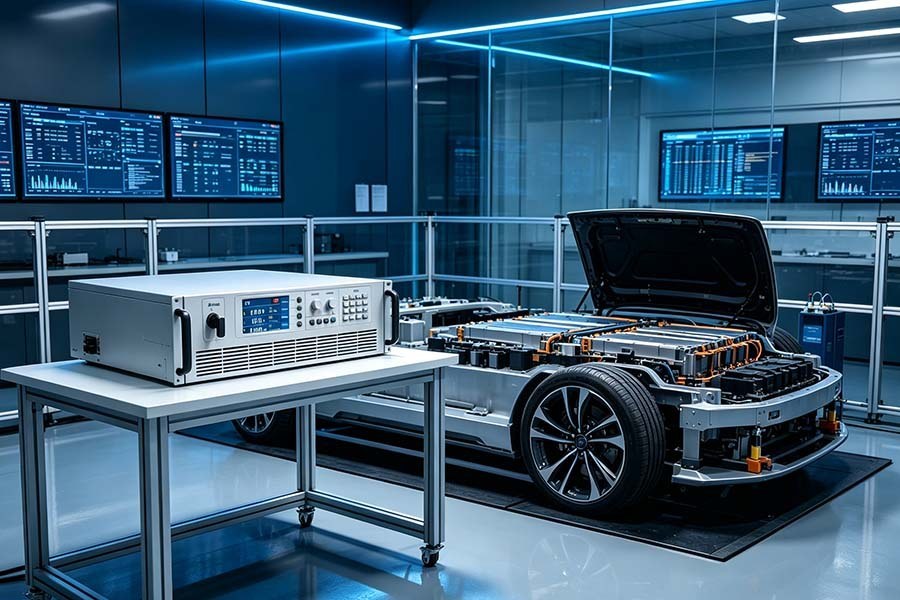
What is a bidirectional DC power supply in EV testing?
A bidirectional DC power supply is test equipment that can source and sink power. It supplies energy during a battery-discharge or system-powering test, then absorbs energy when power flows back from the device under test.
This is relevant because EV subsystems exchange energy in both directions. A battery supplies traction power, while regenerative braking converts mechanical energy back into electrical energy for return to the battery.
Why is two-way power flow useful for EV battery testing?
Two-way power flow allows a test setup to represent changing vehicle conditions without separating the power-source and energy-absorption roles. It can be used to simulate regenerative braking, charging and discharging transitions, dynamic load changes, and closed-loop battery tests.
A conventional unidirectional DC supply delivers energy but does not absorb returned energy. In such setups, engineers may need an electronic load, switching equipment, and additional control coordination alongside the power supply.
| Test setup approach | Power direction handled | Typical test-system implication |
|---|---|---|
| Unidirectional DC power supply | Delivers power to the device under test | Returned energy requires separate equipment to absorb it |
| Bidirectional DC power supply | Delivers and absorbs power | One platform can represent charge-discharge transitions and returned energy |
How can regenerative operation affect energy use in a battery laboratory?
In regenerative operation, absorbed energy can be returned to the electrical grid instead of being dissipated as heat through electronic loads or resistive elements. This is particularly relevant where battery packs undergo repeated charging, discharging, cycling, performance validation, and reliability testing.
Less energy converted to heat can reduce cooling demand and facility heat generation. The source also identifies lower electricity consumption and the ability to operate multiple high-power stations without placing the same burden on facility power infrastructure as potential benefits.
Note: The practical impact of regeneration depends on the test configuration and facility electrical arrangement; no specific energy-saving figure is stated here.
Can bidirectional DC power supplies support high-voltage EV systems?
They are intended for applications requiring wide voltage ranges, high current, large power capacity, and rapid transient response. The source describes EV development moving from earlier platforms around 400 V toward systems such as 800 V battery architectures, high-power charging, and high-voltage traction inverters.
The same source states that many bidirectional systems support hundreds of kilowatts and voltages above 1000 V, but individual capabilities must be confirmed for the specific instrument and test requirement. High-voltage work also requires appropriate safety protocols.
How does programmable control shorten battery test workflows?
Programmable control can automate charging profiles, discharge sequences, dynamic-load simulations, driving-cycle reproduction, and state-of-charge evaluations. Automatic transitions between source and sink modes reduce the need for manual reconfiguration between charging and discharging steps.
This can improve repeatability and reduce operator involvement in long-running procedures. Battery development may include capacity, cycle-life, charge-discharge characterization, thermal, abuse, and aging tests, and some life tests can run for months.
Why is dynamic response important for BMS validation?
BMS validation requires battery conditions to be recreated with controlled voltage and current behavior. Relevant scenarios include sudden load changes, charging interruptions, voltage fluctuations, fault conditions, and dynamic current profiles.
A bidirectional platform with fast transient response, precise voltage regulation, accurate current control, and programming resolution can be used to simulate these scenarios. This helps engineers evaluate how BMS algorithms monitor cell voltages, manage charging, address overvoltage or overcurrent conditions, and estimate battery state.
When can a bidirectional supply be used for fast-charging tests?
It can be used when a test needs battery emulation, charger simulation, power-converter testing, or energy-storage-system emulation. Fast-charging validation involves high currents, rapid power changes, communication requirements, and safety considerations, so the test system must represent both vehicle-battery and charging-station behavior.
Mode flexibility can support compatibility checks, fault simulation, communication testing, and system-level validation. The required voltage, current, control behavior, and safety provisions should be matched to the charger under test.
How can a bidirectional platform simplify laboratory expansion?
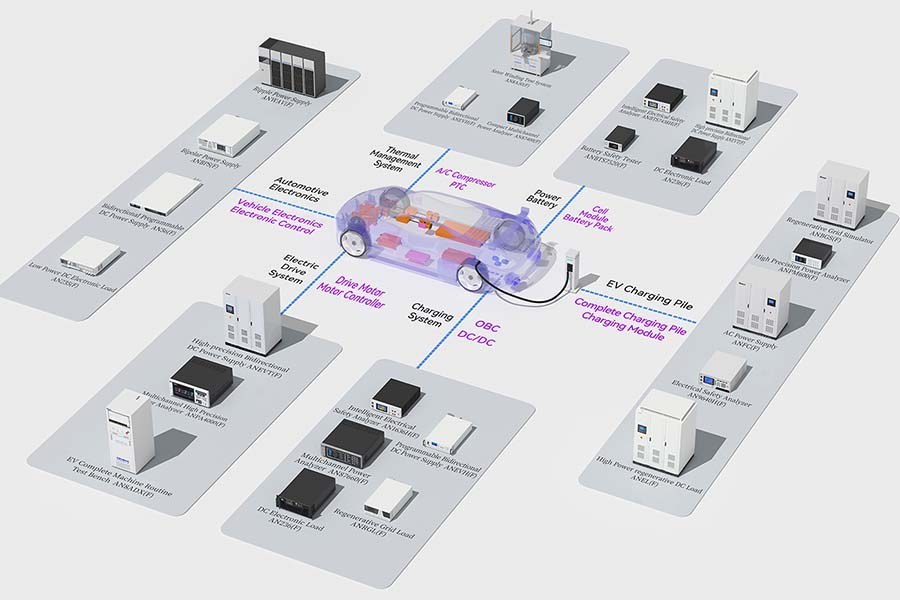
A bidirectional DC power supply can combine the roles of a DC power supply, electronic load, regenerative unit, battery simulator, and programmable test platform. Consolidating these functions may reduce equipment count, wiring complexity, installation footprint, and heat-management demand.
This can be useful as laboratories add battery cyclers, charging test systems, validation stations, and converter test benches. Selection should still be based on the power range, voltage range, dynamic response, automation needs, and safety requirements of each planned test station.