The Role of Air Showers in GMP Cleanroom Systems
An Air Shower is an intermediate device installed at cleanroom entrances and exits, designed to remove dust, microorganisms, and contaminants from personnel clothing, footwear, carts, and materials before entering the production area. Using high-velocity clean airflow combined with HEPA filtration, the air inside the chamber is continuously purified and blown directly onto surfaces at speeds of approximately 20–25 m/s.
More than just a supporting device, the air shower plays a critical role in maintaining cleanroom classification stability, ensuring product quality, and optimizing long-term operational efficiency.
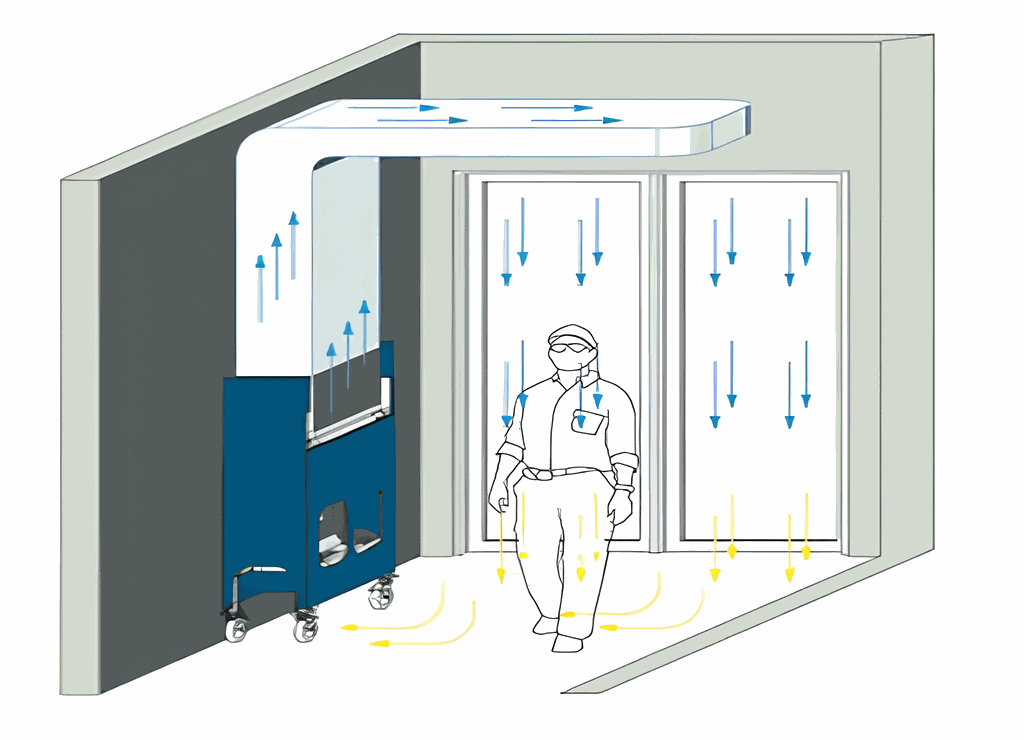
Proper air shower installation helps businesses:
Ensure regulatory compliance by meeting mandatory requirements from regulatory authorities (such as pharmaceutical regulators and health agencies) and standards including GMP, ISO, and HACCP.
Maximize contamination control, maintain stable cleanroom classification, and reduce the load on primary air handling systems (AHU, HEPA filter units).
Protect product quality and optimize production efficiency by preventing contamination-related defects, reducing product rejection rates, and minimizing rework or disposal costs.
Therefore, installing a GMP-compliant air shower is a smart investment for sustainable business growth.
GMP-Compliant Air Shower Installation Process: Step-by-Step
1. Site Survey and Installation Planning
Air shower installation requires high technical precision to ensure airtightness and optimal performance. The first step is conducting an on-site survey. Installation engineers evaluate personnel flow direction, cleanroom connection points, installation space, and availability of electrical and air supply systems.
The air shower location must ensure unidirectional personnel flow to prevent cross-contamination. This is a critical factor that directly affects long-term system performance.
2. Technical Design Based on Cleanroom Classification
Depending on the cleanroom classification (ISO 7, ISO 8, GMP Grade C, GMP Grade D, etc.), the air shower configuration is customized based on key design parameters, including:
Number of air nozzles
Airflow velocity
Fan capacity
HEPA filter specifications
Improper design configuration can significantly reduce contamination control effectiveness, even if installation is technically correct.
3. Installation of Structure, Housing, and Electrical Control System
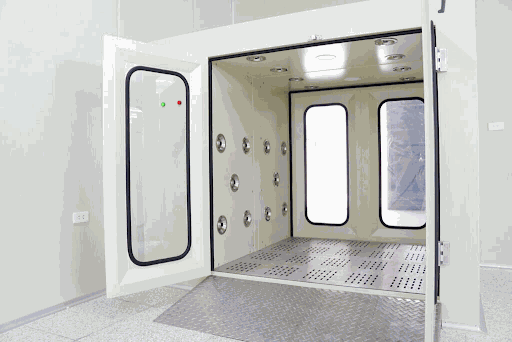
Air showers are typically constructed from stainless steel 304 or powder-coated steel, ensuring durability and corrosion resistance. During installation, interlocking doors, infrared sensors, control panels, and power systems must be connected with high precision.
The interlock system ensures that both doors cannot open simultaneously, preventing pressure loss and minimizing the risk of contaminants entering the cleanroom.
4. Installation of Fan, Filtration, and Airflow System
This is the core component of the air shower system. High-performance centrifugal fans generate powerful airflow, while HEPA filters capture up to 99.97% of particles ≥ 0.3 microns. The entire system must be fully sealed to prevent air leakage and ensure optimal performance.
5. Testing, Calibration, and Commissioning
After installation is completed, the air shower undergoes operational testing, including airflow velocity measurement, air cleanliness verification, noise level assessment, and interlock system functionality checks. This is a mandatory step before the system can be officially integrated into production operations.
When Should Businesses Install or Upgrade an Air Shower?
In practice, many air shower installations fail to achieve optimal performance due to overlooked technical factors. Learning from these common issues helps businesses ensure cleanroom system effectiveness.
Companies should consider installing or upgrading air showers when:
Expanding production scale or facility size
Upgrading cleanroom classification to meet new GMP standards
Increasing personnel and material traffic, raising contamination risks
Existing systems show unstable performance or reduced filtration efficiency
Investing in proper air shower installation at the right time helps prevent costly operational issues and ensures continuous, efficient production.
Air Shower Installation Solutions from EMIN
With years of experience in cleanroom projects, EMIN provides comprehensive air shower installation solutions, including consultation, design, installation, and commissioning. Product offerings include single-person air showers, multi-person air showers, cargo air showers, and fully customized systems tailored to specific factory requirements.
In addition to equipment supply, EMIN provides expert consultation to ensure proper GMP compliance, along with testing instruments for airflow velocity, pressure, and particle measurement. EMIN also offers maintenance services and periodic HEPA filter replacement.
Air shower installation is not just a technical component—it is a comprehensive solution for protecting cleanroom environments. A GMP-compliant installation process helps businesses improve production quality, reduce contamination risks, and optimize long-term operational efficiency.