For full functionality of this site it is necessary to enable JavaScript.
EMIN.VN
0

Analysis of I-V curve deviations in solar power systems

2026년 04월 17일 14시 10분 16초

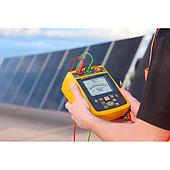
I-V curve analysis is an in-depth diagnostic method for identifying hardware performance issues. For accurate results, devices like the Fluke Solmetric PVA-1500 compare the measured curve to a standard curve, while automatically adjusting for actual radiation and temperature conditions.

Below is the process analysis basis, derived from the scheme processing attempt by the National Renewable Energy Laboratory (NREL).

Verify measurement data

Before troubleshooting the module, you need to ensure the test is valid:

Open circuit: If no curve is obtained, check the measurement cable connection or series fuse for a broken connection.

Discontinuous connection: If the curve drops sharply or breaks abruptly, the cause is often a misaligned measurement cable or a faulty crimped terminal. The connection should be isolated and repaired before re-measuring.

Identifying 6 types of I-V curve deviations

A normal system has an efficiency coefficient of 90% - 100%. If it is lower, compare it to the following six types of deviations:

If the result is lower, compare it to the following characteristic distortion patterns:

1. Staircase curve

The cracks appear due to uneven current flow between battery cells.

The bypass diode will activate to conduct current through the weak or shaded area of ​​the battery.

Common causes: localized shading, uneven dirt distribution, or faulty battery cells.

2. Low short-circuit current (Isc)

The curve shape remains normal, but the Isc value decreases.

Common causes: inaccurate radiation sensor readings, dirty or heavily covered battery surface.

3. Low open-circuit voltage (Voc)

This is often related to temperature deviations during the measurement process.

Since Vocs are less affected by aging, environmental conditions should be checked before concluding that the module is faulty.

4. The knee joint is rounded

This indicates a decline in performance over time.

The main cause is the aging or degradation of the module.

5. Low voltage ratio (Vmp / Voc)

The vertical section of the curve is steeper than normal.

Comparisons between strings can be used to detect faulty wires or connections.

6. Low current ratio (Imp / Isc)

The horizontal section has an unusually steep slope.

Shadow and dirt effects must be ruled out before inspecting the hardware.

Fluke device applications 

Fluke-PVA-1500HE2 this is the optimal device for current 1500V systems. In addition to providing detailed data, it also supports the storage and monitoring of long-term performance trends for the entire project.

Invitation to attend the Fluke Technical Workshop

To master the skills of using analyzers and directly practice analyzing various types of aberrations on real PV systems, we invite you to participate in Fluke's in-depth workshop: Predictive Maintenance for Solar Power Systems: Maximum Safety - Breakthrough Performance

Key content:

- Practical testing with the PVA-1500 Series instrument.

- Detailed instructions on the standard NREL troubleshooting flowchart.

👉 Link to participate: Here!

Representative products to support your work:

- PVA-1500 Series photoelectric analyzer.

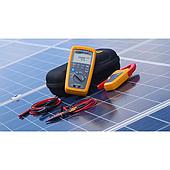
- PVA-1500HE2 tool kit (including I-V monitor, clamp meter and multimeter).

관련 뉴스

What is the required TDS level for shrimp ponds?
2026년 06월 12일 14시 26분 27초

What is the ideal TDS level for a shrimp tank? Many people spend a lot of time monitoring pH, temperature, and filtration systems but overlook TDS. Only when shrimp grow slowly, their colors fade, they have difficulty molting, or die off sporadically do they start checking their water source and discover that this indicator has long been out of the right range

Signs that the electrodes in your TDS meter are degraded and need replacing
2026년 06월 12일 11시 43분 51초

TDS meters can operate reliably for many years, but the electrodes are the most subject to wear and tear. Each time a measurement is taken, the sensor surface comes into direct contact with water, dissolved minerals, and various other chemical components. This continuous process means the electrode's responsiveness gradually decreases over time.

Can metal detectors locate underground pipes and cables?
2026년 06월 10일 19시 17분 37초

Metal detectors operate on the principle of passive electromagnetic induction and can only detect isolated metal objects such as gold, copper, and iron. These devices cannot trace utility paths because they cannot differentiate the direction or depth of long, buried continuous pipes. For insulated electrical cables or plastic pipes, metal detectors are completely ineffective as there is no AC current to generate a magnetic field. Furthermore, the detection depth of standard consumer metal detectors is typically limited to 1 - 2 meters for small objects, whereas underground utility lines are often buried 3 - 5 meters deep or even more.

혜택 소식 받아보기

대량 할인, 도매 가격 업데이트 및 신제품 소식을 이메일로 받아보세요.

구독하면 당사의 서비스 이용약관개인정보 처리방침에 동의하는 것으로 간주됩니다.

빠른 지원

인증된 전문가에게 직접 연결