How thermal cameras work in thick smoke and darkness
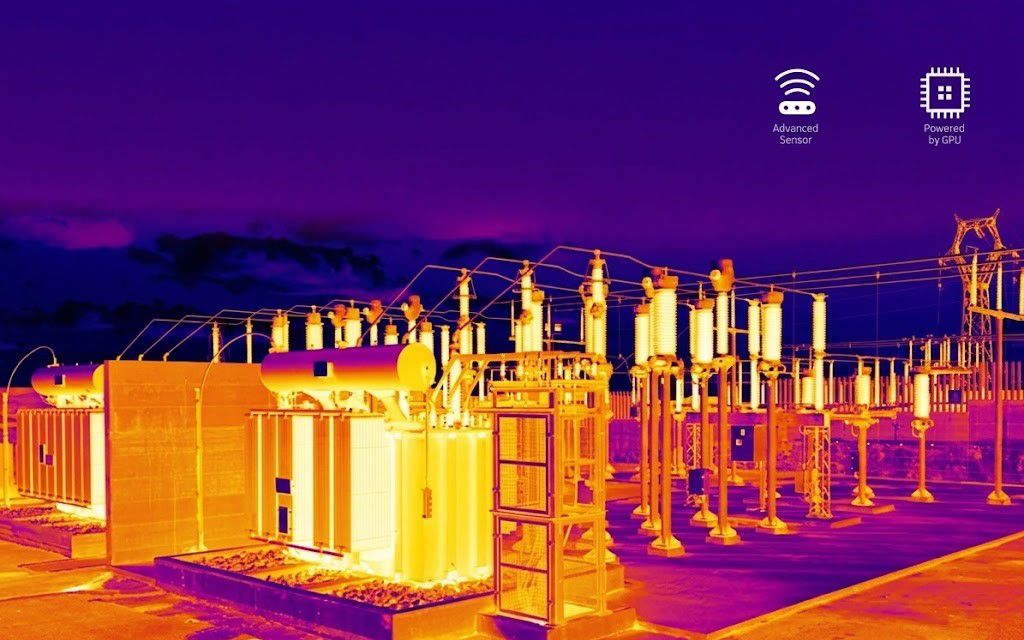
Any object with a temperature emits infrared radiation, even in the absence of visible light. Thermal cameras capture this radiation using specialized sensors and convert it into images where colors indicate temperature levels: hotter areas appear yellow or orange, while cooler areas appear blue or purple.
Since smoke and darkness do not significantly obstruct thermal radiation unlike visible light firefighters can clearly discern human figures, pathways, or heat sources amidst dense smoke, a feat impossible for the naked eye or standard flashlights.
How do thermal cameras assist in firefighting operations?
Before flames spread, thermal cameras enable firefighting teams to detect hidden hotspots within walls, ceilings, or insulation areas where fire may be smoldering unseen by the naked eye. During operations, the device helps track the fire's progression to inform more effective suppression strategies while monitoring the temperature of walls, floors, and load-bearing columns to provide early warnings of potential structural collapse. Once the fire is extinguished, thermal cameras are used to scan for residual hotspots, preventing reignition after the crew has left the scene.
For firefighting teams requiring a device capable of measuring extreme temperatures ranging far beyond a few hundred degrees to reach the thousands necessary for monitoring chemical or metal fires the FLIR E96 series offers a measurement range of up to 1500°C. With a resolution of 640x480 pixels, it provides sufficient detail to clearly distinguish hotspot boundaries, even from a distance.
How do thermal cameras assist in search and rescue operations?
Human body temperature typically hovers around 37°C, whereas the surrounding environment whether it be rubble, dense forest, or open water almost always presents a distinct temperature difference. It is precisely this thermal contrast that enables thermal cameras to detect signs of life, even when victims are partially buried, trapped in narrow crevices, or adrift in dark waters. For large-scale search areas such as mountainous terrain or open seas, these devices are often mounted on drones or rescue helicopters to rapidly survey vast expanses; the search can then be narrowed down to specific locations showing thermal anomalies, eliminating the need for a manual, square-meter-by-square-meter sweep.
For rescue teams requiring compact, handheld equipment capable of capturing thermal images and transmitting reports directly from the field via wireless connectivity, the FLIR E8 Pro series offers a measurement range of up to 550°C and cloud data synchronization. These features facilitate effective on-site documentation and seamless coordination among teams working on the same mission.
What limitations of thermal cameras should be considered when using them for firefighting and rescue operations?
Thermal cameras cannot see through walls or solid objects; they only detect thermal radiation emitted from surfaces, meaning they cannot entirely replace other locating methods in certain specific situations. Materials with high thermal insulation or highly reflective surfaces can also compromise measurement accuracy, requiring experienced operators to correctly interpret thermal images and distinguish between reflected heat sources and actual ones. This is why professional firefighting units typically combine equipment procurement with operator training, rather than simply purchasing the devices for immediate use.
Overall, thermal cameras have become an essential tool for modern firefighting and rescue forces not because they replace human personnel, but because they enable them to see what is invisible to the naked eye, precisely when seeing something just a few seconds earlier can mean the difference between life and death.