Lithium-ion batteries are widely used in electric vehicles, energy storage systems, electronic devices, and various industrial applications. However, during charging, discharging, or high-load operation, battery temperatures may rise abnormally due to high current, internal resistance, connection faults, or cell degradation. If not detected in time, overheating can affect battery lifespan and performance and may even lead to thermal runaway.
An infrared thermometer provides a convenient way to measure lithium battery surface temperatures quickly and without physical contact.
Why Is It Important to Monitor Lithium Battery Temperature ?
Temperature is one of the key parameters reflecting the operating condition of lithium-ion batteries. During operation, electrochemical reactions inside the cells, together with internal resistance and energy losses, generate heat. A moderate temperature rise within the designed operating range is normal. However, significant temperature differences between cells or localized overheating may indicate an underlying technical issue.
For example, a battery cell operating at a considerably higher temperature than neighboring cells may indicate increased internal resistance, cell imbalance, poor electrical contact, or localized damage. At terminals, busbars, and electrical connection points, excessive heat may also result from loose connections or high contact resistance.
Temperature monitoring is therefore not simply about determining whether a battery is hot. It also helps identify uneven heat distribution throughout the battery pack. This information is valuable for quality inspections, routine maintenance, and safety assessments of energy storage systems.
How Does an Infrared Thermometer Measure Lithium Battery Temperature ?
An infrared thermometer works by detecting infrared radiation emitted from an object's surface. Based on the detected radiation, the instrument calculates and displays the surface temperature without touching the target.
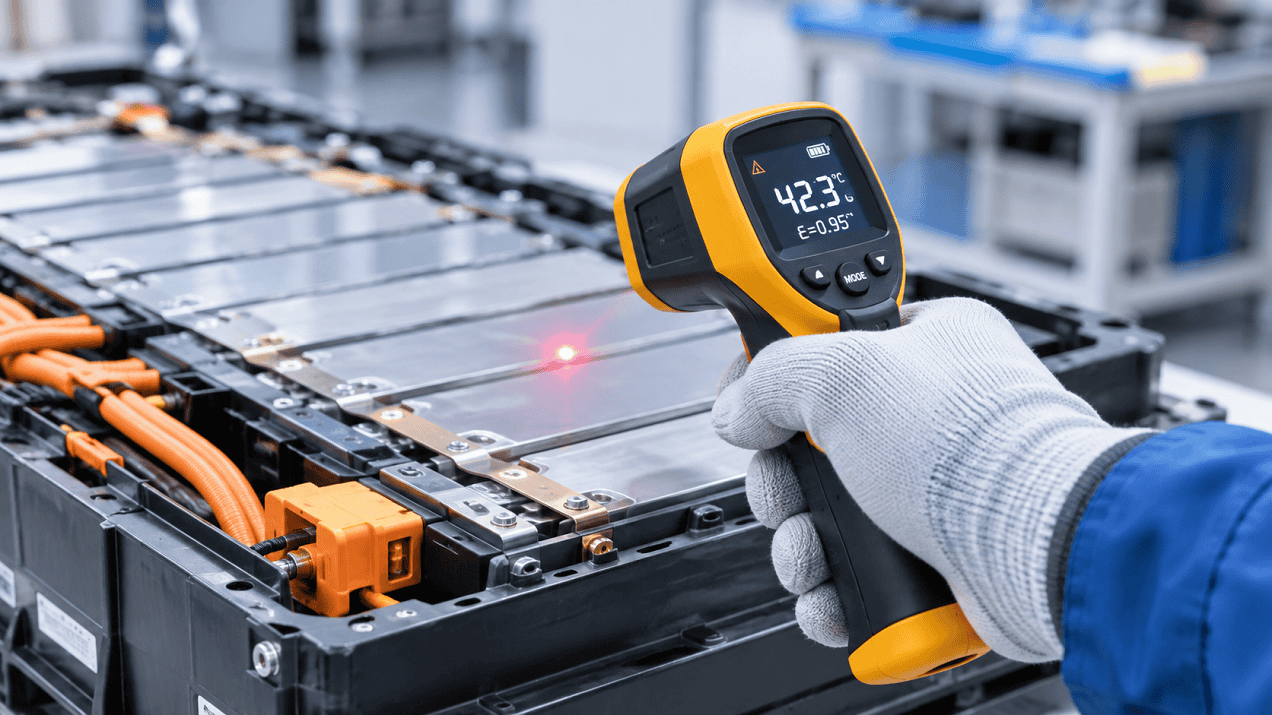
When inspecting lithium batteries, technicians point the thermometer at the surface of individual cells, battery modules, or other areas requiring monitoring. Measurements are available within seconds, making the instrument convenient for checking multiple points across a battery pack, including locations that are difficult to access.
Some infrared thermometers allow users to adjust the emissivity setting to match the surface characteristics of the measured material. This is an important consideration because polished metal battery casings, reflective surfaces, and different coatings can affect measurement results. An inappropriate emissivity setting may cause the displayed temperature to deviate from the actual surface temperature.
For battery systems containing multiple cells, measuring corresponding locations under the same operating conditions makes it easier to compare temperatures between cells. If an unusually high reading is detected, technicians can conduct further inspections using specialized equipment to identify the underlying cause.
Procedure for Checking Lithium Battery Temperature with an Infrared Thermometer
To obtain meaningful measurement results, inspections should be performed under relatively stable operating conditions. First, determine the battery's operating state at the time of measurement, such as charging, discharging, or idle. Battery temperature can vary considerably depending on the load and ambient conditions, so measurements taken under different operating states should not be directly compared.
During measurement, select an appropriate distance based on the instrument's distance-to-spot ratio (D). If the thermometer is positioned too far from the target, its measurement spot may cover multiple cells or surrounding areas, resulting in readings that do not accurately represent the temperature of the intended measurement point.
Technicians should measure individual cell surfaces, the central and edge areas of battery modules, terminals, busbars, and electrical connection points. For battery packs containing multiple cells, maintaining a consistent measurement distance and angle helps minimize variations caused by measurement technique.
After recording the readings, compare temperatures at corresponding locations and check them against the operating limits specified by the battery manufacturer. Any abnormal hot spot should be investigated further rather than using a single temperature reading as the sole basis for concluding that a battery is faulty.
Factors Affecting Measurement Accuracy
An infrared thermometer for lithium battery inspection measures surface temperature only; it does not directly measure the temperature inside a battery cell. Therefore, the displayed reading may differ from the cell's internal temperature, particularly when heat is generated rapidly inside the cell or when the outer casing has limited thermal conductivity.
Surface characteristics also have a significant impact on measurement accuracy. Polished metal surfaces can reflect infrared radiation from surrounding objects, resulting in unstable readings. By contrast, matte-coated surfaces are generally more suitable for infrared measurements. Selecting the correct emissivity setting and maintaining an appropriate measurement angle are essential for minimizing errors.
Other factors to consider include the D ratio, measurement spot size, ambient temperature, and changes in the battery's charging or discharging state. For applications requiring continuous temperature monitoring or hot spot detection across an entire battery pack, a thermal imaging camera may be a more suitable option than a handheld spot infrared thermometer.
When Should You Use an Infrared Thermometer or a Thermal Imaging Camera ?
A handheld infrared thermometer is suitable for quick temperature checks at specific measurement points. Its advantages include simple operation, fast response time, and convenience for routine maintenance. It is particularly useful when technicians need to inspect terminals, electrical connections, or individual areas of a battery module.
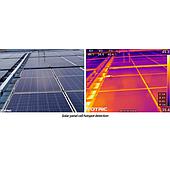
A thermal imaging camera, on the other hand, captures temperature distribution across an entire surface in a single observation. Thermal images make it easier to identify abnormal temperature variations between multiple cells, detect localized hot spots, and record data for trend analysis. This approach offers clear advantages when inspecting large-scale energy storage systems or battery production lines.
Depending on system size and monitoring requirements, the two instruments can be used together. An infrared thermometer is suitable for quick spot checks, while a thermal imaging camera provides an overall assessment and helps identify areas requiring more detailed inspection.
Safety Considerations When Inspecting Lithium Batteries
Detecting abnormal temperatures is important, but an infrared thermometer cannot replace a battery management system (BMS) or dedicated safety monitoring equipment. It only provides information about surface temperature at the time of measurement and cannot fully determine the chemical condition or internal safety status of a battery cell.
If a battery shows signs of rapid temperature increases, swelling, leakage, unusual odors, or other abnormal conditions, the appropriate safety procedures specified by the manufacturer and applicable facility regulations must be followed. Do not continue charging or discharging the battery, or attempt to disassemble a battery pack showing signs of potential danger.
For industrial battery systems and energy storage applications, temperature inspections should be incorporated into regular maintenance schedules and combined with BMS data, contact temperature sensors, and more specialized inspection methods when necessary.
Checking lithium battery temperature with an infrared thermometer is a fast, non-contact, and convenient method for equipment maintenance and monitoring. By comparing temperatures across individual cells, modules, and electrical connection points, technicians can identify potential overheating issues and determine where further inspection is required.
When selecting an IR thermometer, several factors should be considered, including temperature measurement range, accuracy, distance-to-spot ratio (D), adjustable emissivity, and actual operating conditions. For applications requiring temperature distribution monitoring over larger areas, a thermal imaging camera is also worth considering as a complementary solution.