Torque measurement for assembly quality control can be applied before, during, and after fastening. These three checkpoints help teams set tools to the application requirement, audit torque delivered in production, and identify loose, missed, or relaxed fasteners after assembly.
The appropriate method depends on the stage being checked. Torque analyzers, sensors, testers, joint simulators, and manual or digital torque tools each serve a different verification purpose.
Summary: Check tool setup and repeatability before production. Audit applied torque dynamically during fastening. Verify residual torque after assembly to help detect loose or missed fasteners.

What are the three stages for torque measurement in assembly?
Torque can be measured before assembly, during assembly, and after assembly. Before assembly, the focus is tool setup and capability; during assembly, it is the torque actually applied; after assembly, it is final verification of the fastened joint.
| Assembly stage | Primary quality-control purpose | Examples of equipment mentioned |
|---|---|---|
| Before assembly | Set the tool and assess whether it can deliver the required torque and repeatability | Tabletop torque tester, torque analyzer, stationary or rotary sensor, run down adapter |
| During assembly | Audit actual torque delivered to the application and compare production behavior with earlier results | Rotary torque sensor with a torque analyzer; torque tester for hand tools |
| After assembly | Check for adequate fastening torque, loose or missed fasteners, and joint relaxation | Dial wrench or screwdriver, digital torque wrench, sensor with torque analyzer |
Why measure torque before an assembly process begins?
Pre-assembly torque testing supports tool setup and tool capability studies. A tool crib or laboratory can set a torque tool according to the torque specification required by the application, then assess whether the tool can provide the necessary torque and repeatability.
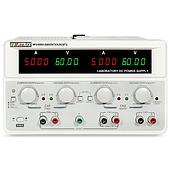
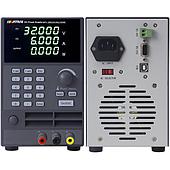
Tabletop torque testers with built-in transducers can be used for this work. A torque analyzer paired with stationary or rotary torque sensors, as well as joint simulators such as run down adapters, can also be used to evaluate the tool before it reaches production.
How is torque audited while an assembly tool is in production?
For pneumatic and electric tools, a rotary torque sensor can be connected between the tool and the assembly application to monitor torque transferred from the tool to the fastener or bolt. This measurement is a dynamic torque reading.
The rotary sensor connects to a torque analyzer, which records and stores the measurement data. This enables technicians to check whether the tool is applying torque as expected in the actual assembly environment.
Why can production torque differ from tool-crib results?
Each assembly application can have different joint rates and tolerances, so a tool’s performance on the production application may differ from its results in the tool crib or laboratory. Comparing the rotary-sensor readings in production with capability-study data can reveal those differences.
When a difference is found, technicians can adjust the tool or the assembly process as needed. The audit can also help validate whether the tool setting and the previously collected capability data remain aligned.
How can hand torque tools be verified on the production floor?
Hand torque wrenches and hand torque screwdrivers can be checked on a torque tester daily or weekly to confirm that their settings remain within allowable tolerance. The displayed result must be compared with the tool’s permitted tolerance.
Some torque testers provide a tolerance-setting function with a GO/NG indication, such as green or red. An OK result indicates the tool is in tolerance; an NG result indicates that calibration or adjustment is required.
What is residual torque and why is it checked after assembly?
Residual torque is the tension that remains in a joint after a threaded fastener has been tightened. A post-assembly check can help verify that adequate torque was delivered and help identify missed or loose fasteners or joint relaxation.
A “just move” test is described as the way to determine residual torque. In this test context, the measurement captures torque as the fastener is moved from its finished position.
Note: Residual torque is a post-fastening check of the joint. It is distinct from the dynamic torque reading measured while an electric or pneumatic tool is actively fastening.
Which tools can be used for residual torque verification?
Residual torque verification may use dial wrenches and dial screwdrivers, digital torque wrenches, or wrench and screwdriver sensors paired with a torque analyzer. The selection should match the required verification method and the type of fastener being checked.
The Mountz TorqueMate digital torque wrench is described as displaying torque applied after 3 degrees of movement, along with final torque and applied angle. The Mountz Dial Wrench captures finishing torque using fine main and memory pointers.
How do the three torque checks work together to support quality control?
The three checks address different points where variation can enter an assembly process. Pre-assembly testing confirms a tool is set up and capable, in-process auditing evaluates what is applied on the real joint, and post-assembly verification evaluates the finished fastening condition.
Using these checks together can help a manufacturer investigate whether a concern is related to tool setup, production conditions, or the completed joint. This structured approach supports efforts to protect product quality, safety, and reliability while reducing avoidable rejections.