The rapid development of modern electrical systems—such as inverters, solar power, and industrial automation—means that electrical current is no longer as “simple” as it once was. Even when using a high-end clamp meter, choosing the wrong device can lead to significant measurement errors. Instead of searching for the “best clamp meter,” users should first identify their actual needs: what type of current they are measuring and under what conditions.
- Clamp Meters for Residential Electricians: Keep It Simple and Sufficiently Accurate
In residential applications, electrical systems are generally stable, with minimal noise and primarily basic AC current. Many users look for “budget clamp meters” but worry about accuracy.
In reality, for household environments, mid-range clamp meters can deliver reliable and stable measurements when used correctly. Investing in high-end True RMS models for this purpose is often unnecessary.
Recommended models for common residential tasks (checking outlets, circuit breakers, and household loads):
- Clamp Meters for HVAC Technicians: Accurate Measurement of Fluctuating Currents
In HVAC systems—especially inverter-based systems—current is highly dynamic and continuously varies with load. One often overlooked factor is inrush current, which occurs briefly during startup.
Standard clamp meters typically fail to capture this peak value, leading to incorrect assessments of equipment performance.
For HVAC applications, prioritize clamp meters with:
True RMS capability
Inrush current measurement
High sensitivity for low current levels
Commonly used models in HVAC environments:
- Clamp Meters for Solar Systems: Accurate DC Measurement Is Essential
Solar power systems primarily operate with DC current at high voltage and current levels, which is fundamentally different from residential AC systems.
A common mistake is using AC-only clamp meters to measure DC current, resulting in inaccurate—or completely meaningless—readings. This happens because only clamp meters equipped with Hall-effect sensors can measure DC current.
When selecting a clamp meter for solar applications, ensure it:
Supports both AC and DC measurement
Meets high safety standards
Popular clamp meter models for solar applications:
- Industrial Clamp Meters: Accuracy Directly Impacts Operating Costs
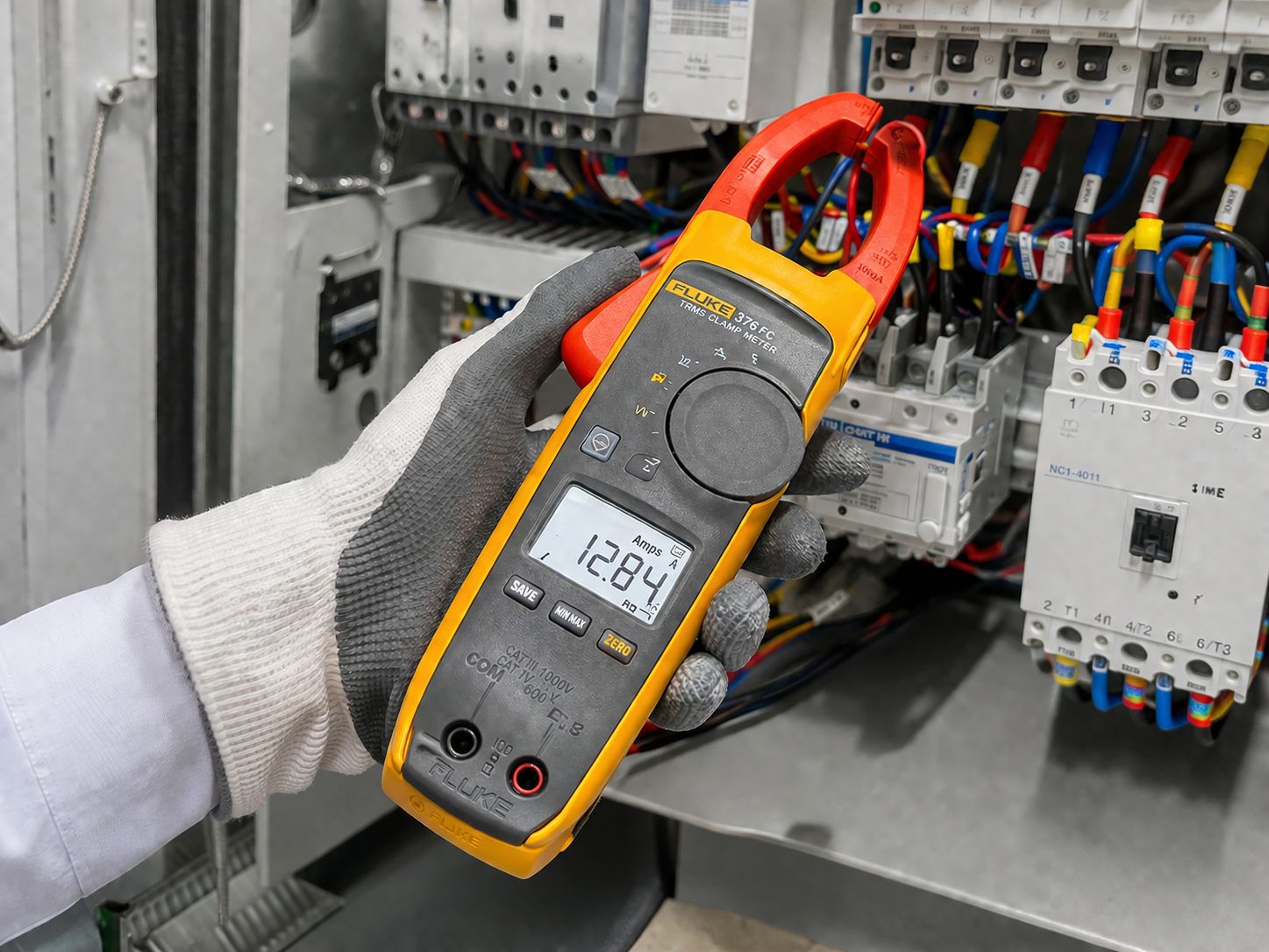
In industrial environments, electrical systems often include inverters and nonlinear loads, which distort waveforms due to harmonics. This is a primary cause of measurement errors when using standard clamp meters.
Devices without True RMS capability only measure average values, which do not reflect the actual current. This can lead to incorrect diagnostics of motors or systems, potentially causing unexpected failures and production downtime.
- For industrial use, prioritize clamp meters with:
True RMS measurement
Low-pass filters (LPF) for noise reduction
Wide current measurement range
Highly rated models for factory environments:
Each application has its own specific requirements. A clamp meter that performs well in one environment may not be suitable in another. To ensure optimal performance and accuracy, it’s essential to choose the right tool for your specific use case. Contact EMIN for expert advice on selecting the most suitable clamp meter for your needs.
Related Articles
Have you fully understood all the function buttons on a clamp meter?
Definition and Functions of a Clamp Meter