Energy-Efficient Soldering Stations should be selected based on their ability to deliver the right amount of heat to solder joints, rather than simply comparing the rated power displayed on the equipment. On production lines with multiple soldering stations or multi-shift operations, standby power consumption and the need for rework can accumulate into significant costs.
Key features that offer practical benefits include precise temperature control, temperature reduction during periods of inactivity, automatic power-off after extended idle periods, and fast thermal recovery. These functions help balance operating speed, solder joint quality, and the reduction of unnecessary heat loss.
Overview: Prioritize temperature control and heat transfer efficiency rather than focusing solely on rated power. Sleep and automatic shutdown modes help reduce energy consumption when soldering equipment is not in use. Stable temperatures help minimize rework. Fast thermal recovery ensures that energy-saving features do not interrupt workflow.
What Factors Determine the Energy Efficiency of Soldering Equipment?
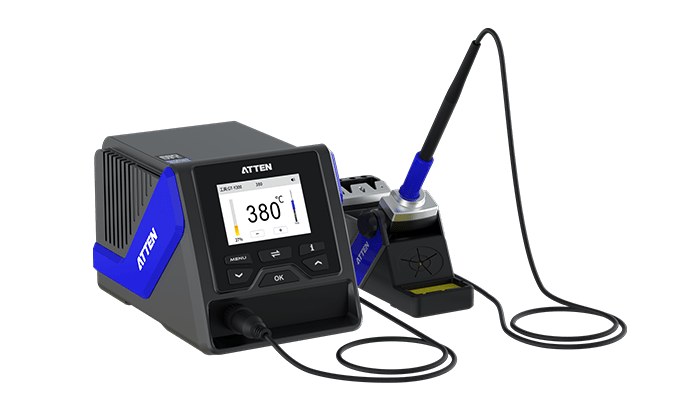
Energy efficiency depends on how effectively electrical power is converted into useful heat at the solder joint, rather than simply how much power the equipment draws from the supply. A higher-powered soldering station can still operate efficiently if it transfers heat effectively and supplies only the power needed to maintain the set temperature.
Three key factors should be considered: temperature control accuracy, thermal recovery speed after contact with a solder joint, and power consumption while the soldering iron is resting in its holder. Equipment with poor temperature retention may lose heat to the surrounding air or handpiece, requiring continuous power input to compensate for these losses.
Why Does PID Temperature Control Help Reduce Soldering Waste?
PID control regulates heat input based on the actual temperature, helping maintain a more stable setpoint. Compared with continuous heating or simple on/off control, this approach minimizes temperature overshoot and fluctuations, which can consume energy without directly contributing to the soldering process.
Temperature stability is particularly important in lead-free soldering, which requires tighter thermal control. Significant temperature fluctuations may result in defective solder joints or heat-related component damage, leading to additional rework.
How Do Sleep and Automatic Shutdown Modes Reduce Power Consumption?
Automatic sleep mode lowers the soldering tip temperature to a standby level when the handpiece is placed in its holder, while automatic shutdown cuts power after an extended period of inactivity. Both functions target periods when operators are reviewing circuit diagrams, positioning components, or taking breaks between tasks.
| Feature | How It Works | Operational Benefits |
|---|---|---|
| Automatic sleep mode | Reduces the soldering tip temperature to a standby level when not in use | Reduces power consumption and heat loss during idle periods |
| Automatic shutdown | Cuts power after a specified period of inactivity | Prevents unnecessary heat generation over extended periods |
| Fast thermal recovery | Restores the operating temperature after standby mode or temperature drops caused by thermal loading | Enables energy-saving operation while minimizing operator waiting time |
Note: Actual energy savings depend on idle time, temperature settings, solder joint types, and the number of soldering stations in operation. Measurements should be taken under the specific operating conditions of each production line rather than applying a universal savings percentage.
Is Fast Thermal Recovery Essential When Selecting an Energy-Efficient Soldering Station?
Yes. Fast thermal recovery allows the soldering tip to return to its operating temperature quickly after cooling in standby mode and compensate promptly for heat loss when contacting solder joints with a high thermal mass. This enables manufacturers to implement temperature reduction during idle periods without slowing down the soldering process.
Solutions incorporating integrated heating elements, sensors, and soldering tips, as well as induction heating technology, are identified in the reference material as approaches that support rapid temperature stabilization. When evaluating equipment, it is advisable to check its thermal recovery performance after soldering a large joint under actual operating conditions.
How Does Temperature Stability Affect Emissions and Rework Rates?
Temperature stability helps reduce the risk of cold solder joints and damage caused by excessive heat. If a solder joint needs to be removed and resoldered, the process consumes additional time, electricity, and materials compared with completing the joint correctly the first time.
Reducing rework is therefore an indirect way to minimize energy waste. Appropriate temperature settings, efficient heat transfer through the soldering tip, and stable temperature control should be considered together rather than simply increasing the temperature to handle every situation.
How Should You Evaluate the Rated Power of a Soldering Station?
You should not assume that a high-power soldering station always consumes more electricity. Rated power indicates the equipment's ability to handle thermal loads. Actual energy efficiency also depends on power control, thermal coupling between the soldering tip and the joint, and the time required to complete each operation.
Equipment with efficient heat transfer and precise temperature control may complete soldering operations more quickly, thereby reducing the time heat must be maintained. When comparing different options, rated power should be assessed in relation to PCB types, solder joint sizes, and the lead-free soldering requirements of the production line.
How Do Soldering Tip Lifespan and Maintenance Affect Equipment Selection?
Longer-lasting soldering tips and replaceable components can reduce consumable replacement costs throughout the equipment's service life. Excessive temperatures or unnecessary heat maintenance can accelerate soldering tip degradation, making sleep mode beneficial for protecting consumable components as well.
When purchasing equipment, it is advisable to clarify whether the soldering tip, heating element, and related components can be replaced individually according to the product design. This provides a basis for evaluating maintenance requirements and avoiding the need to replace an entire soldering station when only one component has worn out.
What Should an Energy-Efficient Soldering Equipment Selection Process Include?
A suitable selection process begins by identifying solder joint thermal loads, equipment standby time, and quality requirements before comparing product features. Priority should then be given to soldering stations with PID control, automatic sleep and shutdown modes, fast thermal recovery, and reliable temperature stability.
- Identify solder joint types, joint sizes, and lead-free soldering requirements.
- Measure or estimate actual soldering time relative to standby time during each shift.
- Evaluate thermal recovery after high thermal loads rather than checking only the initial warm-up time.
- Assess no-load power consumption alongside solder joint quality and rework rates.
- Consider soldering tip lifespan and component replacement options to support long-term operation.
This evaluation approach helps ensure that purchasing decisions are based on actual production conditions rather than a single power rating. For large production lines, monitoring the operating and idle time of each soldering station can also help identify further opportunities for energy optimization.