For full functionality of this site it is necessary to enable JavaScript.
EMIN.VN
0

What causes centrifuge samples to break or undergo phase separation, even when the correct speed is set?

2026년 10월 05일 16시 46분 07초

This article analyzes three core technical causes of sample failure despite correct speed settings, incorporating safety standards (OSHA/COSHH) and practical handling procedures from two previously implemented high-speed centrifuge operating manuals.

In molecular biology laboratories, clinical testing facilities, and industrial plants, technicians frequently encounter situations where the centrifuge indicates a completed cycle, yet opening the lid reveals compromised results: cracked or broken tube bottoms, or blurred and remixed separation layers, even when parameters such as speed (RPM/RCF) and time were set strictly according to Standard Operating Procedures (SOPs).

The initial reaction is often to suspect motor failure or electrical issues. However, the control panel only provides necessary baseline conditions. The underlying causes of sample failure stem from mechanical and fluid-dynamic factors inside the chamber that the digital display cannot detect or signal.

1. Incorrect Adapter Cushioning and Tube Material Limits Causing High-Speed Shattering

It is a common misconception that test tubes withstand force uniformly under all conditions. At high speeds ranging from 15,000 to over 30,000 RPM, peak centrifugal acceleration subjects the tube bottom to immense hydrostatic pressure.

Incorrect Adapter Match

Placing conical-bottom tubes directly into round-bottom rotor cavities without specialized adapters concentrates all stress onto a single point, causing internal stress fractures or bottom breakage.
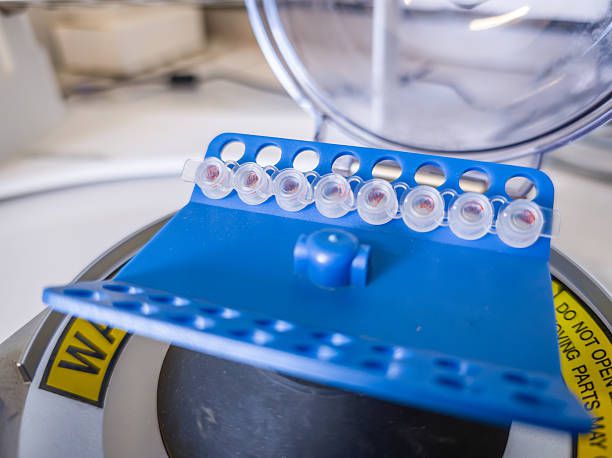
Adapter mismatch
Chemical Incompatibility with Plastics

Polypropylene (PP) plastic loses structural integrity when exposed to aggressive organic solvents like chloroform or phenol, weakening polymer bonds and causing spontaneous failure under high centrifugal force.

Plastic chemical reaction
Tube Material Fatigue

Tubes designated for high-speed centrifugation have a finite operational lifespan. Repeated autoclaving or multiple high-speed centrifugation cycles induce micro-cracks in the plastic structure that are invisible to the naked eye.

Technical Corrective Actions:
  • Verify geometric compatibility between the tube bottom and the rotor cavity prior to operation.
  • Adhere strictly to balancing rules: Weight differential between opposing tubes must not exceed 0.1 grams; always use a precision balance for calibration rather than visual estimation.
  • Fill tubes to a maximum of 2/3 capacity to prevent hydrodynamic pressure from popping caps or breaking tubes.
  • Never reuse tubes for runs exceeding 10,000 RPM if they have undergone multiple thermal cycles. When starting the unit, remain nearby to monitor equipment for 1 to 2 minutes until it reaches stable operational speed (approximately 90% of rotor failures occur during the acceleration phase).

2. Aggressive Deceleration Settings Causing Remixing of Separated Layers

The deceleration phase represents the most critical window where separation interfaces are highly susceptible to disruption if parameters are improperly configured.

Braking Inertia Effect

When decelerating rapidly from high speeds to 0 RPM, activating hard braking stops the rotor abruptly while the liquid column inside continues rotating due to inertia.

Micro-Vortex Shear Currents

Velocity differentials generate micro-vortices and shear waves right at the phase boundary, resuspending freshly separated layers (such as the buffy coat layer in blood separation).

Brake Setting Solutions:
  • For sensitive sample matrixes, configure deceleration parameters to "Soft Brake" or disable braking entirely ("No Brake" / Free Coasting) to allow the rotor to coast down naturally.
  • Ensure the inner rotor lid is securely fastened before closing the main chamber lid.

3. Incorrect Rotor Geometry Selection Leading to Suboptimal Sample Sedimentation

Selecting an inappropriate rotor configuration prevents effective layer resolution or causes improper pellet adherence within the tube:

Rotor TypeMechanism & Sample BehaviorRecommendation / Mitigation
Fixed-Angle RotorFixed tube angle from 25° to 45°. Force impinging against the outer tube wall creates a extended pellet smear along the wall. Upon deceleration, this smear easily slides down, clouding the liquid.Ideal for supernatant collection. Do not use for density gradient separation or thin interface layer harvesting.
Swinging-Bucket RotorBuckets swing out 90° perpendicular to the axis of rotation. Sedimentation trajectory travels parallel along the tube axis, forming a tightly packed pellet at the bottom while preserving sharp boundary layers.Gold standard for complex separations, density gradient centrifugation, and clean interface recovery.

Explore our range of high-quality centrifuges distributed by EMIN

4. Emergency Response Protocol for Tube Breakage or Excessive Vibration

EMERGENCY RESPONSE PROTOCOL ACCORDING TO OSHA / COSHH STANDARDS
STEP 1: Emergency Shutdown: Immediately press the STOP button and disconnect the main power supply.
STEP 2: DO NOT open the lid immediately: Opening the chamber immediately releases biohazardous or chemical aerosols generated in the chamber directly into the operator's breathing zone and face.
STEP 3: Mandatory Settling Time:
• Standard samples: Wait at least 15 to 30 minutes.
• Biohazardous samples: Wait a minimum of 30 minutes.
STEP 4: Decontamination Procedure: Don full protective gear including respirator masks and heavy-duty gloves, then use forceps to pick up glass/plastic debris. Clean the centrifuge bowl with a suitable disinfectant (70% ethanol or diluted bleach). Avoid high-concentration chlorine agents that corrode aluminum rotor assemblies.
STEP 5: Rotor Logbook Management: Document complete operational history (date, RPM, run duration) in the equipment logbook. Retire and decommission rotors upon reaching manufacturer-specified cycle limits to prevent metal fatigue and catastrophical rotor failures.
WORKFLOW OPTIMIZATION - BIOLOGICAL SAMPLE PRESERVATION & OPERATOR SAFETY
Diagnostic and Troubleshooting Guide for Specialized Centrifugation Equipment

관련 뉴스

DC, Pulsed DC, or RF: Selecting a Plasma Source Based on Material and Process
2026년 11월 23일 16시 55분 48초

In sputtering, positive ions (typically Argon) are accelerated toward a target to bombard and dislodge material. A stable ion current can only be maintained if electric charge does not accumulate on the target surface. The simulation below illustrates this principle qualitatively: the blue trace follows the waveform, while the amber-colored bar represents the level of charge accumulated on the target surface

Errors in Measuring Rebar Diameter within Concrete
2026년 11월 23일 13시 50분 41초

In the quality assessment of reinforced concrete structures using non-destructive testing (NDT) methods, determining the diameter (d) of reinforcing bars directly on a completed structural element often results in significantly greater margins of error compared to measuring the thickness of the concrete cover. If the identified diameter deviates by one or two standard size increments (for example, if a D16 bar is misidentified as a D20 or D12), the entire analysis—including the calculation of load-bearing capacity and the verification of the structural design—loses its reliability.

Assessment and Retrofitting of Reinforced Concrete Structures After Fire Exposure in Accordance with TCVN 14104:2025
2026년 11월 23일 11시 48분 42초

In accordance with the principles for the preservation and post-fire structural assessment stipulated in TCVN 14104:2025, the inspection entity must accurately quantify the extent of cross-sectional degradation in heat-exposed concrete, the presence of subsurface delamination, and the condition of the internal steel reinforcement before developing a strengthening plan.

Hướng dẫn đo nghiệm thu chiều dày lớp bê tông bảo vệ đúng chuẩn TCVN 9356:2012 & Luật Xây dựng 2025
2026년 11월 21일 10시 00분 27초

Để kết quả đo đạt độ tin cậy pháp lý khi làm hồ sơ hoàn công và nghiệm thu với tư vấn giám sát, kỹ sư hiện trường và thí nghiệm viên phòng LAS-XD cần làm chủ quy trình vận hành máy đo chiều dày lớp bê tông bảo vệ, kiểm soát các yếu tố gây nhiễu từ trường và xử lý số liệu đúng quy chuẩn.

혜택 소식 받아보기

대량 할인, 도매 가격 업데이트 및 신제품 소식을 이메일로 받아보세요.

구독하면 당사의 서비스 이용약관 및 개인정보 처리방침에 동의하는 것으로 간주됩니다.

빠른 지원

인증된 전문가에게 직접 연결