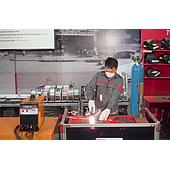
Stick welding machine, also called SMAW or shielded metal arc welding, joins metal with an electric arc formed between a flux-coated electrode and the workpiece. The electrode and base metal melt to form the weld, while the coating produces shielding gas and a slag layer.
For practical results, prepare clean metal, maintain a stable arc and travel speed, and select an electrode suited to the base material and joint requirements. Manual control is important throughout the process.
Summary: Stick welding uses a consumable flux-coated electrode. Keep the arc at or below the electrode diameter, remove slag between passes, and adjust current when the weld pool is too fluid or metal does not flow. Use protective equipment, sound electrical connections, ventilation, and fire precautions.
What is stick welding used for?
Stick welding is used to join, assemble, or repair metal parts. Applications in the supplied material include steel structures, tanks, frames, steel pipe, shipbuilding, construction assembly, household metalwork, tack welding, and on-site repair work.
Because it does not require shielding gas, the process can be used indoors, outdoors, and in difficult positions. It is described as suitable for carbon steel, alloy steel, and stainless steel, with specialized electrodes referenced for other materials.
What are the main advantages and limitations of stick welding?
Stick welding is portable and adaptable for field work, small workshops, and repair tasks. However, it is a manual process that requires electrode changes and slag removal, so it is not intended for automated production lines or high-volume work.
| Advantages | Limitations |
|---|---|
| Can be used in indoor, outdoor, and hard-to-reach locations. | Welding is fully manual and cannot be automated as described. |
| Does not need shielding gas and is less affected by wind. | Electrodes must be changed manually, reducing productivity. |
| Equipment can be compact and easy to move. | Slag must be chipped and cleaned after welding. |
| Supports joining and repair work on a range of metal applications. | Operator control of arc start, angle, speed, and arc length is essential. |
How should the workpiece and welding circuit be prepared?
Use an SMAW power source appropriate to the workpiece thickness, along with an electrode holder and a work clamp rated for the required welding current. Remove rust, oil, and paint around the joint so the arc can remain stable.
Attach the work clamp directly to bare metal and tighten it securely. Poor contact can create sparks and localized heating. Check the power leads, electrode holder, and work clamp before work begins.
How do you start and maintain a stable stick-welding arc?
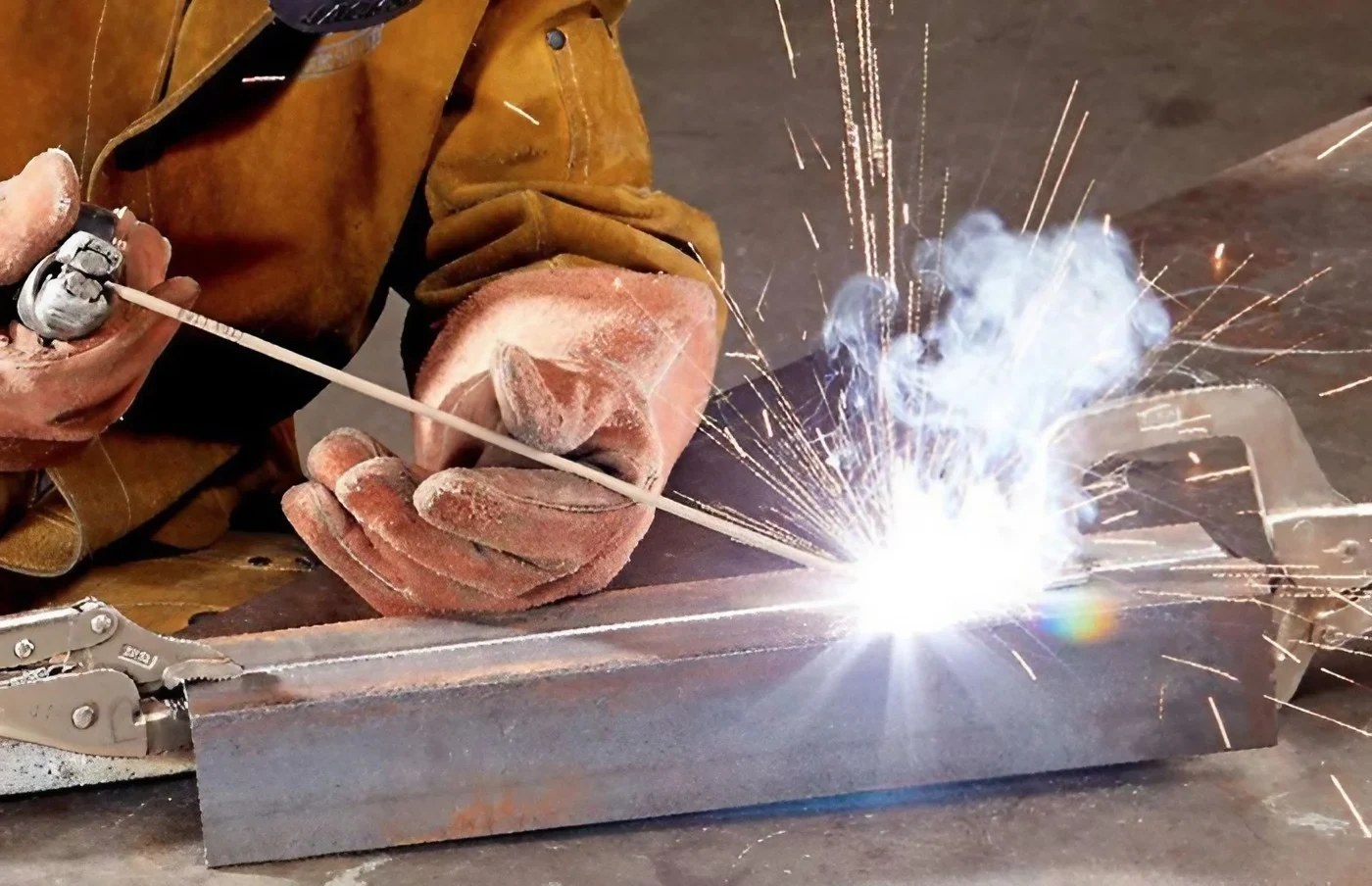
An arc may be started by tapping the electrode tip straight against the workpiece or by dragging it across the surface in a motion similar to striking a match. The goal is to establish the arc without letting the electrode stick.
During welding, keep the arc length equal to or shorter than the electrode diameter. An arc that is too long can increase spatter, reduce penetration, and produce a raised bead; an arc that is too short can cause sticking or extinguish the arc.
What electrode angle and travel motion should be used?
For drag welding, the supplied guidance recommends tilting the electrode about 10° to 15° in the direction of travel, or approximately 75° relative to the weld axis. A consistent angle helps keep the bead straight and even.
A straight stringer bead is used for thinner workpieces to help control deposited metal and reduce burn-through risk. Zig-zag movement can make a wider bead for thicker joints or wider gaps, while an offset circular weave is described for thicker workpieces or build-up welding.
How should welding current be adjusted?
Set current according to the electrode manufacturer’s recommended range for its type and diameter. Start near the middle of that range, test on scrap material, and make small adjustments until the arc burns evenly.
- Current too high: the metal may flow too quickly, causing burn-through, a concave bead, and excessive spatter.
- Current too low: the arc may be difficult to sustain, the electrode may stick, and the weld may have insufficient penetration.
- Weld pool check: reduce current if the pool is overly fluid; increase it if the metal does not flow readily.
How do you choose a stick welding electrode?
Electrode choice depends on the base material, workpiece thickness, and weld requirement. The supplied material identifies E6013 for general carbon-steel work and E7018 where higher mechanical performance is required; stainless steel, cast iron, aluminum, and copper require specialized electrodes.
| Electrode or category | Use described in the supplied material | Key consideration |
|---|---|---|
| E6013 | Thin-to-medium steel structures, gates, and household steel frames. | Easy arc starting and slag removal; noted as suitable for beginners. |
| E7018 | Heavy steel structures, bridges, and pressure tanks. | Dry before welding; the supplied guidance specifies 250–350°C. |
| Specialized cast iron or stainless steel electrodes | Cast iron repair and stainless steel work. | Match the electrode to the material. |
| Aluminum, copper, or nickel electrodes | Repair or welding of non-ferrous alloy parts. | Requires stable current and controlled technique. |
Which stick welding defects are common and how can they be addressed?
Common defects are often linked to incorrect current, unstable electrode angle, unsuitable arc length, contaminated workpieces, or damp electrodes. Correct the underlying condition rather than relying on a single setting change.
| Defect | Likely cause described | Corrective action described |
|---|---|---|
| Excessive spatter | High current, long arc, or unstable angle. | Reduce current, shorten the arc, and stabilize the electrode. |
| Burn-through | High current, slow travel, or an oversized electrode. | Reduce current, travel faster, or use a smaller electrode. |
| Lack of penetration | Low current, short arc, or incorrect angle. | Increase current and maintain a stable angle and arc. |
| Porosity | Damp electrode, oil, rust, or unstable travel. | Dry the electrode, clean the metal, and maintain steady travel. |
| Slag inclusion | Slag was not removed between passes. | Chip and clean slag after each layer. |
What safety practices are essential for stick welding?
Shielded metal arc welding machine creates a high-temperature arc, sparks, and welding fumes. Wear a welding helmet or welding glasses, leather gloves, flame-resistant clothing, protective footwear, and suitable respiratory protection as needed for fumes.
Do not weld in wet conditions or when your body is wet. Keep combustible materials away, use screens to protect nearby people from arc exposure, provide ventilation or fume extraction, keep a CO₂ or dry-powder extinguisher nearby, and switch off power when pausing or finishing work.
Note: Welding parameters and electrode handling should follow the relevant electrode manufacturer’s recommendations. Practice on scrap material before welding the finished part.