Optical power meters are widely used to assess signal quality, support acceptance testing, and assist in maintenance and troubleshooting activities. Small issues such as an unclean connector, an incorrectly set reference level, or an unsuitable measurement configuration can create noticeable deviations in the results.
What Does Optical Fiber Loss Measurement Indicate ?
Optical fiber attenuation refers to the reduction in light power as the signal travels from the transmitting end to the receiving end. This value is typically expressed in decibels (dB) and is present in every fiber transmission link.
The attenuation level is affected by factors including cable length, the number of splice points, connector quality, bend radius, and operating conditions. When used together with an optical light source, an optical power meter can be used to determine link loss and evaluate transmission performance.
Abnormally High Measurement Results Caused by Improper Connector Handling
Fiber optic connectors have extremely small contact surfaces. Even a thin layer of dust or fingerprints that are barely visible to the naked eye can scatter light and introduce additional attenuation. As a result, measurement values may vary between test cycles even when the network itself is operating normally.
A good practice is to clean the connector before every connection, including when fiber optic test equipment has just been removed from its protective case.
Selecting a Wavelength That Does Not Match the Link Design
A fiber optic link may produce different attenuation values depending on the test wavelength.
During acceptance testing, the wavelength should be agreed upon in advance and clearly documented in the technical report to ensure all teams interpret the results using the same criteria.
For example, measuring at 1310 nm while comparing the results against design specifications defined at 1550 nm can lead to incorrect conclusions. Likewise, using a multimode test configuration to evaluate a singlemode link reduces the reliability of the measurement data.
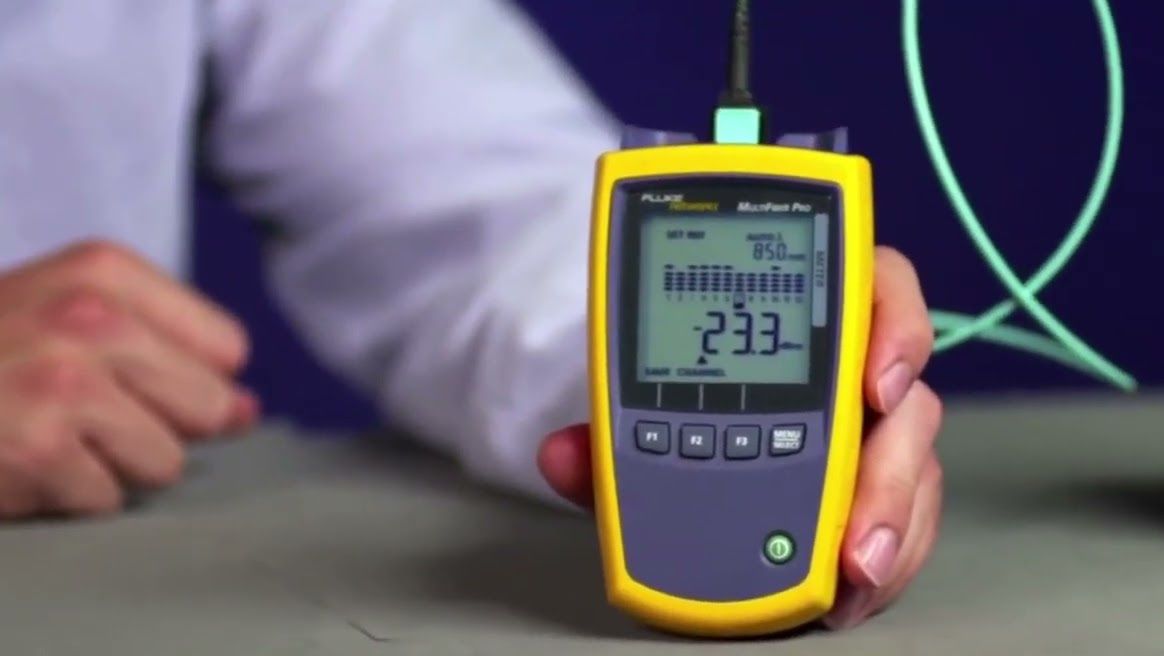
Skipping Reference Setup Causes Systematic Measurement Errors
Technicians sometimes replace test cords or move to another link while keeping the previous reference settings unchanged. This can introduce cumulative errors across all subsequent attenuation readings.
This is one reason why the same fiber link may produce different results when retested with another instrument under identical conditions.
Resetting the reference level before each measurement cycle only takes a few extra minutes but significantly improves data consistency and long-term comparability.
Test Accessories Can Influence Measurement Results
In optical measurement systems, patch cords and adapters are more than simple connection accessories.
A worn or degraded connector may introduce more attenuation than the section of cable being tested, making it easy to misidentify the source of the problem.
If measurement values fluctuate unexpectedly between repeated tests, the reference cord set should be verified before drawing conclusions about the network condition.
Evaluating a Fiber Link Based Only on Attenuation Values
Long-distance links, networks with multiple splice points, or installations operating under demanding environmental conditions behave differently from standard configurations.
Measurement results become meaningful only when reviewed alongside the original design data, operating conditions, and maintenance history. Trend analysis over time often provides a more reliable assessment than a single standalone measurement.
Measurement accuracy does not depend solely on the optical loss test equipment. Preparation, measurement procedures, and testing conditions play equally important roles. Small deviations related to connectors, wavelength selection, accessories, or instrument configuration can all lead to incorrect assessments of link quality.
Establishing a standardized measurement procedure, performing routine inspections, and selecting suitable test equipment will improve data reliability and support more effective acceptance testing and system maintenance.