

2026년 11월 07일 09시 52분 18초
Electronic load testers apply programmable current, voltage, power, and resistance loads to recreate EV acceleration, cruising, regenerative braking, and stop-and-go operation in a repeatable laboratory setting.
Electronic load testers apply programmable current, voltage, power, and resistance loads to recreate EV acceleration, cruising, regenerative braking, and stop-and-go operation in a repeatable laboratory setting.
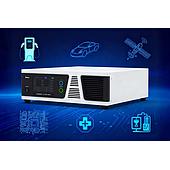
Programmable 3-phase AC power supplies generate configurable three-phase power for controlled, repeatable testing. Typical uses include industrial drives, EV power electronics, renewable energy systems, grid-disturbance simulation, quality assurance, and research.
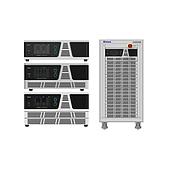
Programmable AC test power supplies help production lines evaluate switching power supplies under controlled input voltage changes, sags, interruptions, and automated test sequences.

Anti-static torque tools are designed to control static charge on production tools through a continuous ground path. They complement personnel controls in microelectronics assembly, where ESD may cause immediate or latent semiconductor damage.
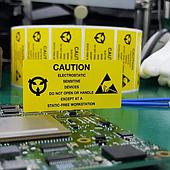
ESD-safe torque tools address static-charge risks that can affect sensitive electronic assemblies. Grounded, conductive tool designs support ESD control while applying the required fastening torque.
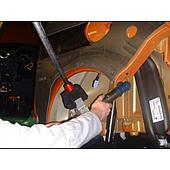
Assembly ergonomics starts with workstations that accommodate different operators. Torque arms can position compatible electric or pneumatic tools perpendicularly to help limit side loading and cross-threading.

High-volume assembly benefits from consistent torque control, ergonomic support, lower-noise tools, soft-stop fastening for delicate joints, and durable brushless tool designs.

Artificial intelligence is rapidly shifting from theory to operational systems. The continuous emergence of large language models, intelligent robots, and autonomous vehicle technologies has caused a surge in global demand for computing power
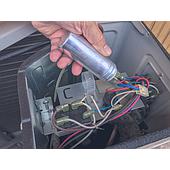
The capacitor labels indicated a 10-year lifespan, yet after just two years of service, the casings began to bulge; some even exploded, accompanied by a popping sound and a burnt odor that permeated the electrical room. The maintenance team would install replacements, only for the exact same issue to recur a few months later. This cycle repeated multiple times before anyone finally questioned whether the failures were due to the capacitors reaching the end of their service life or because they were being subjected to conditions beyond their original design specifications.

According to balanced three-phase circuit theory, the neutral current should ideally be zero or negligible compared to the phase current. Yet, technicians frequently discover during inspections at electrical panels that the neutral wire is extremely hot, with measured neutral currents sometimes even exceeding the current in individual phase wires. This is neither a rare occurrence nor a measurement instrument error; rather, it indicates that the system's loads are non-linear, generating harmonics that traditional conductor sizing methods fail to account for
인증된 전문가에게 직접 연결