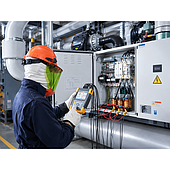
Before contacting the material, a handheld soldering iron mainly heats the soldering tip. Once soldering begins, heat is continuously transferred from the tip to the material. If the heat supply is not sufficient to compensate for heat loss, the temperature at the contact area drops and the processing time increases.
Fast Heating Does Not Mean Fast Heat Transfer
The time required for a soldering iron to reach the set temperature after being switched on only reflects its initial heating capability.
When the soldering tip contacts the material, part of its thermal energy is immediately transferred away. The larger the material, the higher its thermal conductivity, or the wider the area that needs to be heated, the more heat is drawn from the tip.
At this point, the machine's performance depends on its ability to maintain temperature under load. Therefore, two soldering irons that both reach 400°C can still deliver different processing speeds.
The Soldering Tip and Material Affect Heat Transfer
Higher power does not automatically mean faster soldering. Heat must first pass through the soldering tip before being transferred to the material.
The shape, material, size, and mass of the tip directly affect this process. A tip that is too small has a limited contact area, while a tip that matches the working area can transfer heat more effectively. A metal component with high thermal conductivity will draw heat away from the tip faster than a small component or a material with low thermal conductivity.
Therefore, even when using the same machine at the same temperature, changing the soldering tip or material can significantly affect processing time.
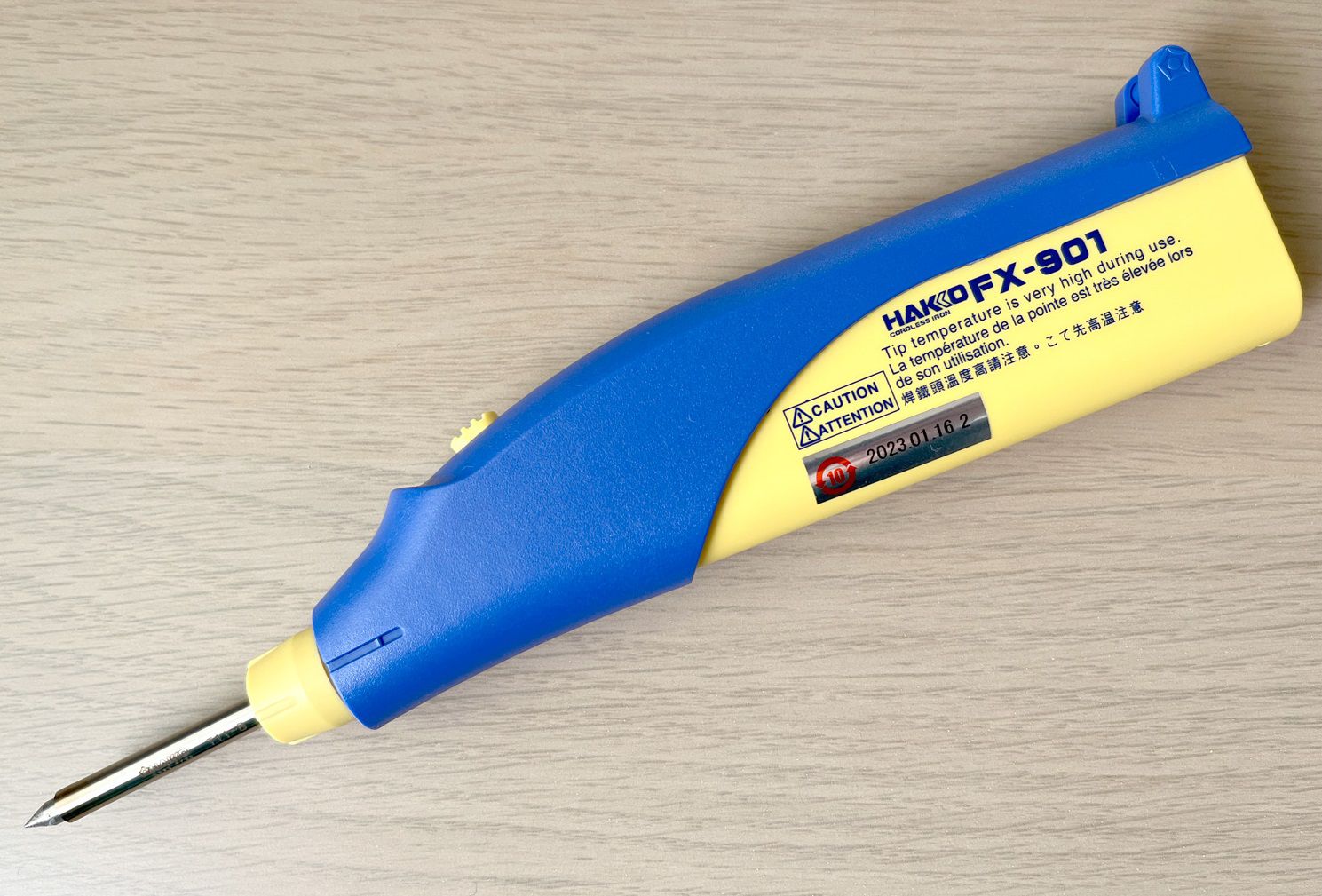
HAKKO FX-901 Cordless Soldering Iron
Heat Recovery Determines Speed During Continuous Operation
After transferring heat to the material, the soldering tip may experience a temperature drop. The machine must quickly supply additional energy to bring the tip back to its operating temperature.
A soldering iron with good heat recovery reduces waiting time between successive operations. Conversely, if the tip takes a long time to recover, continuous soldering will remain slow even if the machine has a very short initial heating time.
The ability to maintain temperature under load is a more direct indicator of heating performance during actual operation.
Should You Increase the Temperature to Solder Faster?
Increasing the temperature is not always the right solution when a soldering iron operates slowly.
If the problem is caused by insufficient heat transfer, an unsuitable soldering tip, or poor heat recovery, increasing the set temperature will not address the underlying issue. Excessively high temperatures can also accelerate oxidation and shorten the service life of the soldering tip.
When evaluating the speed of a handheld soldering iron, it is better to consider the entire heating process:
Power → heating speed → heat transfer → temperature drop under load → heat recovery speed.
A practical test should also be performed using the same temperature setting, the same type of soldering tip, and the same material. This allows the machine to be evaluated based on processing time and temperature stability rather than simply its maximum temperature.
Heating speed is only the first step. The actual performance of a soldering equipment depends on the entire system, from the heating element and temperature control system to the soldering tip and the material being worked on.