Depth detection only reflects part of a device's capability. The signal reception and processing process is what determines its ability to identify targets under varying conditions.
Therefore, the technology used inside metal detectors is receiving increasing attention. VLF and Multi-IQ are currently the two most popular directional approaches, each with its own characteristics regarding signal processing and suitable operating environments.
How does VLF technology work?
VLF (Very Low Frequency) is a technology found in most metal detectors today. Its operating principle is based on transmitting a signal at a specific frequency and continuously receiving feedback from the environment below ground.
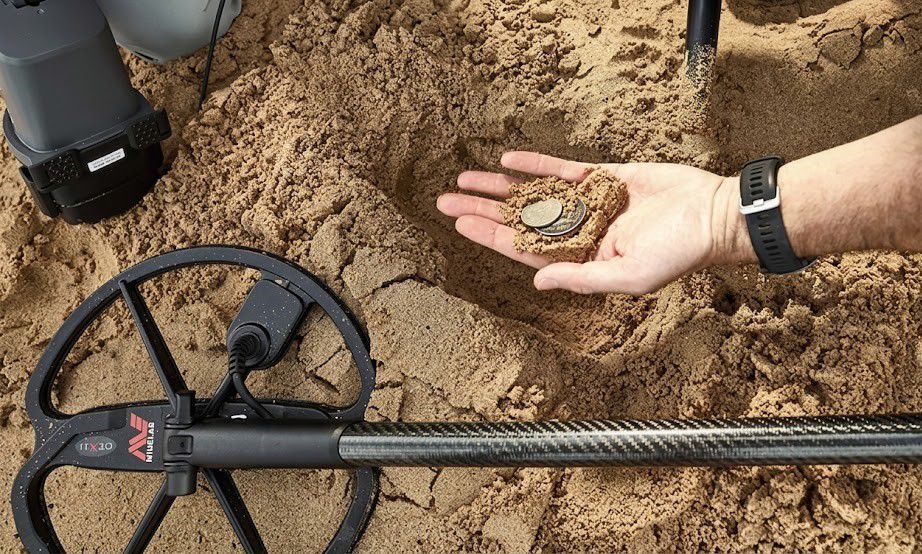
When a metal object is encountered, the reflected signal changes and is processed by a processor into sound or data displayed on a screen. The entire process occurs continuously throughout the detection period.
The major advantages of VLF lie in its stable operation, user-friendly interface, and reasonable investment cost. Areas such as gardens, parks, farmland, or terrain with low mineralization levels are often suitable environments for this technology to be effective.
However, the device operates on only a single frequency band at any given time. Some frequency bands are highly sensitive to small objects like coins or jewelry. Other frequency bands are more suitable for larger targets or those located deeper underground.
How does Multi-IQ differ from VLF?
VLF uses a single operating frequency at a time. Multi-IQ utilizes multiple frequency bands simultaneously and processes data concurrently on the same target.
Each frequency band can be envisioned as providing a separate layer of data about the object located underground. When multiple frequency bands operate simultaneously, the amount of information obtained is significantly greater than using only a single data source.
This gives the device a better basis for evaluating reflected signals, differentiating targets, and reducing the impact of surrounding interference. Object recognition capabilities also become more flexible when working with various types of targets of different sizes and characteristics.
This approach has led to the increasing appearance of Multi-IQ in mid-range and high-end metal detectors, especially in devices geared towards in-depth detection needs.
In what environments does Multi-IQ demonstrate its advantages?
The differences between the two technologies are often most apparent in areas with complex geological conditions.
Basaltic red soil, mineral-rich clay, high-salinity beaches, or areas with high concentrations of metals in the soil all generate a larger than normal amount of background signal. The processor must constantly determine which signals are coming from the actual target and which are originating from the surrounding environment.
The richer the data, the more accurate the target assessment. This is a significant advantage of Multi-IQ when working in areas with high mineralization or environments containing many sources of interference.
Many users have reported more stable target identification, a reduced number of misidentifications, and more continuous detection on challenging terrain.
Read more:
Are metal detectors under 10 million VND really sufficient?
Do sandy soils, clay soils, and rocky soils reduce detection depth?
Should you choose Multi-IQ or VLF?
General metal detection tasks in areas with simple geological conditions can be easily handled by VLF detectors. Reasonable investment costs and ease of use remain significant advantages of this technology.
Those who frequently work in diverse terrains tend to be more concerned with the adaptability of the equipment. This is where Multi-IQ demonstrates its value thanks to its ability to process multiple frequency bands simultaneously and maintain signal stability.
Before comparing detection depths or technical specifications, understanding the technology being used will help in selecting a metal detector that is more suitable for the actual working environment and specific detection goals.