

2026年10月16日 17時22分08秒
Proactively controlling CO concentrations with CO gas detectors requires a systems-based engineering approach, from optimizing combustion chambers to establishing continuous automated monitoring infrastructure.
Proactively controlling CO concentrations with CO gas detectors requires a systems-based engineering approach, from optimizing combustion chambers to establishing continuous automated monitoring infrastructure.
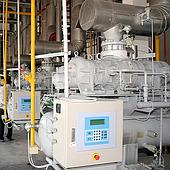
Managing refrigeration systems using ammonia (NH3) aims to minimize the risk of poisoning, fires, and explosions, ensuring occupational safety and system operation
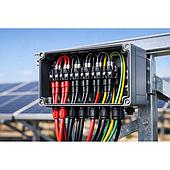
The string of solar panels has been isolated, and the technician has completed the Lockout/Tagout (LOTO) procedure; he now stands before a combiner box, clamp meter in hand. A few hundred meters away, a bolt of lightning strikes an open patch of ground—missing the solar panels entirely. Yet, through the very conductor he is currently testing, a voltage surge of several thousand volts has just flashed by in less than a millisecond
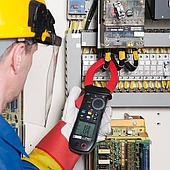
In a solar power plant, the most dangerous moment is not when the system is operating at full capacity. Rather, it occurs just before a technician disconnects a connector, replaces a fuse, or opens an inverter cabinet even after the solar string has been isolated
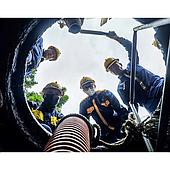
Confined space environments frequently accumulate hazardous gases originating from organic decomposition or long-term chemical reactions. Therefore, strictly adhering to the minimum 3-minute air testing procedure using a Portable Gas Detector is considered a mandatory safety requirement to protect workers' lives.
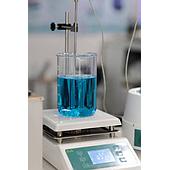
Deciphering motor mechanics, PID closed-loop control, and magnetic-coupling physics for suspended cell samples and shear-sensitive solutions.
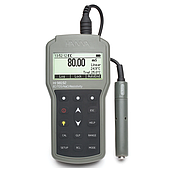
By mastering degradation mechanisms and implementing proper maintenance techniques, technicians can fully restore electrode sensitivity, ensuring stable equipment operation and significantly extending replacement cycles.

Many laboratories still rely on older-generation hotplates equipped with mechanical control knobs, the markings on which have long since faded. Technicians are often forced to stand by and constantly monitor temperatures; samples are frequently prone to localized overheating which compromises the accuracy of analytical results while the risk of spilled solvents seeping into the control circuitry poses a constant threat of equipment failure. In recent years, there have been significant advancements in microprocessor technology, heating plate materials, and magnetic stirring systems. This article addresses all technical questions to consider when evaluating the replacement of such equipment
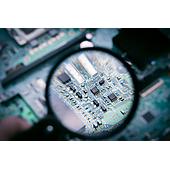
Power integrity requires more than applying simple decoupling-capacitor rules of thumb. As IC processes reach gigahertz levels, lower-speed circuitry also needs more careful consideration.
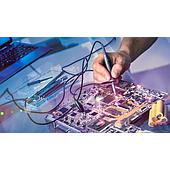
Power electronics and power integrity aim to deliver suitable voltages, currents, and noise characteristics, yet differences in tools, vocabulary, and figures of merit can hinder alignment.
直接联系认证专家