
2026年10月14日 16時09分27秒
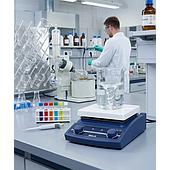
Solution for standardized experimental temperature control, featuring a premium chemical-resistant, ceramic-coated aluminum top plate from DaiHan Scientific (South Korea)
Solution for standardized experimental temperature control, featuring a premium chemical-resistant, ceramic-coated aluminum top plate from DaiHan Scientific (South Korea)
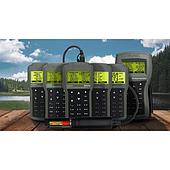
Strictly controlling water environment parameters—from farming to preliminary processing—is not only a technical requirement to overcome technical barriers to trade (TBT) and sanitary and phytosanitary (SPS) measures, but also the key to protecting corporate reputation.
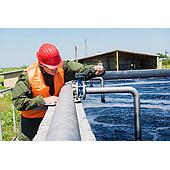
This article addresses various questions in turn, covering whether conversion is permitted, how to establish the K-factor, when the factor ceases to be valid, and which equipment is suitable
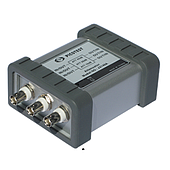
Output impedance testing connects a J2111A current injector and probe to an LM117 output; small-signal load steps use an AWG and no injector bias current.
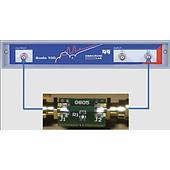
A 2-port shunt-through setup with the Bode 100 uses Gain/Phase mode, a 50 Ohm termination on Ch2, Thru calibration, and a logarithmic sweep to read impedance and estimate inductance.
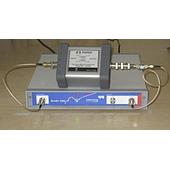
PDN measurement commonly relies on a vector network analyzer. The source distinguishes 1-port measurement for higher impedance from 2-port shunt-through measurement for very low impedance, while noting that instrument cost can affect the approach.
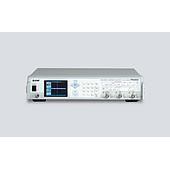
An FRA is commonly used for transfer functions and power-supply control loops. A VNA provides port-based S-parameter, reflection, and calibrated impedance measurements for more complex RF and interconnect work.
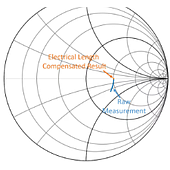
A vector network analyzer can help characterize passive components, but measurement accuracy depends on the impedance range and method used. A grounded-end approach with port extension and an R + jX marker may have significant error outside a narrow range.
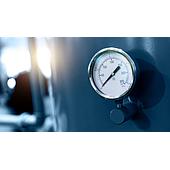
In chemical processing plants, wastewater treatment facilities, oil & gas operations, and food production, selecting the wrong material for a pressure gauge often leads to severe consequences: Bourdon tube failure, toxic chemical leaks, equipment breakdown, and serious occupational safety hazards. This article provides practical technical criteria for selecting the correct case and sensor materials when measuring pressure in corrosive environments.

The current situation regarding electroplating wastewater analysis presents challenges: the wastewater contains acids, alkalis, and heavy metals (such as Cr, Ni, and Cu), alongside persistent cyclic organic compounds derived from brightening agents, anti-misting additives, and degreasing solvents. This complex composition causes significant fluctuations in COD levels depending on the specific process stage and production shift. Sending samples to external laboratories results in a delay of several days—by which time the biological treatment tanks or coagulation systems may have already been operating improperly for too long. Utilizing a benchtop COD analyzer on-site reduces this turnaround time to just a few hours, provided the user fully understands the specific sources of error associated with electroplating wastewater
直接联系认证专家