
2026年07月22日 16時37分40秒
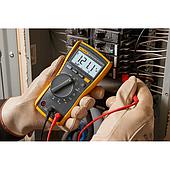
Frequently Asked Questions about using a multimeter: measuring current, selecting the measurement range, measuring diodes, MOSFETs, inverters, PLCs, and 4-20mA signals.
Frequently Asked Questions about using a multimeter: measuring current, selecting the measurement range, measuring diodes, MOSFETs, inverters, PLCs, and 4-20mA signals.
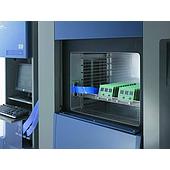
Automotive circuit boards, sensors, modules, and plastic components can all experience issues after repeated transitions between cold and hot environments. A thermal shock chamber operating from -40°C to +150°C enables the replication of these temperature fluctuations under controlled testing conditions.
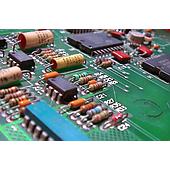
An electronic component may operate stably under constant temperature conditions yet fail after repeated rapid transitions between hot and cold. The issue typically stems not from a specific temperature level, but rather from the rate of temperature change and the number of hot-cold cycles

Electrical safety is consistently one of the primary criteria evaluated before electrical or electronic equipment—or industrial components—are released to the market. A product may operate reliably yet still fail to meet requirements if its insulation lacks sufficient durability, its grounding resistance exceeds permissible limits, or leakage current occurs during operation.
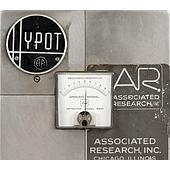
When it comes to electrical safety testing equipment specifically Hipot testers—many QA/QC and testing engineers are familiar with the globally renowned brand Associated Research. A subsidiary of the parent company IKONIX, Associated Research (ARI) invented the world's first commercial Hipot tester.
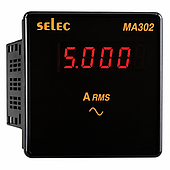
Voltmeters are almost invariably found on the panels of electrical cabinets in factories, power stations, or generator systems. A glance lasting just a few seconds allows an operator to determine whether the power supply is stable or showing signs of abnormality. However, not everyone understands the significance of the displayed readings, particularly regarding three-phase electrical systems.
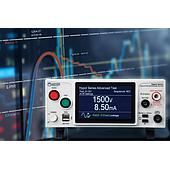
Few people realize that the concept of the "Hipot Test"—or electrical safety testing—has long existed within the electrical equipment manufacturing industry. Driven by the growing need to verify the voltage withstand capabilities of conductors, motors, and electrical devices, the industry required a robust and virtually fail-safe method to detect insulation weaknesses before products reached the market.
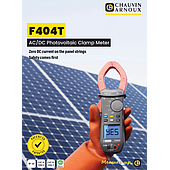
The Chauvin Arnoux F404T clamp meter measures up to 1500 A DC and 1700 V DC while featuring patented AutoCheck technology, providing a safer and more reliable testing solution for photovoltaic (PV) systems.
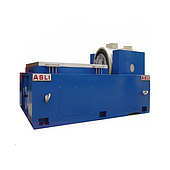
A device may operate stably for months, yet suffer cracks, broken solder joints, or snapped component leads after being transported. What surprises many engineers is that the vibration amplitude during transport is no greater than usual. The root cause lies in a specific frequency range where the product's structure absorbs energy most intensely, triggering resonance and causing continuous stress concentration at a single point.
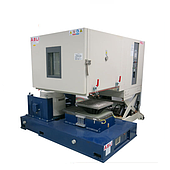
Một kiện hàng gần như không bao giờ bị rơi ngay khi vừa rời khỏi nhà máy. Quãng đường hàng trăm kilomet trên xe tải, container hay băng chuyền mới là giai đoạn diễn ra đầu tiên, nơi bao bì liên tục chịu rung lắc trong nhiều giờ. Chỉ sau đó mới đến những cú va chạm khi bốc xếp, giao nhận hoặc rơi ngoài ý muốn.
直接联系认证专家