How High CO2 Levels in Sealed Classrooms Affect Students, How to Measure It, and Where to Correctly Install Sensors
Classrooms house dozens of students sitting closely together. During hot weather, air conditioning is turned on and doors remain tightly closed, causing exhaled CO2 to accumulate rapidly. This guide sequentially answers key technical questions raised by school administrators, teachers, parents, and facility managers ranging from impacts on student performance and critical CO2 monitoring thresholds to proper sensor selection and installation.
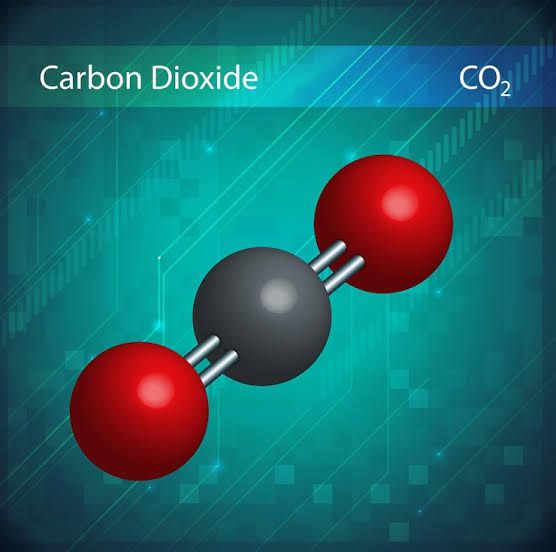
Does Elevated CO2 Cause Drowsiness, Inattention, and Reduced Academic Performance in Students?
Yes. Common symptoms include frequent yawning, lethargy, irritability, and mild end-of-period headaches. Direct classroom empirical studies record reduced concentration, increased fatigue, and higher error rates among students when indoor CO2 concentrations rise. An experiment involving 7th graders performing letter-word sorting tasks showed a marked decline in correct answers and an increase in errors when CO2 exceeded 2,000 ppm compared to baseline levels below 1,000 ppm.


Teachers can identify early warnings through three indicators: stuffy room odor after roughly half a class period, students frequently yawning and asking to step outside, and parents reporting end-of-day headaches—particularly in crowded, sealed classrooms.
What CO2 Concentration Level Exceeds Safety Thresholds, and Why Do Classrooms Spikes Faster Than Offices?
The 1,000 ppm mark is widely adopted as a baseline standard for evaluating adequate room ventilation. Outdoor ambient air averages ~400 ppm in clean areas and ~500 ppm in urban environments. Exceeding 1,000 ppm signals an immediate need to review fresh air supply rates.
Classroom CO2 rises significantly faster than in office environments due to higher occupant density per unit area. ASHRAE 62.1 ventilation standards specify default classroom occupant densities of 25 to 35 people per 1,000 ft² of floor area, compared to just 5 people per 1,000 ft² in offices—a 5x to 7x multiplier. For a typical 40-student classroom occupying a 50 m² space with 3.3 m ceiling height, sealed doors can cause CO2 levels to reach 1,000 ppm in just 10 to 20 minutes.

Empirical measurements are often higher than expected. In a full-scale model classroom holding 35 students (170 m³ volume) without mechanical ventilation, average CO2 reached 2,150 ppm with peak concentrations touching 2,740 ppm. Other studies on 5th-grade classrooms recorded 1,900 to 3,300 ppm following the first morning class period.
How Much Fresh Air Delivery Is Required for a Classroom?
For educational classrooms, ASHRAE Standard 62.1 mandates 5 liters per second (L/s) per person plus 0.6 L/s per square meter of floor area. This two-part formula addresses exhaled breath dilution via occupant headcount while diluting off-gassing emissions from furniture, paint, and educational supplies via floor area.
Applying this to a 40-student classroom over 50 m², the minimum required fresh air supply equals (40 × 5) + (50 × 0.6) = 230 L/s, or approximately 830 m³/h. This aligns with empirical testing where a 35-student classroom supplied with 800 m³/h maintained an average CO2 level of 962 ppm (peaking at 1,380 ppm). These represent minimum baselines; higher occupancy or smaller footprints demand increased airflow rates.
Related Article: How Inadequate Fresh Air Supply Harms Offices, Which Metrics to Measure, and How to Resolve It?
Is Opening Doors During Recess Sufficient to Restore Healthy CO2 Levels?
No, it is insufficient. A field survey of typical school facilities demonstrated that despite opening doors between class periods, indoor CO2 continuously exceeded 2,100 ppm. The underlying mechanics are straightforward: CO2 accumulates continuously over a 45-minute lesson, whereas a brief multi-minute recess cannot evacuate accumulated gas volumes.
Ceiling fans also fail to resolve the core issue, as fans merely circulate existing indoor air without introducing outdoor fresh air. More effective methods involve simultaneous cross-ventilation via opposing doors and windows, supplemented by exhaust or supply fans. Air-conditioned, sealed classrooms should employ Heat Recovery Ventilation (VAM) units to supply pre-cooled fresh air. Schools adjacent to major thoroughfares require fine particle intake filtration to prevent outdoor dust ingress.
Which Sensor Type Is Recommended for Classroom CO2 Measurement?
Nondispersive Infrared (NDIR) sensors are strongly recommended, as they directly measure CO2 molecules via infrared absorption. Lower-cost eCO2 devices merely estimate CO2 values from Volatile Organic Compounds (VOCs), yielding inaccurate readings unsuitable for ventilation monitoring.
A suitable classroom instrument should feature a minimum measurement range of 400 to 5,000 ppm, accuracy within a few dozen ppm, a clear display or status LED visible from the back of the room, threshold alarm capability, and data-logging functions for retrospective export. Integrated temperature and relative humidity sensing is highly advantageous, as all three metrics govern thermal comfort.
Explore CO2 monitors and indoor air quality instruments distributed officially by EMIN.
Where Should CO2 Sensors Be Installed, at What Height, and How Many per Room?
Standard classrooms typically require a single sensor installed on a side or rear wall at a height of 1.1 to 1.5 meters—corresponding to the breathing zone of seated students. Larger spaces, such as lecture halls, laboratories, or computer rooms, require two sampling points for spatial comparison.
Placement location dictates measurement accuracy. Sensors must be mounted at least 2 meters away from windows, doors, supply air grilles, and fans. Avoid placing sensors directly in front of seated students to prevent direct exhaled breath from causing artificial reading spikes. Avoid unventilated high-ceiling corners and direct solar exposure.
Regarding threshold configuration, many institutions set green indicators for <800 ppm, yellow for 800–1,200 ppm, and red for >1,200 ppm. Teachers opening windows/activating exhaust fans upon yellow alerts, or pausing class briefly upon red alerts, maintain healthy environments. NDIR sensors experience baseline drift over time; models with Automatic Baseline Calibration (ABC) assume minimum multi-day levels equal ~400 ppm, whereas continuously occupied rooms should undergo annual calibration checks using reference instruments.
What Are the Key Steps in a School Ventilation Audit and Improvement Workflow?
For educational administrators, empirical datasets address parental inquiries with objective evidence rather than subjective estimates. For engineering contractors, pre- and post-audit metrics provide verifiable proof of investment efficacy.