Many factories invest in combustible gas detection systems expecting continuous safety protection, only to find within a few months that the sensors have gone "blind"—displaying 0% LEL even when gas is actively leaking into the area. When this failure occurs without triggering an alarm, the risk of fire or atmospheric explosion escalates significantly.
This silent loss of sensitivity typically stems from selecting the wrong sensing principle for the local chemical composition and atmospheric conditions. To effectively deploy equipment from our fixed gas detectors catalog, M&E engineers and HSE teams must understand the mechanisms behind catalytic sensor poisoning and identify the appropriate alternative technologies for each operating environment.
Key Takeaways for Early Identification:
Catalytic bead sensors rely on oxidation reactions across a catalyst surface; exposure to silicone vapors, sulfur compounds, lead, or oxygen-deficient atmospheres (<10% Vol) causes permanent sensitivity loss or inhibits the measurement reaction.
1. Catalytic Bead Sensor Poisoning Mechanisms and Causes of Sensor "Blindness"
Catalytic bead sensors operate on the Wheatstone bridge principle: combustible gas diffuses through a flame arrestor onto a heated catalyst-coated platinum coil, triggering an oxidation reaction that raises temperature and alters electrical resistance. This mechanism requires an unobstructed catalyst surface and sufficient ambient oxygen to sustain stable combustion.
When a plant environment contains silicone vapors (from mold release agents, silicone sealants, specialty lubricants, or coatings), silicone molecules decompose at high temperatures on the catalyst surface and form an inert silica crust. This coating seals off active sites, preventing combustible gas from reaching the catalyst and causing severe sensitivity loss—often resulting in a 0% LEL reading even as ambient gas concentrations climb.
Similarly, sulfur compounds (such as H2S, mercaptans, and SO2), lead-containing compounds (such as fuel additives and organometallic compounds), and halogenated vapors cause chemical poisoning that progressively degrades the catalyst's oxidizing capacity. Furthermore, in oxygen-deficient environments (<10% Vol)—commonly found in nitrogen-purged tanks, confined vaults, or chemical reaction zones—catalytic oxidation lacks sufficient oxygen to complete, producing negative errors or failing to reflect actual gas concentrations.
2. Transitioning to NDIR Sensors for Hydrocarbons and Electrochemical Sensors for Toxic Gases
When production areas contain catalyst poisons or low oxygen levels, repeatedly replacing catalytic sensors only drives up maintenance costs and creates safety gaps. The definitive engineering solution is switching to measurement technologies that do not depend on surface combustion.
For hydrocarbon gases (such as Methane CH4, Propane, Butane, Ethane, or hydrocarbon solvent vapors), non-dispersive infrared (NDIR) sensors offer superior performance. NDIR technology measures infrared absorption at wavelengths specific to target gas molecules, making it completely immune to poisoning from silicones, sulfur, or lead, while operating reliably in oxygen-deficient atmospheres or sustained high gas concentrations without saturating like catalytic beads.
For toxic gases (such as CO, H2S, NH3, and Cl2) or oxygen level monitoring, electrochemical sensors provide high selectivity, strong linearity at low concentrations (ppm), and low power consumption. Clearly separating flammability monitoring (%LEL) using NDIR for hydrocarbons from toxicity or asphyxiation monitoring using electrochemical sensors ensures accurate alarms, minimizes false triggers, and eliminates silent sensor blindness.
| Sensor Technology | Resistance to "Blindness" Agents | Best-Fit Applications |
|---|---|---|
| Catalytic Bead | Vulnerable to poisoning from silicone vapors, sulfur, and lead; degrades below 10% Vol O2. | Clean combustible gases free of catalyst poisons in standard oxygen environments. |
| Non-Dispersive Infrared (NDIR) | Immune to silicone, sulfur, and lead poisoning; independent of oxygen concentration. | Hydrocarbon gases (CH4, LPG, solvent vapors), contaminated zones, or low-O2 spaces. |
| Electrochemical | High target gas selectivity; requires adherence to operating humidity and cell lifespan specs. | Toxic gases (CO, H2S, NH3, Cl2) and ambient oxygen monitoring. |
3. Selecting Compatible Fixed Gas Detectors on EMIN
When upgrading or designing new gas monitoring lines for a plant, engineers should review all airborne chemicals present on site to select compatible sensor configurations and control panel signal interfaces.
Combustible and Toxic Gas Monitoring with Industrial System Integration
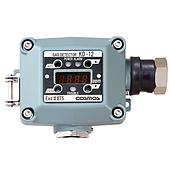
For locations requiring high-stability fixed transmitters with straightforward signal wiring to central controllers, Cosmos KD-12B fixed gas detector is reliable options when configured with the appropriate sensor type for each gas hazard.
Harsh Plant Environments and Explosion-Proof Requirements
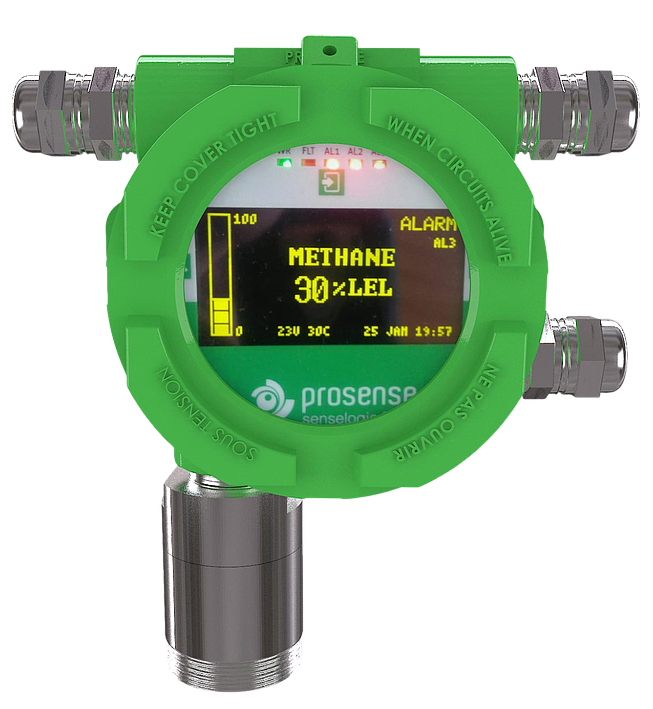
In chemical processing areas, gas filling stations, or workshops with ignition hazards, pairing explosion-proof enclosures with Prosense P-Series fixed gas detector enhances mechanical durability and supports continuous operation in heavy industrial environments.
4. Periodic Inspection Procedures to Detect Early Sensor Degradation
Even after transitioning to NDIR or electrochemical sensors, facilities must maintain scheduled bump tests using certified calibration gas rather than relying solely on a 0% LEL display reading. Whenever abnormally slow response times or post-calibration drifts exceeding tolerance limits appear, technicians should immediately investigate local contamination sources to resolve the root cause before the system loses its warning capability.
Need help choosing the right NDIR, electrochemical, or catalytic sensor for your facility?