
For full functionality of this site it is necessary to enable JavaScript.
EMIN.VN
0

What ORP index in water is good for health?

04/28/2025 09:34:12

When it comes to assessing water quality, the ORP index is always of interest. But what is ORP really, what does it mean, how much is considered good and how to check this index most accurately! The article below will explain everything to you.

What is ORP index?

ORP - Oxygen Reduction Potential is an index that reflects the oxidation-reduction capacity of water, simply understood as the ability of water to donate or receive electrical charges from oxidizing substances present in it. This index can have either a negative (-) or positive (+) value and is measured in millivolts (mV).
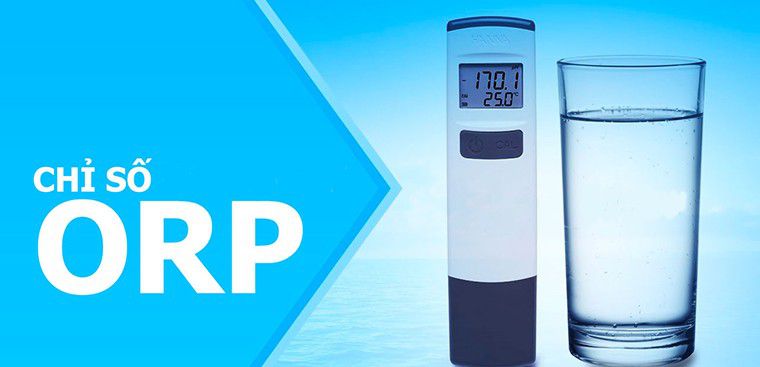
In the process of assessing water quality, ORP and pH are always considered two key factors. There is also a very close relationship between these two values:

When ORP is negative, the water exhibits strong reducing properties, the pH will be higher, and the water will be more alkaline. Conversely, if ORP is positive, the water has stronger oxidizing properties, and the pH will decrease, causing the water to become more acidic. Nowadays, to meet the demand for quicker and more convenient measurements, many pH meters have been integrated with ORP measurement functions, allowing users to easily monitor both indices simultaneously.

Reference: Measure ORP with an Oxidation Redox Meter?

What should the standard ORP level in water be?

The ORP index has long been considered an important factor in evaluating water quality. But specifically, at what level is ORP truly suitable, safe, and beneficial for health?

According to recommendations from the World Health Organization (WHO), a good ORP level for the human body should be below -500mV. Several scientific studies have also shown that the more negative the ORP value, the greater the health benefits. Water with a highly negative ORP can support the process of cellular rejuvenation and reduce the risk of diseases related to oxidation and aging, such as diabetes and cancer.
The reason is that when water has a negative ORP, it possesses strong reducing properties, helping to donate electrical charges to neutralize free radicals in the body. This process plays an important role in enhancing oxygen supply, supporting detoxification, and contributing to strengthening the body's natural immune system.

Today, research and application of ORP have been expanded into many fields, especially in healthcare and wellness with therapies using water rich in reducing properties, and in agriculture such as hydroponics and aquaculture, to create a better environment for natural development.

To measure the ORP index, you can refer to the following methods: What are the ways to make the redox meter achieve safety index?

Related Posts: What is an ORP oxidation reduction machine? What is the safe ORP oxidation reduction index in a water purifier?


Related News

The scent of new wood in a newly handed-over apartment: How to measure and address formaldehyde (HCHO) levels before moving in
11/14/2026 10:28:19

Many people refer to the pungent, acrid odor that emerges when opening a new cabinet as the "smell of new wood," assuming it will simply dissipate after a few days. In reality, however, what is being released could well be formaldehyde—a substance originating from the adhesives used in the pressed-wood panels—and our sense of smell is not a reliable enough gauge to determine the concentration levels present

Guide to Selecting a TCLP Toxicity Characteristic Leaching Procedure Shaker Configuration in Compliance with QCVN 07:2025/BNNMT and TCVN 9239:2012
11/13/2026 17:23:39

Regulation QCVN 07:2025/BNNMT (replacing QCVN 07:2009/BTNMT and QCVN 50:2013/BTNMT) specifies hazardous waste and sludge thresholds based on leachate concentrations. To ensure that analytical results for heavy metals and organic compounds are accepted during ISO/IEC 17025 or VIMCERTS assessments, laboratories must comply with the Toxicity Characteristic Leaching Procedure (TCLP) specified in TCVN 9239:2012, which is equivalent to US EPA Method 1311

Checking the Temperature of Paint and Coating Surfaces After Curing Using an Infrared Thermometer
11/13/2026 16:11:22

An infrared thermometer allows surface temperature measurement without direct contact, making it suitable for products coming out of curing ovens or surfaces that are difficult to access. However, to ensure reliable results for production quality control, it is important to understand the measurement principle and the factors that affect measurements on painted and coated surfaces.

Crowded Gyms and Yoga Studios: How to Manage Air Quality to Retain Members
11/13/2026 15:07:40

Around 6 or 7 in the evening, the gym becomes packed; the music drowns out the sound of heavy breathing, and the air conditioning runs at full blast behind closed doors. At first glance, everything seems fine: the room is cool, the lights are bright, and the equipment is state-of-the-art. Yet, after just a few sessions, regular members begin to feel a heavy-headedness and find themselves running out of breath more quickly eventually, they simply stop renewing their memberships. No one complains about the personal trainers or the exercise machines. The very thing that makes them feel stifled and drives them away is something entirely invisible: the air inside the room

Stay Updated with Offers

Get exclusive volume discounts, bulk pricing updates, and new product alerts delivered directly to your inbox.

By subscribing, you agree to our Terms of Service and Privacy Policy.

Quick Support

Direct access to our certified experts


