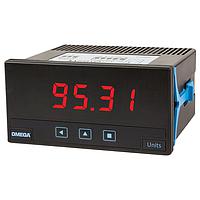
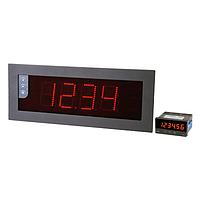
Process Meters
Clear, reliable signal display is essential when operators need to verify process conditions at a glance. In control panels, machinery interfaces, and instrumentation cabinets, Process Meters help translate electrical input signals into readable values that support day-to-day monitoring, adjustment, and troubleshooting.
This category focuses on panel-mounted devices used to display common process signals such as current and voltage. Whether the application involves a 4-20 mA loop, a voltage signal from a transmitter, or a compact display requirement in a DIN cutout, the right meter makes system status easier to interpret and helps reduce ambiguity on the plant floor.
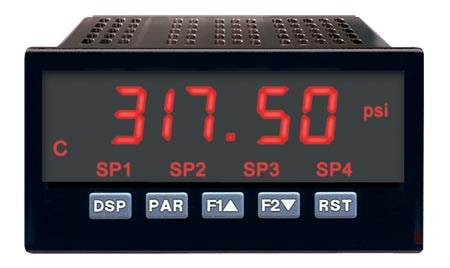
Where process meters fit in industrial measurement systems
In many industrial environments, sensors and transmitters generate analog signals that must be shown locally for operators, technicians, or maintenance teams. A process meter is often installed on the panel door or enclosure front so the measured value can be viewed without connecting a handheld instrument or opening the cabinet.
These devices are commonly used in process control, utilities, HVAC monitoring, OEM equipment, and general factory automation. They are especially useful when a system needs a dedicated local display for loop current, voltage input, temperature-related scaling, pressure indication, or percentage-based process values derived from a transmitter.
Common signal types and display requirements
A practical way to select a meter is to start with the input signal. Many applications rely on 4-20 mA current loops because they are robust in industrial environments and widely used for transmitters. Other systems use low-level or standard voltage inputs such as 0 to 10 Vdc, especially in control and building automation installations.
Display format matters as well. Compact LCD process meters can provide a clear numeric readout while keeping panel space under control. Models in this category also reflect different user preferences for segment color and power arrangement, which can be relevant for visibility, wiring method, and retrofit compatibility.
If your application requires a broader range of local readout devices, you may also want to review panel meters for adjacent display options used across electrical and process monitoring tasks.
Examples from the current product range
Several products in this category illustrate the typical role of compact process display devices. The Dwyer DPMA series includes 3.5-digit LCD panel meters in a 1/8 DIN format, designed for common process signal display. Options such as the DPMA-401 and DPMA-402 are suited to current-input applications, while the DPMA-501, DPMA-502, and DPMA-504 variants address voltage-input use cases.
There are also versions such as the DPMA-401P, DPMA-402P, DPMA-404P, DPMA-502P, and DPMA-504P, which support related installation preferences including different powering approaches and display styles. Across these examples, the overall theme is consistent: compact front-of-panel indication for analog process values with straightforward integration into industrial control systems.
For buyers standardizing around a known instrumentation supplier, the Dwyer brand page can be a useful starting point for comparing related measurement and indication products.
How to choose the right process meter
The first consideration is input compatibility. Match the meter to the signal coming from the field device or controller: current-input models for 4-20 mA loops, and voltage-input models for signals such as 0 to 5 Vdc or 0 to 10 Vdc. This step is fundamental, because signal mismatch can make scaling and commissioning unnecessarily difficult.
The second consideration is power and installation. Some applications prefer loop-powered designs to simplify wiring, while others use separately powered DC meters. Panel cutout size, terminal style, and whether the device will be snap-in mounted or clamp mounted can also affect the selection, especially in retrofit projects where enclosure space is already fixed.
Finally, think about readability and labeling. A meter may display engineering units such as °F, °C, %, or psi depending on the configuration and intended use. In practice, that makes it easier to align the front-panel display with the variable being monitored, reducing operator confusion during routine checks.
Typical applications for process meters
These meters are often used wherever a transmitted analog signal needs a local numeric indication. Examples include pressure transmitters on skid systems, humidity or temperature signals in environmental control panels, pump and flow monitoring loops, and machine panels that need a dedicated display without adding a full HMI.
They are also useful in maintenance-friendly designs where technicians need immediate confirmation that a loop is active and scaled correctly. A simple local display can speed up commissioning, simplify fault isolation, and provide confidence that the transmitter, controller, and wiring are all working together as intended.
When the application is centered more specifically on local indication rather than broader meter functionality, related process indicator products may also be worth comparing.
Related instrumentation context
Process meters are part of a wider instrumentation ecosystem that includes transmitters, indicators, and environmental measuring devices. For example, the Dwyer EMMA multifunction environmental meter is not a panel process meter, but it highlights the broader need to measure and verify variables such as temperature, humidity, airflow, sound, and light during setup, inspection, or facility assessment.
That distinction is important: handheld multifunction instruments support spot checks and diagnostics, while panel-mounted process meters provide a fixed, always-available display in the operating environment. In many facilities, both approaches complement each other rather than replace one another.
Applications focused primarily on thermal variables may also benefit from exploring temperature meters and indicators for more specialized local readout requirements.
What buyers often compare before ordering
In B2B purchasing, the comparison usually comes down to a few practical details: signal type, power method, display color, enclosure fit, and how the meter will be read by operators. Accuracy, update rate, and operating environment are also relevant, especially when the display is part of a critical monitoring point.
Buyers may also compare whether the unit is intended for basic readout or for a more defined process indication role within a control architecture. If you are narrowing down alternatives within this category, it helps to identify the source signal first, then confirm installation constraints, and only after that compare display preferences and front-panel presentation.
Choosing a process meter with confidence
The right process meter should fit the signal, the panel, and the operator’s need for clear local visibility. For many applications, a compact LCD meter with support for standard current or voltage inputs is enough to provide dependable front-panel indication without adding unnecessary complexity.
As you compare options in this category, focus on how the meter will be wired, what variable it needs to represent, and how it will be used during operation and maintenance. That approach usually leads to a more suitable selection than choosing by format alone, especially in industrial environments where readability and compatibility matter just as much as specifications.
Get exclusive volume discounts, bulk pricing updates, and new product alerts delivered directly to your inbox.
By subscribing, you agree to our Terms of Service and Privacy Policy.
Direct access to our certified experts