Power Conditioning
Stable electrical power is essential for control cabinets, process equipment, communication networks, and sensitive industrial electronics. In real-world installations, voltage fluctuations, short interruptions, inrush events, and power quality issues can lead to nuisance trips, communication faults, or unplanned downtime. Power Conditioning products are used to improve supply stability, protect connected loads, and support more reliable operation across industrial environments.
Within this category, buyers will typically find solutions for managing short-term voltage disturbances, supporting continuity on DC control power lines, and integrating power control hardware into broader automation systems. The range also includes supporting modules and interface components that help adapt a power architecture to different control strategies or fieldbus requirements.
Where power conditioning fits in an industrial system
Power quality problems are not limited to complete outages. Many failures are caused by brief dips, switching transients, overloaded circuits, or instability on the DC side of an automation panel. In these cases, power conditioning helps bridge short disturbances, smooth operation, and protect equipment that depends on clean and consistent power.
This makes the category relevant in machine building, process lines, building automation, and infrastructure projects where PLCs, HMIs, sensors, relays, and communication devices must remain stable. Depending on the application, engineers may combine these products with DIN rail power supplies or backup solutions such as UPS systems when longer ride-through time is required.
Typical product roles inside the category
This category is broader than a single device type. Some items are designed for short-term buffering of a 24 VDC control supply, helping the system ride through brief interruptions without resetting controllers or field devices. A good example is the SIEMENS SITOP buffer module family, including models such as 6EP42978HB000XY0 and 6EP42317HB000AX0, which are suited to DIN rail installations and are commonly used in control panels.
Other products in the category serve as power control assemblies for industrial heating or process control applications. Advanced Energy THYRITOP and Thyro-A related products listed here illustrate that power conditioning can also include controlled power delivery, modular assemblies, and communication-ready components used in more specialized systems.
There are also accessory and expansion elements such as plug-in cards for Profibus or DeviceNet, as well as bus modules. These parts are important because a power solution often needs to fit into an existing automation architecture rather than operate as a standalone device.
Featured manufacturers and solution context
Advanced Energy is strongly represented in this category with THYRITOP, Thyro-A, bus module, and communication plug-in card entries. These products are relevant when a project requires controlled power handling, integration with industrial networks, or modular expansion around a larger thermal or process power system.
SIEMENS appears here with SITOP buffer modules that support control power continuity in 24 VDC applications. This type of solution is especially useful when brief supply interruptions would otherwise restart PLCs, interrupt communications, or destabilize sensors and actuators.
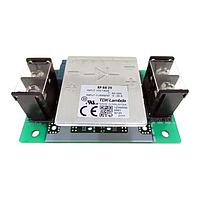
Bel Power Solutions is also represented with a high-power conditioning product, showing that the category can extend beyond panel-level buffering into broader power conversion and conditioning roles. The overall mix of products indicates that selection should be based on system function first, rather than assuming every item serves the same purpose.
How to choose the right power conditioning product
The first step is to identify the electrical problem you need to solve. If the objective is to maintain a 24 VDC control circuit through short interruptions, a buffer module may be the right fit. If the application involves controlled AC power delivery for heaters or process loads, a thyristor-based or dedicated conditioning assembly may be more appropriate. If network compatibility matters, communication modules and bus accessories should be considered at the same time as the main device.
Mounting method, voltage level, operating environment, and integration requirements should all be reviewed before ordering. For example, DIN rail mounting is often preferred in compact control panels, while operating temperature range may matter in outdoor enclosures or hot production areas. It is also important to evaluate whether the installation needs only conditioning or whether it should be paired with DIN rail mount isolated DC/DC converters to support voltage conversion and isolation in the same cabinet.
Examples from the current range
Several listed Advanced Energy products highlight the modular and application-specific nature of this category. Items such as 8000011180, 8000011177, and 8000011179 are THYRITOP assembly variants, while 8000009314 and 2000745106 reflect Thyro-A related power conditioning solutions. These are best understood as components within a controlled power system rather than generic panel accessories.
On the DC control side, SIEMENS models 6EP42978HB000XY0 and 6EP42317HB000AX0 represent buffer modules designed for short-term support of 24 VDC loads. The listed DIN rail mounting format and industrial operating temperature ranges make them relevant to control cabinet applications where continuity during momentary disturbances is important.
Support items such as Advanced Energy 2000000393 Profibus plug-in card, 2000000394 DeviceNet plug-in card, and 2000190002 BasicBusModule show how communication and system expansion can be part of a complete conditioning strategy. In practice, these accessories can be just as important as the main power device when integration into the plant control system is required.
Application areas and system planning considerations
Power conditioning products are commonly evaluated in applications where a short disturbance can create a disproportionate production impact. This includes packaging machines, thermal processing equipment, conveyor systems, utility panels, and distributed automation cabinets. In such environments, improving power stability may reduce false alarms, communication drops, and unnecessary reset cycles.
For system designers, the key is to match the product role to the risk profile of the installation. A brief DC buffer may be enough for a PLC rack, while a larger architecture may also require upstream protection, conversion, or distribution hardware. In some panels, related products such as industrial control transformers are part of the same power design strategy, especially where voltage adaptation and control circuit reliability must be addressed together.
Finding the right fit for your project
Choosing from a power conditioning range is easier when the application is defined clearly: what load must stay online, how long a disturbance must be tolerated, how the device will be mounted, and whether communication or modular expansion is needed. That approach helps separate buffer modules, controlled power assemblies, and accessory modules that may otherwise look similar on a category page.
This category brings together solutions from recognized industrial suppliers for projects that demand more stable and controllable power delivery. Whether you are building a new panel or upgrading an existing installation, reviewing the electrical function, environmental conditions, and system interface requirements will help narrow the selection to the most suitable product type.
Get exclusive volume discounts, bulk pricing updates, and new product alerts delivered directly to your inbox.
By subscribing, you agree to our Terms of Service and Privacy Policy.
Direct access to our certified experts