
For full functionality of this site it is necessary to enable JavaScript.
EMIN.VN
0

Is the cos press pliers broken? How to fix it at home

03/03/2025 15:33:26

After a period of use, the hydraulic cos press pliers will experience dry oil, causing the internal parts to become harder and directly affected during use. If left for a long time and not repaired, it can easily get stuck or become unusable. The article below will help you check errors and fix hydraulic cos pliers!

Take it apart and see where it's broken

To determine the error and fix the hydraulic cos press pliers, you first need to disassemble the internal parts for inspection. This is not too complicated, but it needs to be done properly to avoid damaging the device.  
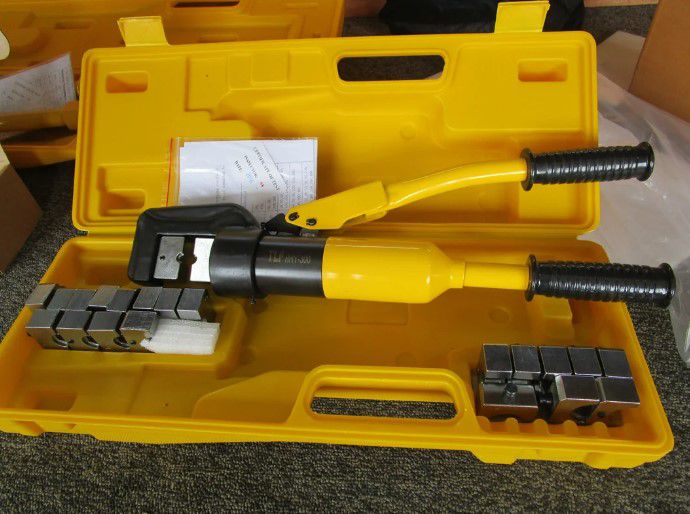
Disassemble the parts  

Start by removing the two eyelets using pliers. Then, continue to remove the screw to remove the lever of the hydraulic pliers. Once you have removed this part, you will see the hydraulic hose inside. Carefully disassemble it to expose the flexible oil tube, then proceed to remove the oil tube.  

Drain old oil and clean details 

Any equipment needs maintenance after a period of use, and hydraulic crimping pliers are no exception. The oil inside can become dirty and lose its lubricating effect, so you need to drain all the old oil before replacing it.  

Use a wrench to unscrew the part to be removed in the correct position. Once opened, you will see two pieces of sin inside. You can use an electric tester or a small stick to take them out. Next, remove the On/Off knob, but be careful because there is a small red ball inside, avoid losing it.

Clean the inside of the device  

After disassembling the parts, continue using a wrench to remove the machine head. If it feels too tight, you can use a wrench to help and then tighten it by hand. When you open it, you will see the spring inside is covered with dry oil. Continue to remove the spring and remove the nipple for thorough cleaning.

Complete the cleaning process  

After removing all components inside the hydraulic cos press pliers, use a soft cloth to wipe off old oil, dirt and sediment.

How to add oil to hydraulic cos pliers  

After thoroughly cleaning the internal components, you can proceed with reassembling them in the correct order. Ensure that all joints and connections are properly fitted to maintain the device’s stable operation.


When it comes to oil refilling, use 10-weight hydraulic oil and pour it into the hydraulic tube. Pour slowly to allow the oil to distribute evenly, avoiding overfilling or underfilling. Once finished, securely close the cap and wipe off any excess oil to keep the device clean.

Finally, reassemble all parts according to their original positions. Once completed, the hydraulic crimping tool will operate more smoothly, eliminating any jamming or resistance. If the device still does not function properly after cleaning and refilling the oil, there may be another technical issue. In this case, you should bring the tool to EMIN or the nearest repair center for a thorough inspection.
Related News

The scent of new wood in a newly handed-over apartment: How to measure and address formaldehyde (HCHO) levels before moving in
11/14/2026 10:28:19

Many people refer to the pungent, acrid odor that emerges when opening a new cabinet as the "smell of new wood," assuming it will simply dissipate after a few days. In reality, however, what is being released could well be formaldehyde—a substance originating from the adhesives used in the pressed-wood panels—and our sense of smell is not a reliable enough gauge to determine the concentration levels present

Guide to Selecting a TCLP Toxicity Characteristic Leaching Procedure Shaker Configuration in Compliance with QCVN 07:2025/BNNMT and TCVN 9239:2012
11/13/2026 17:23:39

Regulation QCVN 07:2025/BNNMT (replacing QCVN 07:2009/BTNMT and QCVN 50:2013/BTNMT) specifies hazardous waste and sludge thresholds based on leachate concentrations. To ensure that analytical results for heavy metals and organic compounds are accepted during ISO/IEC 17025 or VIMCERTS assessments, laboratories must comply with the Toxicity Characteristic Leaching Procedure (TCLP) specified in TCVN 9239:2012, which is equivalent to US EPA Method 1311

Checking the Temperature of Paint and Coating Surfaces After Curing Using an Infrared Thermometer
11/13/2026 16:11:22

An infrared thermometer allows surface temperature measurement without direct contact, making it suitable for products coming out of curing ovens or surfaces that are difficult to access. However, to ensure reliable results for production quality control, it is important to understand the measurement principle and the factors that affect measurements on painted and coated surfaces.

Crowded Gyms and Yoga Studios: How to Manage Air Quality to Retain Members
11/13/2026 15:07:40

Around 6 or 7 in the evening, the gym becomes packed; the music drowns out the sound of heavy breathing, and the air conditioning runs at full blast behind closed doors. At first glance, everything seems fine: the room is cool, the lights are bright, and the equipment is state-of-the-art. Yet, after just a few sessions, regular members begin to feel a heavy-headedness and find themselves running out of breath more quickly eventually, they simply stop renewing their memberships. No one complains about the personal trainers or the exercise machines. The very thing that makes them feel stifled and drives them away is something entirely invisible: the air inside the room

Stay Updated with Offers

Get exclusive volume discounts, bulk pricing updates, and new product alerts delivered directly to your inbox.

By subscribing, you agree to our Terms of Service and Privacy Policy.

Quick Support

Direct access to our certified experts