Ammonia (NH3) refrigerant leaks in cold storage facilities and food processing plants always present a tough challenge regarding operational safety. Not only do these incidents directly threaten human lives, but they also cause production line disruptions and severe economic losses. Mastering the legal framework, thoroughly understanding technical principles, and equipping specialized monitoring systems are key to protecting modern industrial infrastructure.
What Is an NH3 Cold Storage Facility
An ammonia (NH3) cold storage facility is an industrial refrigeration solution utilizing the natural refrigerant R717 (NH3). It is best suited for large-scale cold storage systems, seafood and agricultural processing plants, and industrial food manufacturing due to its superior thermal efficiency and low operating costs.
Owing to the unique chemical properties of ammonia, this type of cold storage offers powerful advantages but also demands extremely strict technical safety standards.
Legal Framework and Compliance Standards for (NH3) Operation
In Vietnam, the management of refrigeration systems using (NH3) is strictly regulated by legal normative documents to minimize toxicity and explosion hazards:
Circular No. 50/2020/TT-BCT: Specifies the National Technical Regulation on Industrial Ammonia (QCVN 07:2020/BCT), applying to the production, storage, transportation, and usage of (NH3) with concentrations ranging from 10% to 35%.
Decision No. 3733/2002/QĐ-BYT: Issued by the Ministry of Health, establishing the maximum allowable concentration of NH3 gas in the workplace at 20 mg/m3 (approximately 25 ppm) as an 8-hour time-weighted average (TWA) per work shift.
Industrial Fire Protection Standards: Require large-capacity cold storage facilities to integrate automatic emergency ventilation systems, water spray/chemical absorption fire suppression systems, and online toxic gas sensor networks.
Incident Causes and Mechanisms
NH3 leaks typically originate from a loss of system tightness, mechanical failure, or operational errors. Pipelines, welded joints, gaskets, stop valves, and compressor shafts can crack, corrode, or deteriorate over time due to prolonged vibration, pressure fluctuations, and thermal cycling. Additionally, overpressure or improper valve operation can cause refrigerant to escape.
Poisoning Mechanism: NH3 readily dissolves in moisture on the eyes and respiratory tract, forming alkaline compounds that irritate and damage tissues. Inhaling high concentrations can cause severe respiratory distress and lung damage. Escaping liquid NH3 at low temperatures can also cause frostbite upon direct contact. The severity depends on gas concentration, exposure time, and area ventilation.
Fire and Explosion Hazard: NH3 can ignite when its atmospheric concentration falls within its flammable limits in the presence of an ignition source, such as electrical sparks or hot surfaces. Gas accumulation in enclosed spaces, combined with poor ventilation, increases the risk of fire and pressure buildup during an incident. NH3 may also react dangerously with certain incompatible chemicals.
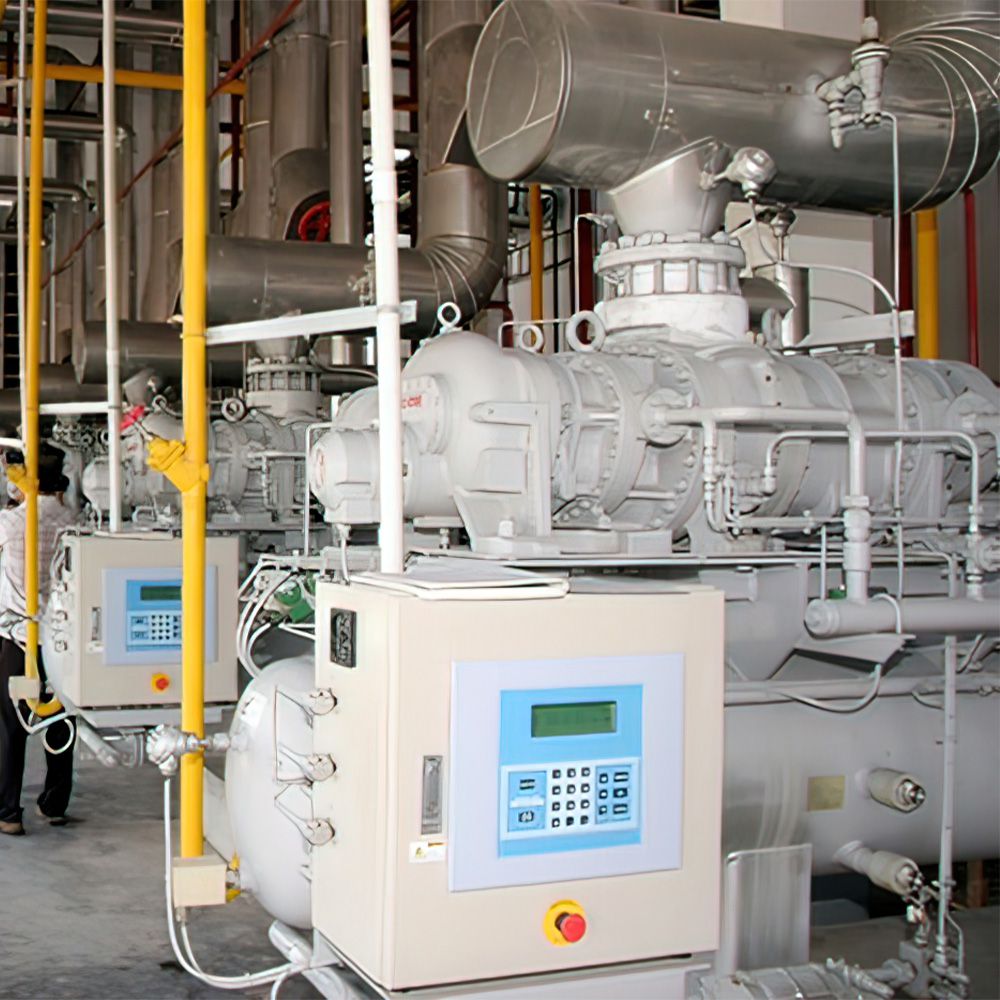
Preventive Measures and Optimization of Environmental Monitoring Systems
Preventing incidents requires a combination of equipment maintenance, NH3 concentration monitoring, and controlling factors that could trigger poisoning or explosions.
Regular Inspection and Maintenance: Monitor the condition of piping, joints, valves, compressors, and pressure vessels; detect early signs of corrosion, abnormal vibration, or seal degradation. Concurrently, test safety relief valves and emergency shut-off mechanisms to mitigate large-scale leak risks.
Use of Specialized Equipment: Combine portable single-gas detectors with fixed NH3 sensors installed in compressor rooms, valve stations, and receiver areas. Sensors must be selected for the correct measuring range, regularly inspected, and calibrated alongside motor vibration meter to detect early shaking issues and abnormal concentrations, triggering alarms when preset thresholds are exceeded.
Dispersal Control and Fire/Explosion Prevention: Equip emergency ventilation systems, audible/visual alarms, and interlock systems designed to activate solenoid shut-off valve relays, isolate liquid supply valves, and engage directional emergency exhaust fans. Control ignition sources, use electrical equipment compatible with the area's hazardous classification, and prevent gas accumulation in enclosed spaces.
Training and Emergency Preparedness: Establish evacuation procedures, area isolation, and incident response protocols; provide appropriate personal protective equipment (PPE) and conduct regular drills. Unqualified personnel lacking proper protective gear must not approach leak points or enter suspected toxic zones.
Emergency Response Procedure
When the monitoring system triggers a red alert, the operating team must execute the following steps precisely:
Isolate the Pipeline: Press the emergency stop button in the central control room to close all main gas stop valves leading from high-pressure receivers.
Activate Auxiliary Infrastructure: Engage the high-pressure water misting system in the compressor area to absorb and dilute the escaping NH3 gas plume, preventing widespread dispersion.
First Aid and Medical Emergency: Move victims out of the toxic zone, perform artificial respiration if necessary, and continuously flush exposed skin/eyes with clean water for at least 15 minutes before transferring them to a medical facility.