
For full functionality of this site it is necessary to enable JavaScript.
EMIN.VN
0

Low-distortion measurements with high-resolution oscilloscopes

11/19/2021 10:44:32

**Basic fault-finding** The PicoScope 4262 is a high-precision oscilloscope that is also suitable for general-purpose fault-finding. With two input channels,

Basic fault-finding

The PicoScope 4262 is a high-precision oscilloscope that is also suitable for general-purpose fault-finding. With two input channels, it can display signals in both time domain and frequency domain views, or even both at the same time. Spectrum views provide a number of automatic measurements including distortion and noise.

Dynamic range

The analog to digital converters in most digital oscilloscopes have 8-bit resolution, which produces 256 quantization levels. This is equivalent to an ideal dynamic range of 48 dB. The PicoScope 4262 has a 16-bit analog to digital converter which produces 65,536 quantization levels, increasing the dynamic range to 96 dB.

96 dB is the best theoretical figure, but in practice the acquisition system will have some noise that will reduce the actual usable dynamic range.

The dynamic range of the generator and acquisition system was measured with the generator output directly connected to the channel A input, as in Figure 1.
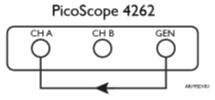
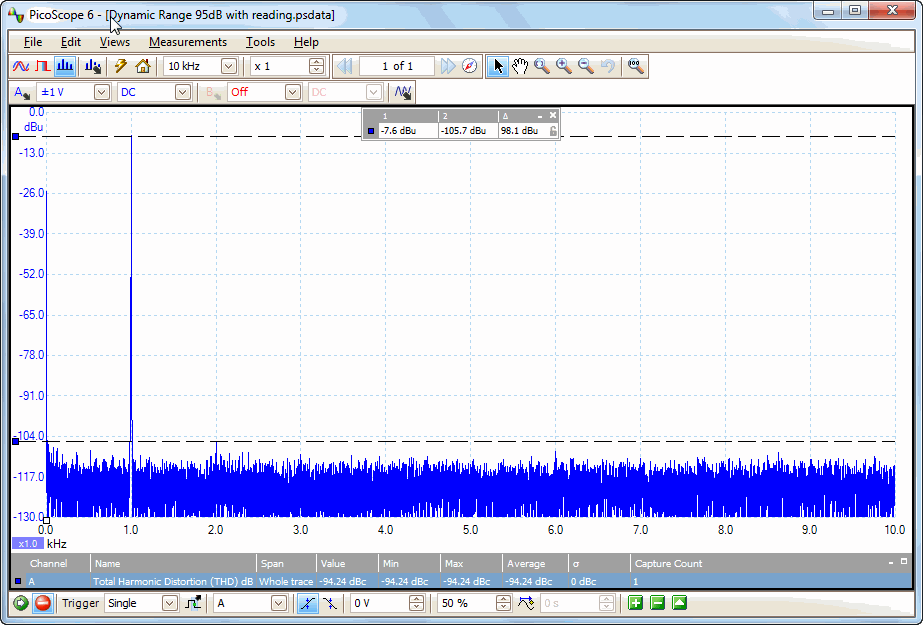
Figure 1: Measuring dynamic range by feeding signal from built-in generator into oscilloscope

Figure 2 shows the spectrum view in PicoScope. This was obtained by capturing the sine wave signal in the time domain and then clicking the Spectrum button.

To measure the dynamic range we aligned the two channel A rulers (controlled by the blue squares next to the y-axis) with the signal peak and the noise floor. The ruler legend then showed the dynamic range, given by the delta between the two rulers, to be –98 dB.

Monitoring waveform distortion

This test measures distortion in a stereo amplifier. It shows how PicoScope’s automatic distortion measurement can detect harmonics even when the time-domain waveform looks clean. The PicoScope 4262 has more than enough dynamic range to capture these signals without adding significant noise or distortion of its own.

Figure 3: Setup for distortion measurement

Figures 4 and 5 show the PicoScope screen divided into four views: a time-domain and a spectrum view for each of the two channels. Each view is easily created by right-clicking on the default view and selecting Add View.
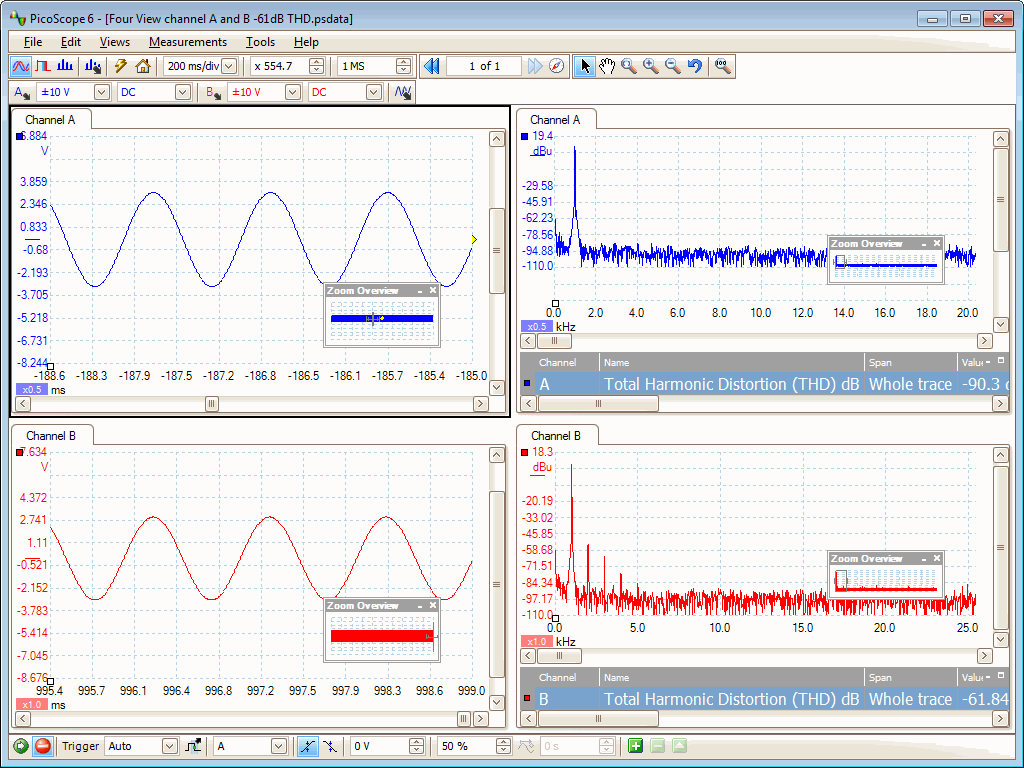
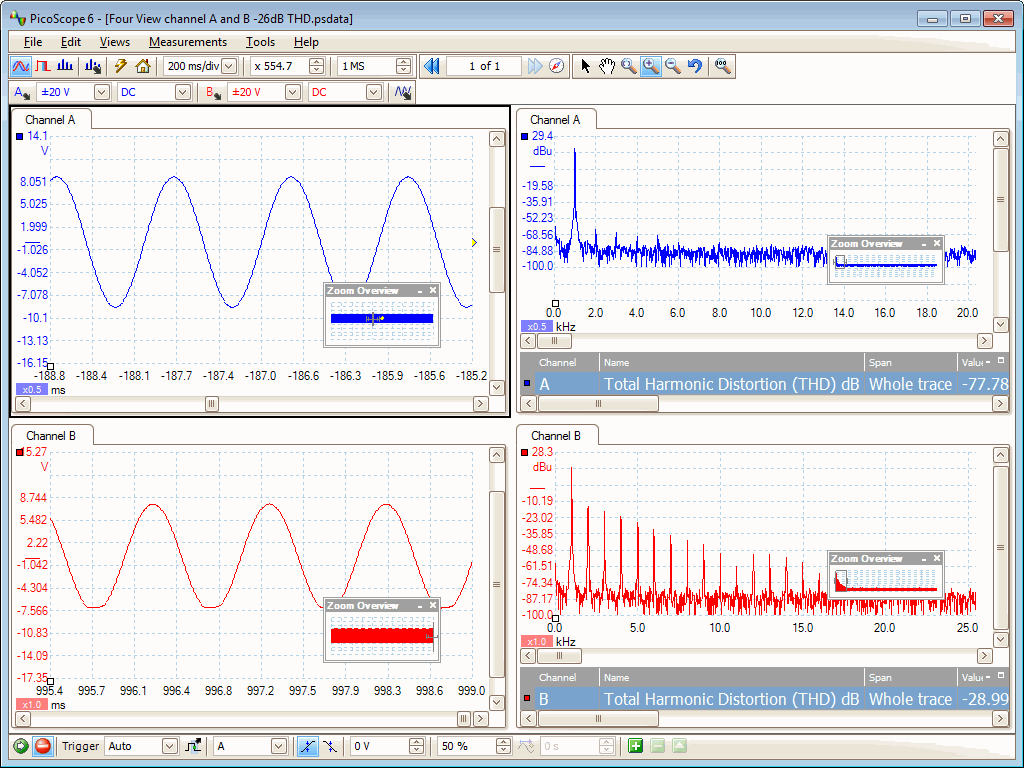
Figure 4: Four views, channels A and B Channel B has –61 dB THD. In the time-domain view we cannot see distortion.

Figure 5: Four views, channels A and B With increased power output level, we can start to see some distortion harmonics in the channel A spectrum display.

The channel B spectrum has THD of –28 dB at this level. We can start to see the distortion in the time-domain display (lower left panel).

Glitch detection

PicoScope’s Persistence Display mode is useful for capturing unwanted clicks or glitches in an audio signal. In a normal oscilloscope display these signals appear on the screen for only a fraction of a second, so there is little chance of performing accurate measurements on them. Persistence mode causes old waveforms to remain in the background while newer waveforms are drawn on top.

The main choice to be made in Persistence Options is between Color Persistence and Analog Intensity modes.

Color Persistence mode, as shown in Figure 7, can display new updates in brighter colors than old waveforms, making glitches stand out.

Analog Intensity mode has a similar effect but using shades of a single color. This is more like the display of an analog persistence scope.
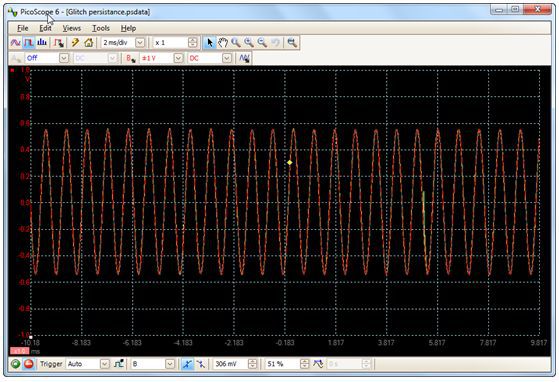
Figure 7: Color Persistence mode, showing a glitch in a brighter color

Conclusion

The high resolution of the PicoScope 4262 makes it ideal for low-noise, low-distortion measurements, and its built-in signal generator removes the need for an additional signal source. With its 5 MHz bandwidth, it can easily analyze audio, ultrasonic and vibration signals, characterize noise in switched mode power supplies, measure distortion and perform a wide range of precision measurement tasks.


Related News

The scent of new wood in a newly handed-over apartment: How to measure and address formaldehyde (HCHO) levels before moving in
11/14/2026 10:28:19

Many people refer to the pungent, acrid odor that emerges when opening a new cabinet as the "smell of new wood," assuming it will simply dissipate after a few days. In reality, however, what is being released could well be formaldehyde—a substance originating from the adhesives used in the pressed-wood panels—and our sense of smell is not a reliable enough gauge to determine the concentration levels present

Guide to Selecting a TCLP Toxicity Characteristic Leaching Procedure Shaker Configuration in Compliance with QCVN 07:2025/BNNMT and TCVN 9239:2012
11/13/2026 17:23:39

Regulation QCVN 07:2025/BNNMT (replacing QCVN 07:2009/BTNMT and QCVN 50:2013/BTNMT) specifies hazardous waste and sludge thresholds based on leachate concentrations. To ensure that analytical results for heavy metals and organic compounds are accepted during ISO/IEC 17025 or VIMCERTS assessments, laboratories must comply with the Toxicity Characteristic Leaching Procedure (TCLP) specified in TCVN 9239:2012, which is equivalent to US EPA Method 1311

Checking the Temperature of Paint and Coating Surfaces After Curing Using an Infrared Thermometer
11/13/2026 16:11:22

An infrared thermometer allows surface temperature measurement without direct contact, making it suitable for products coming out of curing ovens or surfaces that are difficult to access. However, to ensure reliable results for production quality control, it is important to understand the measurement principle and the factors that affect measurements on painted and coated surfaces.

Crowded Gyms and Yoga Studios: How to Manage Air Quality to Retain Members
11/13/2026 15:07:40

Around 6 or 7 in the evening, the gym becomes packed; the music drowns out the sound of heavy breathing, and the air conditioning runs at full blast behind closed doors. At first glance, everything seems fine: the room is cool, the lights are bright, and the equipment is state-of-the-art. Yet, after just a few sessions, regular members begin to feel a heavy-headedness and find themselves running out of breath more quickly eventually, they simply stop renewing their memberships. No one complains about the personal trainers or the exercise machines. The very thing that makes them feel stifled and drives them away is something entirely invisible: the air inside the room

Stay Updated with Offers

Get exclusive volume discounts, bulk pricing updates, and new product alerts delivered directly to your inbox.

By subscribing, you agree to our Terms of Service and Privacy Policy.

Quick Support

Direct access to our certified experts


