What are torque pliers?
Power pliers are a popular tool, widely used in cutting, pressing or bending many types of materials, from soft materials to high-hardness materials.
This device is made from high-strength materials, the entire body is heat-treated with a hardness of about 40 - 45 HRC. The cutting blade is then high-frequency tempered, increasing the hardness to 58 - 62 HRC, making steel cutting more effective and extending product life.
The design of the pliers is quite compact but still ensures good load-bearing capacity. The handle is made of steel, covered with high-quality plastic, with friction-increasing patterns to help grip firmly, limit slipping. The pliers blade is sharp and sturdy, does not chip even when subjected to strong force.
The product comes in many different sizes to meet diverse usage needs and can cut many types of materials with different diameters.
Notes for safe use of torque pliers
When using torque pliers to cut metal materials, it is important to be careful and alert to those around you to ensure safety. During the cutting process, metal can chip and fly out, causing danger. A small tip is to wrap a cloth around the jaws of the pliers to minimize this situation. In addition, it is especially important to note that you should not use torque pliers to cut through live wires to avoid the risk of electric shock.
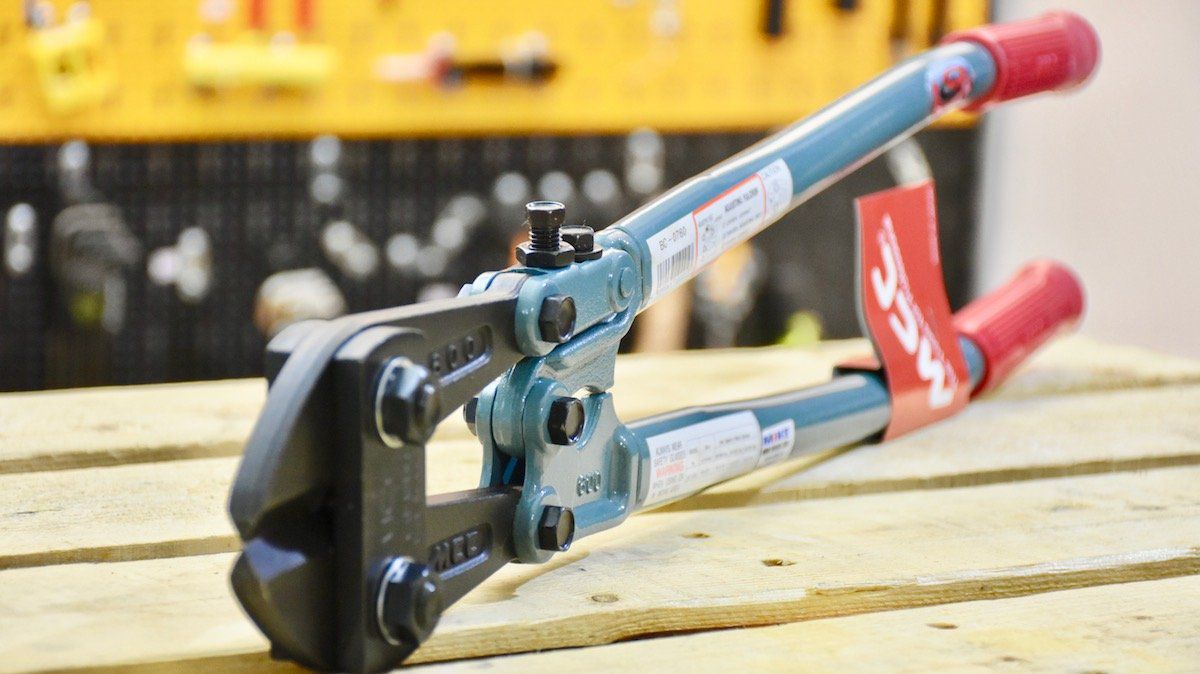
Before you start cutting, adjust the jaw clearance to the proper level. Check the clamping head of the pliers and locate the eccentric bolt, which is usually located right at the junction of the two handles. Hold the pliers so that the bolt head is facing up, then use a wrench to gently turn the eccentric bolt counterclockwise. There is no need to remove the bolt, just loosen it enough to make the body of the pliers more flexible. Next, tighten the handle, place a thin sheet of paper between the jaws, and slowly turn the bolt clockwise. When the two cutting edges begin to touch the paper, stop, remove the paper, and check the clearance.
During use, you should wear full gloves and safety glasses. Grasp the handle firmly with both hands, while making sure the jaws are always facing away from your body. Extend the handle as far as possible so that the jaws are fully open, ready for cutting.
Determine the correct cutting point and place the cutting blade in the middle of the material. The cutting direction should be perpendicular to the surface of the material to ensure efficiency and avoid the jaws from being misaligned or slipping off the surface. If you find it difficult to cut, open the jaw slightly, return the blade to the original groove and continue working. If you need more force, you should choose a larger size of pliers instead of trying to increase the length of the handle with other supporting tools.
Reference: Stanley 14-330 30 inch torque pliers STANLEY 14-330
Various applications of torque pliers
Torque pliers are one of the popular industrial pliers thanks to the practical benefits they bring. This tool is highly applicable in equipment repair, mechanical manufacturing, industrial construction and construction. In addition to the ability to cut hard materials such as iron, steel, copper or aluminum, torque pliers also act as a support device to help hold the material firmly when welding or planing thanks to the design of a sturdy long handle and sturdy jaw.
Not only stopping at cutting, the pliers can also press or bend many metal parts with high hardness, which many conventional cutting pliers find difficult to meet. The strong cutting power and superior force generation ability of the pliers help to process materials quickly and effectively.
The factor that makes the durability and cutting performance of the product is the pliers' beak. This part is made from high-grade alloy steel, heat-treated at high temperatures, creating a cutting blade with high sharpness, sturdiness, good resistance to heat and impact force, while minimizing rust or deformation during use.
Therefore, torque pliers are always indispensable equipment in many industries, especially in construction, the field with the most frequent need to use this product. Current torque pliers models often have relatively similar designs, the main difference lies in the quality of the material and the durability of the cutting blade.
Therefore, when you need to buy quality torque pliers, you should choose reputable places to buy, preferably genuine distribution stores to get detailed advice and choose the right product that suits your needs, at a reasonable price.
Currently, the market has many units providing pliers with diverse designs. Users should have a careful selection to ensure buying products with high durability and effective use in work.