Certification of a solar panel or inverter only covers the safety requirements applicable to that particular device. The installation quality of the entire system must be assessed separately.
One of the key standards is TCVN 7447-7-712:2019 – Low-voltage electrical installations – Part 7-712: Requirements for special installations or locations – Solar photovoltaic (PV) power supply systems. This standard is fully equivalent to IEC 60364-7-712:2017.
TCVN 7447-7-712:2019 applies to standalone PV systems, systems operating in parallel with the utility grid, and corresponding configurations. It focuses on safety requirements arising from the specific characteristics of DC power sources, including the possibility of electrical arcs being initiated and sustained even when the current does not exceed the normal operating current.
After installation, TCVN 11855-1:2017, equivalent to IEC 62446-1:2016, specifies documentation, commissioning tests, and inspection requirements for grid-connected PV systems. It can also be used as a reference for periodic inspections, maintenance, and system modifications.
At the module level, TCVN 12232-1:2025 and TCVN 12232-2:2025 specify structural requirements and safety testing requirements, respectively. The 2025 editions replaced the 2019 versions and are equivalent to IEC 61730-1:2023 and IEC 61730-2:2023.
Power converters and inverters are covered by TCVN 12231-1:2019 and TCVN 12231-2:2019. DC connectors used in PV systems are covered by TCVN 12718:2019, while junction boxes for PV modules fall under TCVN 12675:2020.
DC-Side Safety Measurements
The DC side requires particular attention when inspecting a solar PV system. Even when the AC side of the inverter has been disconnected, the PV array can still generate voltage when exposed to sunlight.
An improperly crimped connector, damaged cable insulation, or a contact with increased resistance can remain in service for an extended period without causing the system to stop generating power. Normal energy production alone is therefore not sufficient to confirm electrical safety.
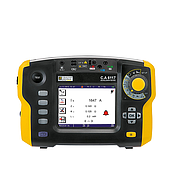
TCVN 11855-1:2017 specifies commissioning tests and inspection criteria used to verify that a grid-connected PV system has been safely installed and operates as intended. These tests may include protective conductor and equipotential bonding continuity, polarity, open-circuit voltage, current, and insulation resistance.
Insulation resistance tester are used to assess the insulation between electrical circuits and earth or other conductive parts. A decrease in insulation resistance may be associated with damaged cables, moisture, water ingress into junction boxes, or faults within PV strings.
Digital multimeter and clamp meter can be used to measure voltage and current and to compare electrical parameters between PV strings. Test equipment must be suitable for the maximum DC voltage, measurement category, and safety conditions of the system under test.
Another useful approach is to evaluate measurement data as a trend rather than simply classifying results as pass or fail. When the same parameters are recorded during commissioning and subsequent maintenance, changes over time can provide additional information about the condition of the system.
Arcing and Hot Spots Can Appear Before a System Failure
DC arcing can occur at loose connectors, deteriorated contacts, or damaged conductors. Unlike some short-circuit faults, the current at an arcing point may not increase enough to trigger overcurrent protection immediately.
This risk is specifically addressed in TCVN 7447-7-712:2019. The standard recognizes that DC systems and PV arrays present hazards that differ from those of conventional AC systems, including the possibility of creating and sustaining an electrical arc at a current that does not exceed the normal operating current.
DC connectors therefore require particular attention. TCVN 12718:2019, equivalent to IEC 62852:2014, specifies safety requirements and tests for connectors used in DC applications in photovoltaic systems.
Even a certified connector can become a source of excessive heat if it is improperly installed. Crimping force, connector compatibility, mechanical stress on cables, and environmental exposure can all affect contact resistance.
For operating PV systems, thermal imaging camera can help identify connectors, junction boxes, or modules with abnormal temperatures. This method is particularly useful because some electrical faults initially appear as localized temperature increases before causing a noticeable loss of power.
Thermal images should be analyzed together with electrical data. An abnormal temperature can identify an area requiring further inspection, while voltage, current, insulation resistance, and other electrical measurements can help determine the underlying cause.
I-V Curves Reveal More Than Energy Output
Safety inspections often focus on insulation, protection, and grounding. For solar PV systems, however, the condition of individual PV strings should also be monitored because a system can continue generating power even when certain modules or strings have developed abnormalities.
I-V curve analyzer record the relationship between current and voltage for a PV module or string. The shape of the curve provides more information than simply measuring voltage or current at a single operating point.
Curve deviations may be associated with shading, module degradation, bypass diode issues, increased series resistance, or other electrical abnormalities. Comparing I-V curves between strings with similar configurations can also help identify strings with abnormal characteristics.
I-V testing does not replace electrical safety tests. Its value lies in combining performance data with electrical measurements to provide a more complete assessment of system condition.
If insulation resistance decreases while the I-V curve of a particular string also shows abnormal characteristics, the scope of further inspection can be narrowed instead of testing the entire PV array.
Grounding and Lightning Protection Must Be Checked as Part of the Electrical System
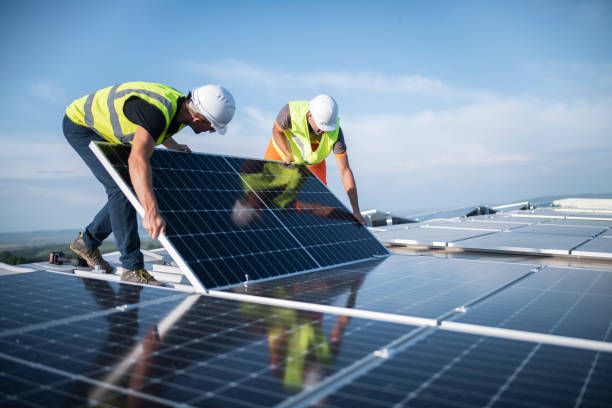
Rooftop PV arrays have a large exposed area, long DC cable runs, and are often installed in locations susceptible to direct lightning strikes or induced voltages. Transient overvoltages can travel through DC cables to the inverter and downstream electrical equipment.
Lightning protection should not be evaluated solely by checking whether surge protective devices are installed. Protection performance also depends on conductor routing, connection length, equipotential bonding, and the grounding system.
DC cable routing also affects induced voltage. If two conductors belonging to the same circuit form a large loop, the resulting loop area can increase the effects of electromagnetic induction caused by lightning.
For grounding systems, an earth resistance tester can be used to measure grounding resistance using an appropriate test method. For certain grounding configurations, a ground resistance clamp meter allows measurements to be performed without disconnecting the grounding electrode from the system.
Ground resistance values should also be recorded during periodic inspections. Electrode corrosion, deteriorated connections, or changes in soil conditions can alter grounding performance over years of operation.
For installations in Vietnam, lightning protection and grounding requirements should be assessed together with the standards, regulations, and technical requirements applicable to the specific type of building or installation.
Passing Commissioning Tests Does Not Guarantee Safety Throughout the System's Service Life
A system may fully meet the requirements at the time of handover, but its technical condition can change over a service life of 5, 10, or 20 years.
Cables and insulation materials are exposed to heat, ultraviolet radiation, and moisture. Connectors undergo repeated thermal cycling. Junction boxes may be exposed to moisture ingress. Grounding electrodes and connections can corrode. PV modules also gradually degrade during operation.
For this reason, the value of solar PV testing equipment extends beyond commissioning. It also lies in its ability to generate measurement data that can be compared over time.
The initial commissioning records can serve as a baseline for the system. Open-circuit voltage, string current, insulation resistance, ground resistance, thermal images, and I-V curves recorded during commissioning can provide useful reference data for future inspections.
For example, insulation resistance may remain within an acceptable range while gradually declining over several inspection cycles. Likewise, a connector showing a progressive increase in temperature across successive thermal inspections may require investigation before developing into a more serious overheating problem.
Solar PV Safety Must Be Measured, Not Verified by Certification Alone
Current Vietnamese standards establish multiple layers of safety requirements. TCVN 7447-7-712:2019 focuses on PV electrical installations; TCVN 11855-1:2017 covers inspection, commissioning tests, and reinspection; while TCVN 12232-1:2025 and TCVN 12232-2:2025 address module-level safety requirements.
Additional standards covering power converters, DC connectors, and junction boxes provide further requirements for individual components and equipment.
Standards, however, do not replace on-site measurements. The quality of rooftop connections, insulation condition of PV strings, grounding resistance, and system degradation after years of operation can only be evaluated through appropriate inspection and measurement data.
Combining data from different test and measurement instruments makes it possible to assess a PV system from three perspectives: electrical safety, equipment condition, and power generation performance.
A safe solar PV system therefore needs more than compliance at the time of commissioning. Its safety condition must be verified throughout its operating life.