Key Considerations for Selecting the Right 24V Photoelectric Sensor for Automation Systems
In many automated plants, control systems occasionally experience frozen output signals, intermittent communication, or inaccurate detection of objects moving along conveyor belts. This causes production lines to stall unexpectedly without a clear root cause.
Most of these malfunctions stem not from main power supply failures or complex PLC programming errors, but from selecting the wrong output signal type or power specification for photoelectric devices during the initial electrical cabinet design stage.
Non-standard sensor wiring or a lack of understanding regarding electrical current characteristics can introduce significant operational delays.
Drawbacks of Choosing the Incorrect Sensor Output Type
Operating equipment without a thorough understanding of output specifications often leads to severe consequences for the central control board.
Signal latency and voltage drops over long cable runs present the initial hurdle. When distances from sensors to the control cabinet extend to tens of meters, degraded transmission quality causes PLCs to misread status inputs inconsistently.
A more critical issue lies in hardware compatibility between the sensor and PLC inputs. If engineers select an output type that is mismatched with the receiving module (such as confusing sourcing and sinking configurations), circuits can lock up or even burn out the controller's input ports, leading to costly replacement expenses and extended downtime.

How 24V Photoelectric Sensors Power Up and Transmit Signals
An optimal solution for modern industrial lines is adopting devices operating at standard industrial voltage levels, such as 24V photoelectric sensors. This voltage level offers high stability, capable of overcoming ambient electromagnetic noise in environments packed with frequency drives and high-power motors.
+ Semiconductor Transmission: Most sensors in this category utilize solid-state transistor outputs, enabling ultra-fast status signal transmission with millisecond-level precision.
+ Instantaneous Response: Whenever an object interrupts the lens scanning area, the circuit's switching state changes instantaneously, sending voltage pulses back to the central processor to log product cycles or trigger downstream actuators.
Technical Factors to Consider When Installing 24V Photoelectric Sensors
Four primary technical considerations must be rigorously controlled when integrating these sensors into conveyors or automated machinery:
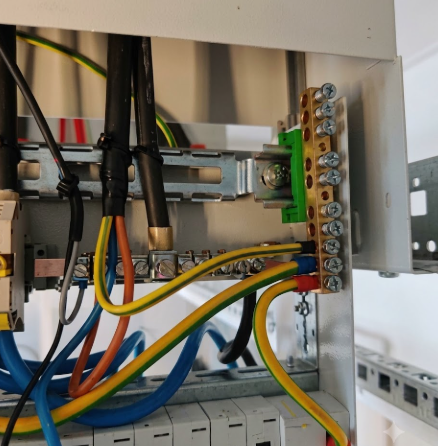
+ Output Polarity: Clearly distinguish output polarity, specifically selecting between sourcing (PNP) and sinking (NPN) types based on the overall electrical cabinet schematics of the plant.
+ Sensing Distance and Safety Margins: Account for actual sensing distance versus nominal manufacturer specifications. Dust, oil, or debris accumulation on the optical lens reduces transmission efficiency, requiring a calculated safety margin.
+ Response Time: Evaluate sensor response time. For high-speed packaging or sorting lines, sensors with slow switching frequencies will fail to detect smaller items.
+ Environmental Resistance: Ensure adequate protection against harsh environmental conditions such as high humidity, water jets, or elevated oven temperatures by selecting enclosures with appropriate ingress protection (IP) ratings.
Standardizing Optoelectronic Equipment Across the Line
Enhanced Stability: Manufacturing facilities that standardize and correctly install suitable sensor models experience a noticeable rise in operational stability.
Eliminating False Errors: False error triggers and intermittent signal loss disappear, improving overall processing throughput and reducing the need for engineers to manually troubleshoot minor breakdowns on the floor.
EMIN provides genuine automation and measurement instruments: conducting direct on-site technical surveys, selecting the precise optoelectronic part numbers, and fine-tuning existing control systems.
Results of Optimizing Sensor Selection
Making accurate choices from the design phase enables automated systems to maintain continuous production rhythms, protect central control electronics, and optimize long-term operational costs for enterprises.
EMIN offers a wide range of genuine automation and measurement equipment, including on-site technical specification assessment, selection of the correct photoelectric product codes from major brands (such as the Omron E3Z-T61 and E32-T25XB 2M series, or block-style and cylindrical photoelectric sensors), and fine-tuning of existing control systems.