
For full functionality of this site it is necessary to enable JavaScript.
EMIN.VN
0

Top Infrared Thermometers by Industry

04/29/2026 16:13:25

In technical datasheets, thermometers are often compared based on accuracy or measurement range. However, in real-world operation, performance differences rarely come down to specifications alone. What truly matters is how temperature manifests within each system.

In the electrical sector, heat is a localized indicator of abnormality. In HVAC, it represents a flow of energy that must be balanced. In mechanical systems, heat is an inevitable byproduct of friction and processing.

Choosing the right temperature meter should begin with a question: What role does temperature operate in your system?

Electrical: When Stability Matters More Than Accuracy

In switchgear maintenance or substation inspections, technicians are not looking for absolute temperature values. What matters is the ability to detect deviations from the system’s normal operating state over time.

This explains why models like the Fluke 62 MAX remain widely used, even though they do not offer the highest measurement range. Their strength lies not in ±1% or ±2% accuracy figures, but in their ability to deliver consistent and repeatable readings across multiple measurement cycles.

In electrical environments, a large but stable error is rarely critical. In contrast, a device whose readings fluctuate with environmental conditions can undermine trend analysis—the key to identifying emerging hotspots.
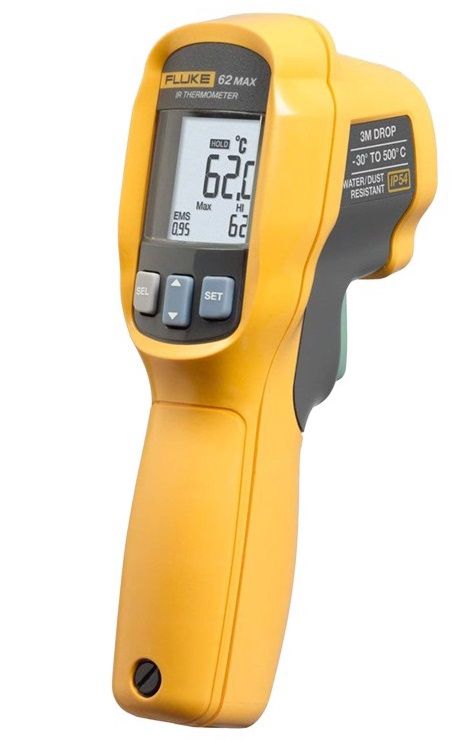
Fluke 62 Max

HVAC: Temperature Is No Longer a Number, but a Gradient

Unlike electrical applications, HVAC technicians are less concerned with absolute temperature values. What they need is a reliable temperature gradient—one that accurately reflects heat transfer performance within the system.

Measurement devices in this context do not need extreme sensitivity to hotspots, but must remain stable enough to capture the true behavior of thermal flow. Popular models such as the Extech 42570 are favored for their ability to maintain consistency across varying surfaces and environmental conditions.

HVAC systems constantly deal with variables such as airflow, humidity, and changing surface materials. If the instrument cannot properly account for emissivity or is overly influenced by ambient conditions, the measured values quickly lose their relevance for performance evaluation.
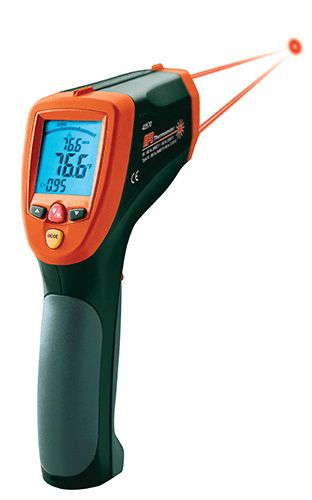
Extech 42570

Mechanical & Manufacturing: Where Physical Limits Become Apparent

In mechanical applications—especially those involving high temperatures or metallic surfaces—temperature measurement becomes significantly more complex.

Unlike the previous sectors, where errors are largely driven by environmental factors, mechanical systems expose the physical limitations of the measurement method itself. Metallic surfaces exhibit high reflectivity, oxide layers evolve over time, and temperature distribution is rarely uniform.

Models such as the Fluke 568 are selected not simply for their extended temperature range, but for their ability to adapt to these conditions. The combination of contact and non-contact measurement allows technicians to cross-validate data, rather than relying on a single method.

In this context, an infrared thermometer is no longer just a data-reading device—it becomes a tool that enables operators to reassess their assumptions about how the system actually behaves.
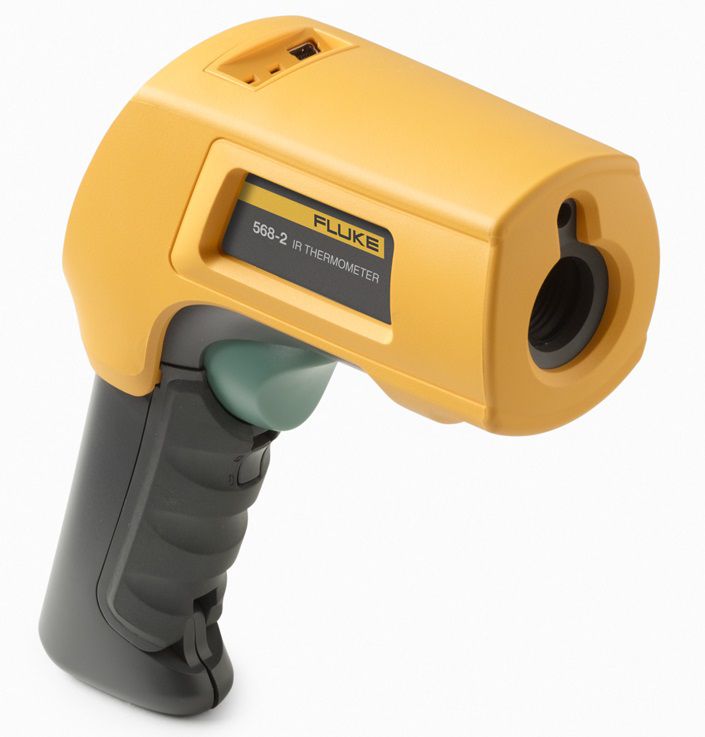
Fluke 568

See more:

Optimizing Temperature Measurement to Reduce Operating Costs by 20%

How to Choose the Ideal Thermometer for Your Application

Related News

The scent of new wood in a newly handed-over apartment: How to measure and address formaldehyde (HCHO) levels before moving in
11/14/2026 10:28:19

Many people refer to the pungent, acrid odor that emerges when opening a new cabinet as the "smell of new wood," assuming it will simply dissipate after a few days. In reality, however, what is being released could well be formaldehyde—a substance originating from the adhesives used in the pressed-wood panels—and our sense of smell is not a reliable enough gauge to determine the concentration levels present

Guide to Selecting a TCLP Toxicity Characteristic Leaching Procedure Shaker Configuration in Compliance with QCVN 07:2025/BNNMT and TCVN 9239:2012
11/13/2026 17:23:39

Regulation QCVN 07:2025/BNNMT (replacing QCVN 07:2009/BTNMT and QCVN 50:2013/BTNMT) specifies hazardous waste and sludge thresholds based on leachate concentrations. To ensure that analytical results for heavy metals and organic compounds are accepted during ISO/IEC 17025 or VIMCERTS assessments, laboratories must comply with the Toxicity Characteristic Leaching Procedure (TCLP) specified in TCVN 9239:2012, which is equivalent to US EPA Method 1311

Checking the Temperature of Paint and Coating Surfaces After Curing Using an Infrared Thermometer
11/13/2026 16:11:22

An infrared thermometer allows surface temperature measurement without direct contact, making it suitable for products coming out of curing ovens or surfaces that are difficult to access. However, to ensure reliable results for production quality control, it is important to understand the measurement principle and the factors that affect measurements on painted and coated surfaces.

Crowded Gyms and Yoga Studios: How to Manage Air Quality to Retain Members
11/13/2026 15:07:40

Around 6 or 7 in the evening, the gym becomes packed; the music drowns out the sound of heavy breathing, and the air conditioning runs at full blast behind closed doors. At first glance, everything seems fine: the room is cool, the lights are bright, and the equipment is state-of-the-art. Yet, after just a few sessions, regular members begin to feel a heavy-headedness and find themselves running out of breath more quickly eventually, they simply stop renewing their memberships. No one complains about the personal trainers or the exercise machines. The very thing that makes them feel stifled and drives them away is something entirely invisible: the air inside the room

Stay Updated with Offers

Get exclusive volume discounts, bulk pricing updates, and new product alerts delivered directly to your inbox.

By subscribing, you agree to our Terms of Service and Privacy Policy.

Quick Support

Direct access to our certified experts



