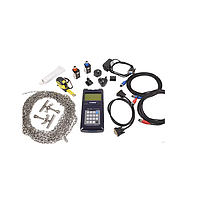
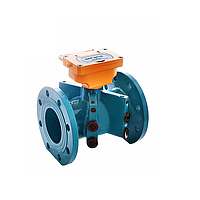
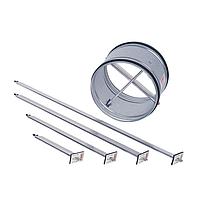
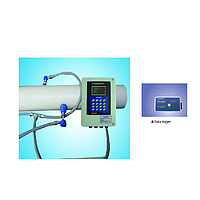
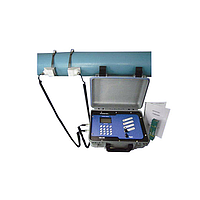
Flow Measurement
Accurate flow data is essential in process control, utility monitoring, water treatment, gas handling, and OEM equipment design. Whether the goal is balancing a line, confirming consumption, or protecting downstream instruments, choosing the right Flow Measurement solution affects both system reliability and measurement quality over time.
This category brings together instruments and supporting components used to monitor, indicate, and manage liquid or gas flow across a wide range of industrial conditions. From general-purpose monitoring to demanding process environments, the selection typically depends on media type, installation method, pipe size, pressure, temperature, and the level of accuracy required.
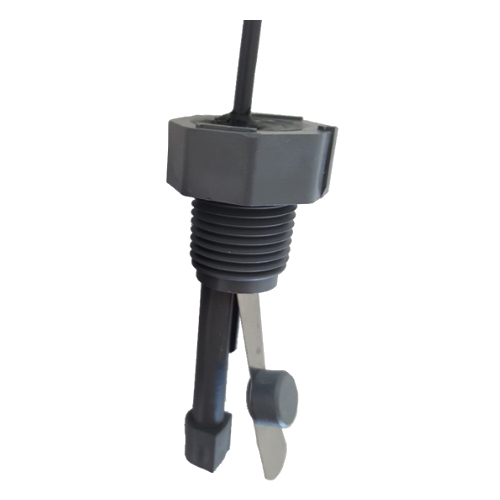
Where flow measurement fits in an industrial system
Flow is rarely measured in isolation. In most applications, it is closely linked to process pressure, media condition, line stability, and tank or vessel behavior. That is why users evaluating flow instrumentation often also review related areas such as pressure measurement and level measurement when building a complete control or monitoring setup.
Within a plant or machine, flow devices can serve different roles. Some are selected for continuous indication, some for totalizing or control, and others for switching, verification, or protection. The best choice usually comes from understanding the process first rather than starting with a specific technology.
Common flow technologies and how selection usually works
Different measuring principles suit different media and operating conditions. For example, clean liquids, water systems, gases, or mixed industrial media may each call for a different approach depending on conductivity, viscosity, flow profile, and installation constraints. In practical terms, users often compare options such as variable area, turbine, vortex, ultrasonic, electromagnetic, or mass flow technologies based on how the process behaves in real operation.
A useful starting point is to define the process medium, expected flow range, normal and peak pressure, operating temperature, and available straight pipe length. Accuracy matters, but so do maintenance needs, compatibility with the fluid, and ease of integration with existing piping and control architecture. For broader comparison across device families, this flow measurement range supports applications from basic indication to more specialized process measurement.
Why fittings and connection hardware matter
Reliable flow performance depends not only on the meter itself, but also on how the instrument is connected into the system. Poor tubing transitions, mismatched process threads, or unsuitable wetted materials can introduce leaks, pressure loss, or unstable readings. In gas and liquid systems alike, properly matched fittings help maintain mechanical integrity and support consistent process conditions at the measurement point.
Several products in this category context illustrate that point well. The Dwyer A-1011 and A-1002 series include connector fittings designed for tube-to-process connections, while the A-1010-10 bulkhead union fitting supports tubing transitions through panels or enclosures. Components such as the Dwyer A-1006-14 front ferrule fitting also play an important role in compression-style tube assemblies, especially where sealing consistency and repeatable installation are important.
Examples from the Dwyer fitting range
Among the featured items, Dwyer A-1011-28 and A-1011-19 are female connector fittings intended for NPT male process connections, while models such as A-1002-35, A-1002-34, A-1002-28, and A-1002-27 represent male connector fitting options for different tubing and connection sizes. These examples show how flow-related systems often require careful selection not just by function, but by tube outer diameter, wall thickness, connection format, and pressure capability.
Another practical detail is material compatibility. The listed Dwyer fittings use 316 stainless steel wetted parts and are described for use with media such as water, steam, oil, solvents, nitrogen, argon, and compatible gases. For engineers working on instrument lines, sampling systems, or process utility connections, this kind of compatibility helps support long service life in demanding environments. You can also explore the broader Dwyer product portfolio for related instrumentation and accessories.
Key factors to consider before ordering
When selecting flow equipment or associated installation hardware, a few technical checks can prevent costly mismatches. First, confirm the media and whether the application involves liquid, gas, steam, or chemically active fluid. Next, verify the pressure and temperature envelope of the process, then review tube size, wall thickness, and thread type to ensure mechanical compatibility.
It is also helpful to consider the wider measurement objective. If the requirement is simple visual indication, the device choice may be different from an application that needs signal output, batching, or integration into control loops. In more advanced systems, users may compare specialized suppliers such as Brooks Instrument or Endress+Hauser depending on process demands, but the final decision should always be based on application fit rather than brand preference alone.
Typical application environments
Flow measurement products are used across water handling, compressed gas systems, chemical processing, utility skids, laboratories, OEM assemblies, and general industrial production. In these settings, the measuring point may be part of a main process line, a bypass loop, a dosing skid, or a smaller instrument branch where fittings and compact components are just as important as the primary sensor.
This is especially relevant in systems that handle both measurement and connection integrity as one package. A stable reading depends on more than meter technology; it also depends on proper installation, leak control, and material suitability throughout the wetted path. That is why accessories and connection components should be viewed as part of the overall measurement chain, not as secondary add-ons.
Building a more reliable measurement setup
A well-designed flow installation usually combines the right measuring principle with the right mechanical interface. For some projects, that means choosing a meter for water, gas, or mixed industrial service. For others, it means confirming that tubing, ferrules, connector fittings, and process threads are matched correctly so the instrument can perform as intended.
If you are comparing options in this category, start with the process conditions and installation details. Reviewing media compatibility, connection style, pressure range, and surrounding instrumentation will make it easier to narrow down suitable products and avoid rework during commissioning.
In short, Flow Measurement is not only about reading flow values; it is about building a dependable path from process media to usable data. By selecting suitable instruments and compatible connection hardware, engineers and buyers can create systems that are easier to install, safer to operate, and better aligned with real process requirements.
Get exclusive volume discounts, bulk pricing updates, and new product alerts delivered directly to your inbox.
By subscribing, you agree to our Terms of Service and Privacy Policy.
Direct access to our certified experts