An EV power analyzer is selected for inverter testing by matching its measurement capability to the inverter’s switching behavior, voltage platform, channels, and test workflow. The key priorities are accuracy, bandwidth, sampling speed, synchronized measurements, and usable analysis software.
Because an EV inverter converts battery DC power into AC power for the motor, the analyzer must capture electrical behavior under high voltage, fast switching, and changing loads. The resulting measurements can support evaluation of conversion losses, inverter efficiency, harmonic distortion, switching performance, and motor-drive efficiency.
Summary: Prioritize measurement accuracy for small efficiency changes. Ensure bandwidth and sampling suit fast switching and transients. Use synchronized channels for DC, three-phase AC, and mechanical measurements. Confirm voltage support, software functions, and test-system integration.
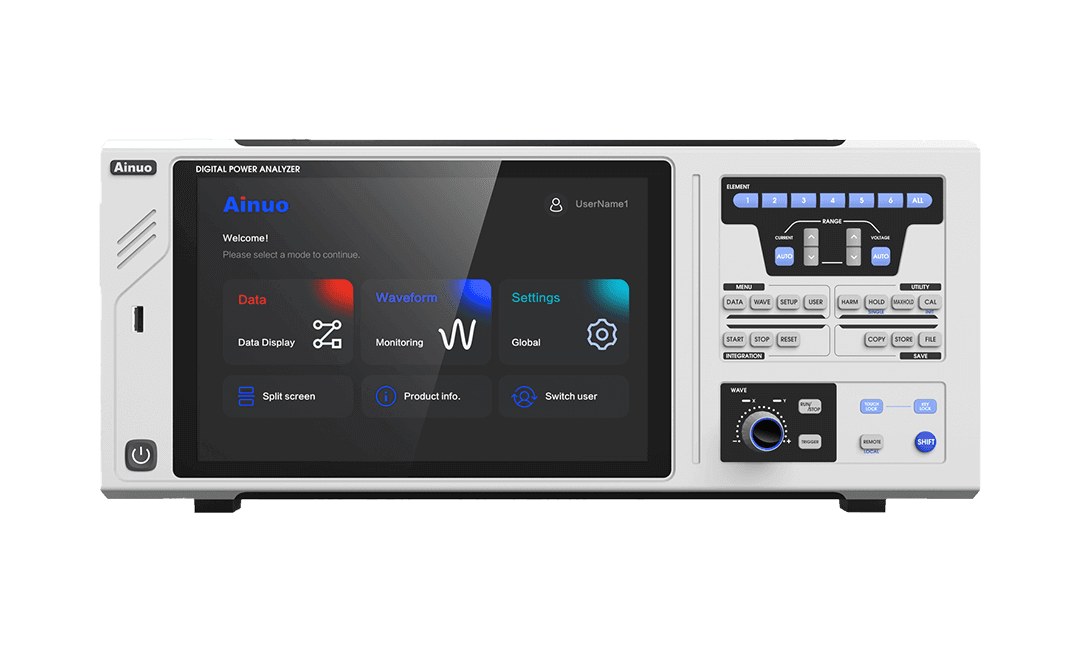
Why is an EV power analyzer needed for inverter testing?
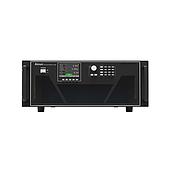
An EV power analyzer measures electrical power under the demanding conditions created by EV inverters, including high voltage, fast switching frequencies, and dynamic loads. It provides the data needed to assess how efficiently the inverter converts battery power for the electric motor.
Testing can examine power conversion losses, energy consumption, harmonics, and switching behavior. These results help engineering teams identify opportunities to improve battery use, reduce heat generation, and optimize drivetrain performance.
Which measurement specifications matter most for EV inverter testing?
Measurement accuracy, bandwidth, and sampling rate are the core specifications because inverter efficiency changes may be measured in fractions of a percent and electrical signals can change quickly. These specifications should be considered together rather than in isolation.
| Specification | Why it matters in inverter testing |
|---|---|
| Measurement accuracy | Supports voltage, current, and power measurements used to identify small efficiency differences. Low uncertainty and long-term calibration stability are relevant considerations. |
| Bandwidth | Helps capture PWM waveforms, high-frequency harmonics, fast switching transitions, and transient events associated with modern inverters. |
| Sampling rate | Supports measurement of rapidly changing signals during acceleration, regenerative braking, dynamic-load testing, and motor startup. |
Inverters using silicon carbide (SiC) or gallium nitride (GaN) semiconductors can switch at higher frequencies than traditional devices. For these applications, sufficient bandwidth is particularly important for observing the relevant waveform content.
When is multi-channel measurement important for an EV power analyzer?
Multi-channel measurement is important when electrical input, three-phase output, and mechanical parameters must be evaluated together. Synchronized channels simplify efficiency mapping and drivetrain analysis by placing related measurements in the same test context.
A suitable configuration may measure DC input voltage and DC conditions, three-phase AC output, torque, speed, and mechanical power. This combination enables comparison between electrical input power and mechanical output power when motor or overall drivetrain efficiency is being analyzed.
How should voltage-platform requirements be evaluated?
The analyzer should support the voltage and current range required by the EV platform being tested. The source identifies 400 V and 800 V as common modern EV architectures, while future platforms may operate at higher levels.
In addition to high-voltage inputs, evaluate wide current measurement ranges, isolated measurement channels, and electrical safety compliance. These points affect whether the instrument can be applied appropriately in high-voltage EV test work.
What software functions help with EV power analysis?
Software functions help turn measured signals into data that can be reviewed during and after a test. Useful capabilities include real-time waveform visualization, harmonic analysis, efficiency mapping, data logging, automated report generation, and trend analysis.
Integrated motor efficiency analysis can also bring electrical and mechanical performance into one instrument workflow. It can be used to determine electrical input power, mechanical output power, motor efficiency, and overall drivetrain efficiency with improved measurement consistency.
How does an EV power analyzer fit into an automated test system?
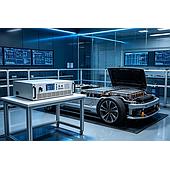
An EV power analyzer should fit the equipment already used in the test environment, such as dynamometers, battery simulators, environmental chambers, data-acquisition systems, and automated production test benches. Integration requirements depend on the intended workflow.
The source identifies Ethernet, USB, CAN, and SCPI as communication options that can support automated testing workflows. Before selection, confirm that the analyzer’s available interfaces align with the test system that will use it.
How can an EV power analyzer remain useful as EV technology changes?
A more adaptable power analyzer may offer expandable measurement channels, firmware updates, support for SiC and GaN technologies, and compatibility with future high-voltage EV platforms. These capabilities matter when testing needs may evolve beyond the current project.
Selection should also consider calibration services, software support, application knowledge, and the manufacturer’s expertise. Together with the technical specifications, these factors help maintain measurement reliability and reduce potential test interruptions over the equipment’s service life.