
2026年09月11日 10時54分16秒
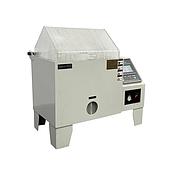
A salt spray test chamber helps manufacturers and laboratories evaluate the corrosion resistance of materials and protective coatings under controlled exposure conditions.
A salt spray test chamber helps manufacturers and laboratories evaluate the corrosion resistance of materials and protective coatings under controlled exposure conditions.

On September 10, 2026, EMIN participated in an in-depth technical training program at ZEISS to update its knowledge of measurement technologies, microscopy, and quality inspection solutions for various industries, including precision engineering, automotive, electronics, aerospace, healthcare, and materials manufacturing

A plated through-hole (PTH) in a multilayer circuit board features a copper-plated barrel extending through the internal circuit layers; it is not merely an empty hole connecting the top and bottom layers
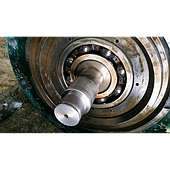
Worn bearings do not cause an immediate drop in the engine's average speed. What changes first is speed stability slight fluctuations in speed occur from one rotation to the next even though a standard tachometer continues to display a seemingly normal RPM reading. This is precisely what many people overlook. While the average figure looks fine, detecting instantaneous fluctuations reveals that the bearings had actually begun to develop play quite some time earlier
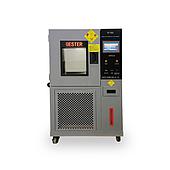
Temperature humidity test chambers help laboratories and manufacturers evaluate how products and materials respond to controlled heat, cold, and humidity conditions. This guide covers their purpose, industry applications, and practical maintenance priorities.

High-voltage generators are used to produce controlled test voltages for evaluating the dielectric strength of insulation and electrical equipment. Depending on the voltage level, waveform, and test method, these devices can be used in laboratories, manufacturing plants, power substations, or for post-installation testing.
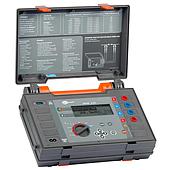
A DC resistance tester applies a controlled DC current and measures the resulting voltage to determine resistance. Proper wiring, discharge handling, and current selection support a stable measurement process.
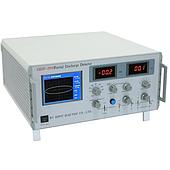
Noise can reduce detection sensitivity or generate signals that may be mistaken for discharges occurring within the test specimen. This article examines common noise sources, noise coupling paths, and key considerations when evaluating partial discharge test results.
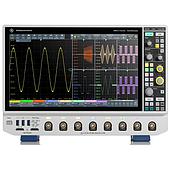
Chroma has integrated Rohde & Schwarz MXO oscilloscope hardware into its ATS 8000 automated test platform. The integration expands waveform measurement and analysis capabilities for testing power conversion devices, meeting the increasingly demanding requirements of high-power supplies and power systems used in data centers.
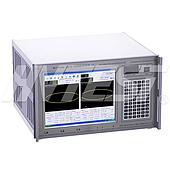
A practical guide to safer partial discharge detection system setup, focused on grounding, warm-up, interference reduction, calibration, and connection handling.
数量割引、まとめ買い価格の更新、新製品情報をメールでお届けします。
登録することで、当社の利用規約およびプライバシーポリシーに同意したものとみなされます。
認定専門家へ直接アクセス