Thermal imaging for coal conveyors helps operators find rising temperatures and hot inclusions that are not visible to the naked eye. Earlier identification can support action before heated material continues to downstream stages such as crushers or boilers.
Coal may oxidize after exposure to air, producing a temperature rise. During conveyor transport, monitoring both the conveyed material and the belt surface is important because heat may occur below the visible upper layer or transfer to the belt.
Summary: Thermal cameras provide non-contact temperature monitoring along conveyor routes. Transfer points, the underside of a belt after transfer, and the load surface are key viewing positions. Alarms can be connected to response measures when a designated temperature is reached.
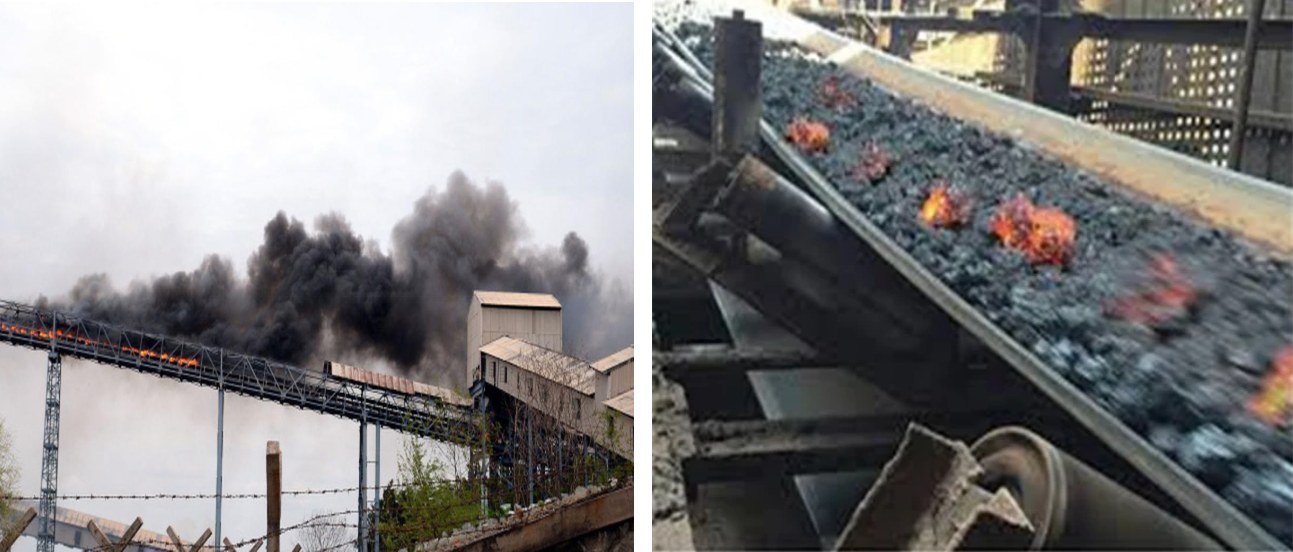
Why is thermal imaging used on coal conveyors?
Thermal imaging is used because temperature increases and hot inclusions in coal or coke can be difficult to detect visually. Infrared cameras measure heat remotely, allowing operators to monitor material and belt temperatures while the conveyor is operating.
According to the supplied information, coal oxidation can initially appear as a temperature slightly above ambient conditions. If not addressed, the temperature can rise above 400°C and lead to ignition.
What areas should a coal conveyor thermal monitoring system cover?
A thermal imaging should cover the full belt surface and, where practical, the coal mass during transport rather than only the top of the load. It may also monitor equipment temperatures, including conveyor rollers, to help identify heat associated with a technical failure.
Coverage is particularly relevant at material transfer locations, where hot material may be exposed or leave a thermal trace on a newly uncovered belt surface.
Where should thermal cameras be installed around a conveyor transfer point?
Three viewing locations can help detect heat at and after a transfer point: in front of falling coal, beneath the receiving belt just after transfer, and above the coal conveyor belt. Each location addresses a different part of the material or belt condition.
| Camera location | Primary monitoring purpose |
|---|---|
| In front of the falling coal curtain | Scan deeper into falling material for hot inclusions. |
| Under the second belt after transfer | Check the freshly exposed belt for an infrared trace from hot items. |
| Above the coal conveyor belt | Detect hot inclusions on or close to the material surface. |
Fixed mounts, pan/tilt heads, and other positioning devices are cited as installation approaches. The suitable arrangement depends on the viewing requirement at each location.
How can an alarm respond to abnormal conveyor temperatures?
When a monitored area reaches a designated temperature, an alarm can be connected to automated control. The supplied deployment approach describes triggering water sprays or a suppression system, or diverting hot material so it does not proceed to the next processing stage.
Note: The designated alarm temperature and the response logic should be determined for the specific conveyor process; the supplied information does not provide a universal alarm setpoint.
When does early heat detection matter most on a coal conveyor?
Early heat detection matters when coal begins warming above ambient temperature or when a hot inclusion contacts the belt. Identifying the condition before it advances through the process can help limit conveyor-belt damage and reduce unplanned downtime.
Thermal camera is therefore most useful as part of a response workflow: detect abnormal heat, localize the affected area, raise an alarm at the selected threshold, and apply the process response configured for the site.