
2026年09月18日 10時17分36秒
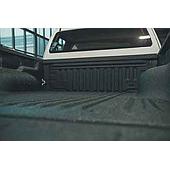
A practical overview of spray-on truck bedliner thickness, application considerations, and non-destructive measurement options for steel and aluminum truck beds.
A practical overview of spray-on truck bedliner thickness, application considerations, and non-destructive measurement options for steel and aluminum truck beds.
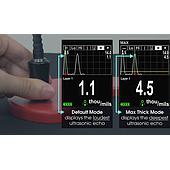
Understand how PosiTector 200 uses ultrasonic echoes to measure coatings on non-metal substrates and when Max Thick Mode can help with rough or noisy surfaces.
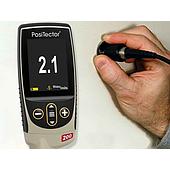
A drywall coating thickness gauge helps evaluate coating uniformity and monitor the application process. This guide provides an overview of measuring dry film thickness on drywall using ultrasonic measurement, including how to interpret the results, handle rough surfaces, and measure areas containing joint compound.

A powder coating thickness gauge is a specialized instrument used to measure the thickness of powder coating on metal or non-metal surfaces, helping ensure coating quality and durability while minimizing material consumption. Measuring powder coating thickness at the right stage and using the appropriate measurement principle helps maintain coating quality, reduce rework, and optimize the finishing process.
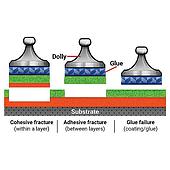
A coating adhesion tester is an essential instrument for evaluating the quality of paints, varnishes, and protective coating systems. The coating must bond sufficiently well to the substrate or underlying coating layer to minimize peeling during use. Depending on the substrate material, coating system structure, test conditions, and evaluation objectives, operators can select from several adhesion test methods, including knife, tape, pull-off, and scratch tests.
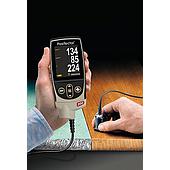
A practical overview of ultrasonic coating thickness measurement for wood and wood products, including operating principles, measurement considerations, and process-control benefits.
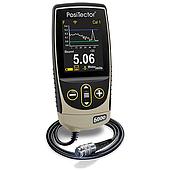
The PosiTector 6000 FS1 is a non-destructive coating thickness gauge that enables the monitoring of mesh, emulsion, stencil, and dried ink thicknesses in the screen printing process.
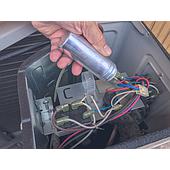
The capacitor labels indicated a 10-year lifespan, yet after just two years of service, the casings began to bulge; some even exploded, accompanied by a popping sound and a burnt odor that permeated the electrical room. The maintenance team would install replacements, only for the exact same issue to recur a few months later. This cycle repeated multiple times before anyone finally questioned whether the failures were due to the capacitors reaching the end of their service life or because they were being subjected to conditions beyond their original design specifications.

According to balanced three-phase circuit theory, the neutral current should ideally be zero or negligible compared to the phase current. Yet, technicians frequently discover during inspections at electrical panels that the neutral wire is extremely hot, with measured neutral currents sometimes even exceeding the current in individual phase wires. This is neither a rare occurrence nor a measurement instrument error; rather, it indicates that the system's loads are non-linear, generating harmonics that traditional conductor sizing methods fail to account for
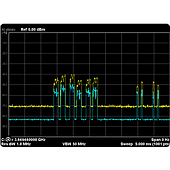
Zero Span transforms a Spectrum Analyzer from a tool for observing power levels across frequencies into a tool for monitoring power levels over time at a specific frequency.
直接联系认证专家