An aluminum welding machine should be selected around the material thickness, required weld appearance, production frequency, and the level of heat control needed. Aluminum conducts heat readily, oxidizes easily, and is heat-sensitive, so an unsuitable process can contribute to burn-through, porosity, or distortion.
For repeatable shop work, MIG is presented as a balanced option for productivity and stable welding. TIG AC is better suited to thin aluminum and appearance-sensitive welds, while laser welding is aimed at precision-oriented and automated production.
Summary: Aluminum welding depends on controlled heat and a stable arc. MIG supports productive repeat work; TIG AC prioritizes thin material and weld finish; laser welding supports precision and automation. Matching consumables and equipment to the application is essential.
What is an aluminum welding machine?
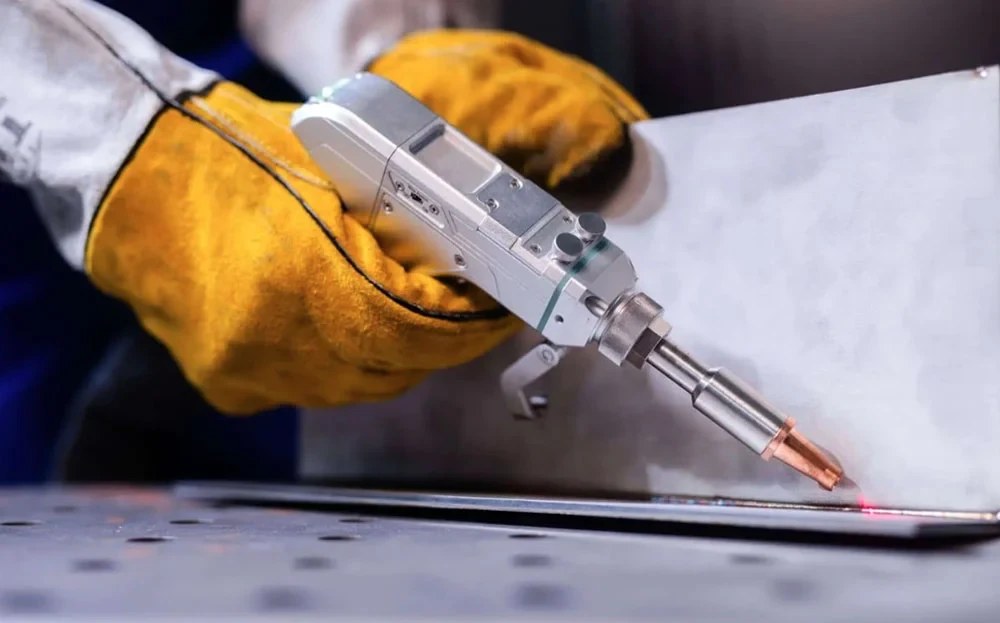
An aluminum welding machine is welding equipment designed or configured to join aluminum and aluminum alloys. It needs a stable arc, suitable current control, and compatibility with dedicated filler materials and, where applicable, shielding gas.
The term does not describe one single machine type. Stick, MIG, TIG, laser, and automated welding systems can all be used for aluminum in different operating situations.
Which aluminum welding method fits the job?
The appropriate method depends on material thickness, weld-quality expectations, throughput, and the available level of operator skill or automation. The source distinguishes stick, MIG, TIG, and laser welding by these practical trade-offs.
| Method | Best-described use | Key consideration |
|---|---|---|
| Stick welding | Temporary repair, one-off work, or constrained field conditions | Heat and arc control are more limited. |
| MIG welding | Medium-to-thick aluminum, fabrication shops, and repeat production | Uses continuously fed aluminum wire with Argon shielding gas. |
| TIG AC welding | Thin aluminum, small parts, and appearance-sensitive products | Requires higher operator skill and is slower than MIG. |
| Laser welding | Precision applications and automated production | Represents a higher-investment option with a small heat-affected zone. |
When should you choose an aluminum MIG welder?
An aluminum MIG welder is suitable when productivity and repeatability are primary needs, particularly for medium-to-thick aluminum. It uses continuously fed aluminum wire and Argon shielding gas, which the source associates with a more stable and manageable arc than stick welding.
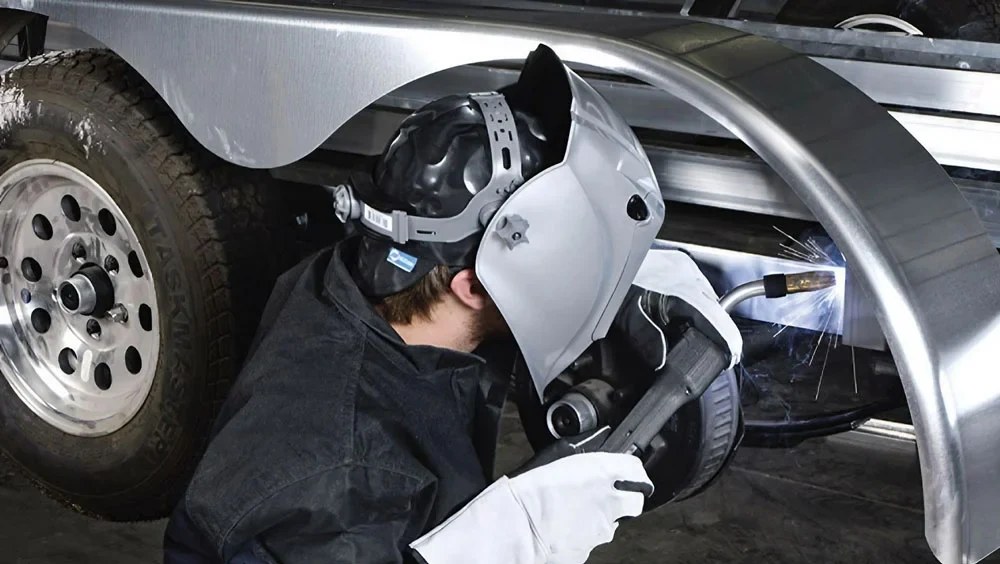
This process is described for aluminum frames, structures, industrial components, and repeat production lines. Stable wire feeding is an important selection point because it helps limit wire jams and arc fluctuations.
When is TIG AC the better choice for aluminum?
TIG AC is the preferred option when thin aluminum, smaller components, or a refined weld appearance are more important than speed. The AC mode is identified as necessary for breaking up the oxide layer on the aluminum surface.
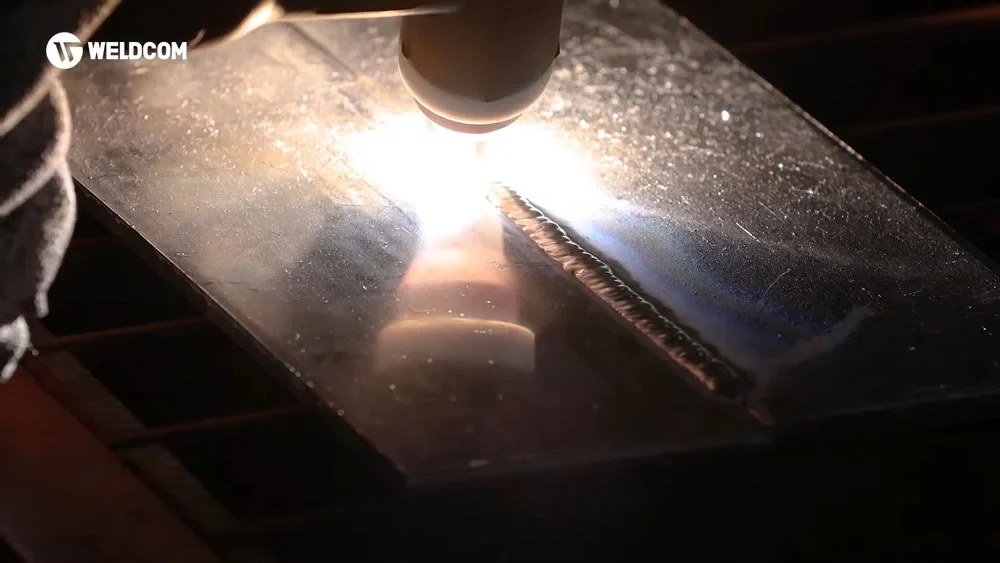
The source associates TIG with aluminum furniture, tanks, and food-equipment applications. Its trade-off is a slower welding rate and greater dependence on operator skill compared with MIG.
Why consider laser or automated aluminum welding?
Laser aluminum welding is intended for applications requiring high precision, a small heat-affected zone, and reduced distortion. It is also described as suitable for integration into automated production.
Automated machines, cobots, and welding robots are relevant to high-volume output, complex aluminum structures, and long-term quality consistency. These systems require a higher initial investment than manual approaches according to the source.

How should material thickness influence machine selection?
Material thickness is a direct factor in selecting an aluminum welding machine. For aluminum at or below 2 mm, the source recommends TIG AC/DC to support precise heat control and reduce the risk of burn-through and distortion.
For medium-to-thick aluminum, MIG is identified as an efficient choice because of its productivity and stable weld results. For difficult-to-weld aluminum alloys or high-precision requirements, higher-end TIG equipment or laser welding may be considered.
What equipment and consumables should be checked before welding aluminum?
The welding machine alone does not determine the result. Aluminum filler wire or electrodes should match the material grade, while shielding gas, the welding torch, and the wire-feed system should be appropriate for aluminum work.
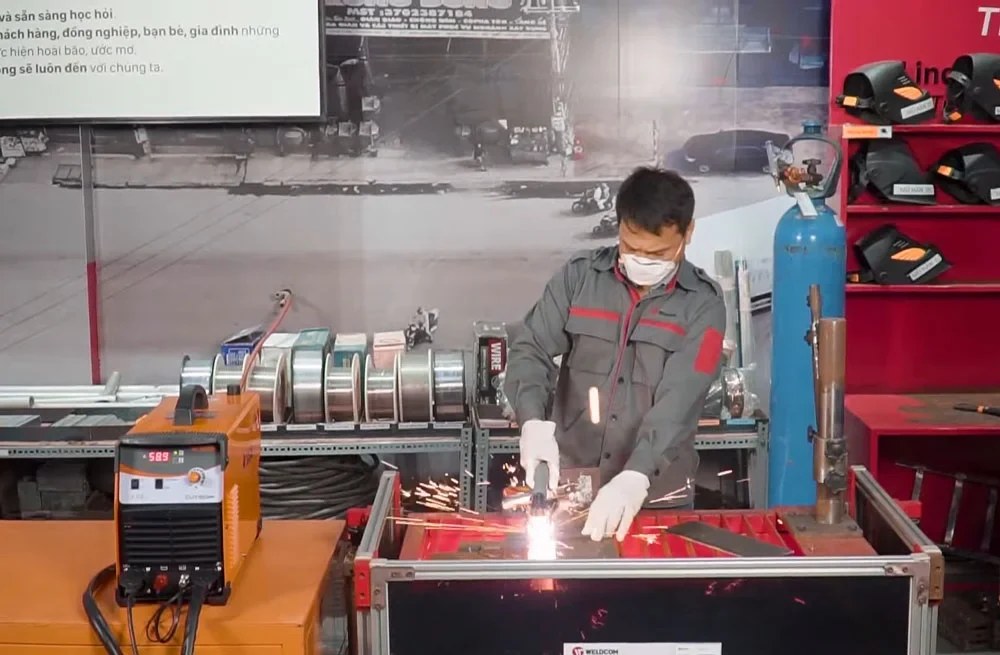
For TIG, AC capability is a central requirement stated in the source. For MIG, verify that the aluminum wire-feed system operates stably; unsuitable or mismatched consumables can contribute to welding issues independently of the power source.
How should a shop match the machine to its production scale?
Occasional repair work does not necessarily justify industrial equipment. A fabrication shop performing repeat work may prioritize an aluminum MIG welder as a balance of cost, output, and operating stability.
Facilities requiring sustained consistency, precision, or automation may evaluate higher-end TIG, laser welding, or robot-based systems. The decision should account for the material, expected production volume, and required weld quality rather than purchase price alone.
Note: The source presents performance and suitability as general selection guidance. Final machine configuration should be checked against the specific aluminum material, joint, consumables, and production conditions.