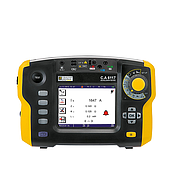
Worn bearings do not immediately cause a motor's average rotational speed to drop. What changes first is speed stability—individual revolutions vary slightly in duration, even while a standard tachometer continues to display an apparently normal RPM figure. This is precisely what many operators overlook. Judging purely by the average number makes everything seem fine, but once instantaneous speed fluctuations are captured, bearing play has already been developing for quite some time.
How Bearing Wear Causes Rotational Speed Fluctuations
When a bearing is in good condition, it keeps the shaft perfectly centered, maintaining nearly constant frictional resistance throughout each rotation. As the balls or raceways begin to wear, internal clearance increases, causing the shaft to wobble slightly per revolution and causing instantaneous resistance to change continuously.
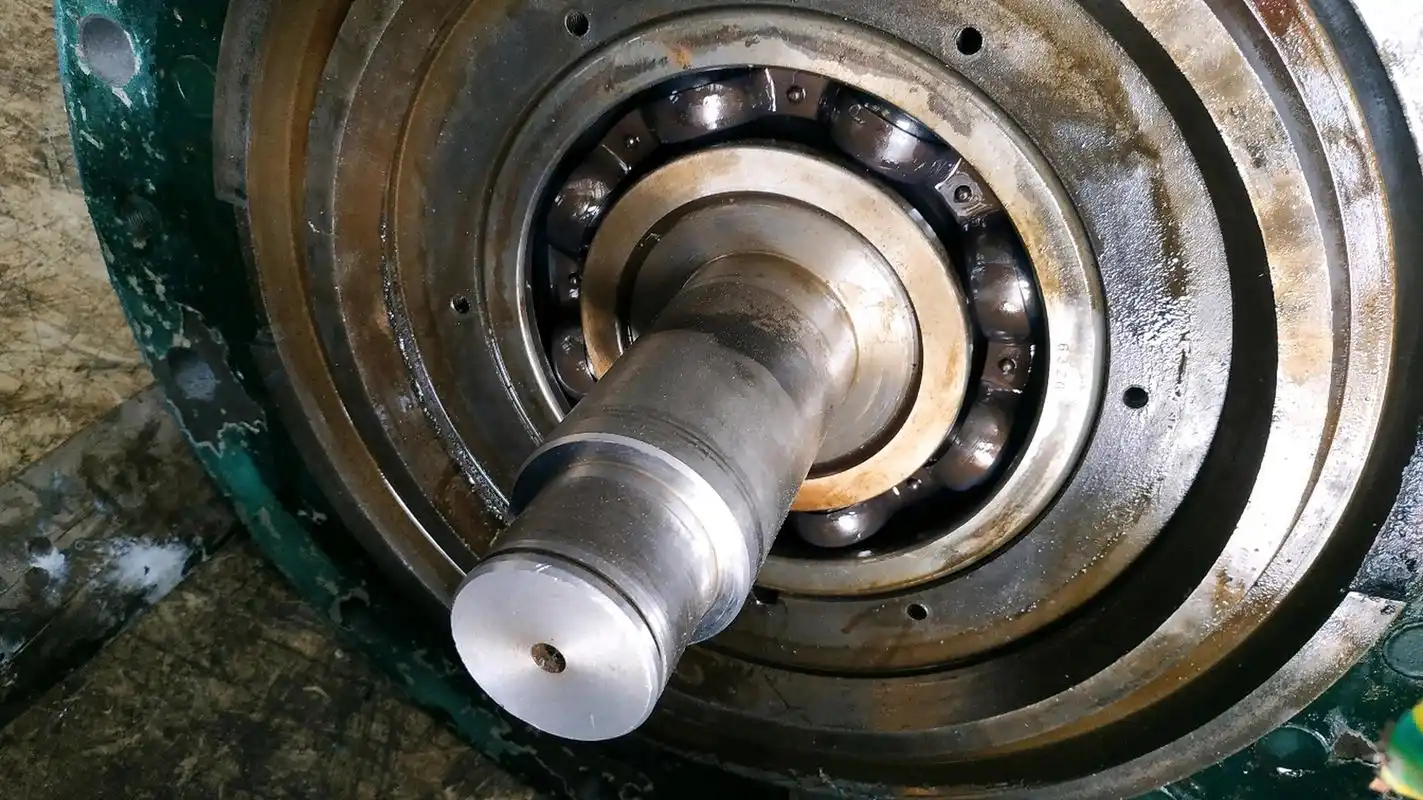
As a result, instantaneous speed ripples around the average value. This fluctuation amplitude is initially very small—just a few percent—insufficient to produce audible noise or vibration detectable by human ears or standard vibration sensors.
Distinguishing Bearing Wear Fluctuations from Unbalanced Load Fluctuations
This is where misdiagnoses most commonly occur. Sudden load variations, material jams on conveyor belts, or wind resistance against fan blades can produce similar speed fluctuations.
The key difference lies in periodicity. Fluctuations caused by bearing wear repeat regularly at the exact rotational frequency of the shaft—occurring once per revolution and remaining virtually consistent over time. Unbalanced load fluctuations, on the other hand, are typically random, unaligned with a fixed rotational frequency, and vary erratically depending on real-time loading conditions. Accurate distinction requires analyzing a speed-versus-time graph over a sufficient duration rather than reading a single instantaneous value.
How to Detect This Sign Using Tachometers
Basic digital tachometers that capture instantaneous readings and round the values struggle to detect subtle fluctuations of this nature. A meter equipped with Min/Max logging over a set measurement interval, or one featuring time-series data output capabilities for graphing, is required.
For panel-mounted motors, industrial fans, and air compressors, a practical approach is to measure continuously for a few minutes, log the Min/Max values, and compare the deviation against the mean speed. A deviation of less than one percent generally falls within the normal operating range of a healthy motor. A deviation exceeding two to three percent—repeating consistently across multiple test runs—serves as a clear signal to schedule a bearing inspection before audible noise develops.
When Speed Fluctuations Are Inconclusive
A single high fluctuation reading does not definitively prove bearing failure. Electrical noise, ambient vibration transmitted through the foundation from adjacent machinery, or temporary load instability can yield identical results. A more reliable method is to repeat measurements at different times throughout the shift while keeping load conditions identical. Fluctuations are only actionable when consistently repeatable, not when observed as a one-off occurrence.
Read more: Motor Jerking, Inverter Reporting Encoder Fault, and How to Check for Encoder Pulse Loss
Frequently Asked Questions
What percentage of speed fluctuation is considered abnormal?
There is no single threshold applicable to all motor types, as it depends on power rating, load characteristics, and design tolerances. A practical approach is to take baseline measurements when the equipment is new or in good condition, then compare subsequent fluctuation levels against this reference point.
Are handheld tachometers sufficient for detecting this sign?
Handheld devices measuring instantaneous speed can work if they include a Min/Max hold function. However, continuous monitoring via fixed-mount units with time-series data logging yields higher reliability, particularly for machinery operating across multiple shifts.
What steps should be taken once early fluctuations are detected?
Schedule a bearing inspection using ultrasonic listening tools or advanced vibration analysis. Avoid waiting until the machine produces clear noise, as replacement costs at that stage are significantly higher than proactive maintenance.
If you need tachometers with Min/Max recording or time-series data export capabilities, explore the Tachometers and Pulse Counters catalog at EMIN, offering both handheld devices and panel-mount units for continuous monitoring.