Assembly ergonomics depends on matching the workstation and the task to the people who perform the work. Planning for operator comfort, adjustability, and safety review early can help organizations address fatigue, arm pain, and work-related injury risks before a production area requires redesign.
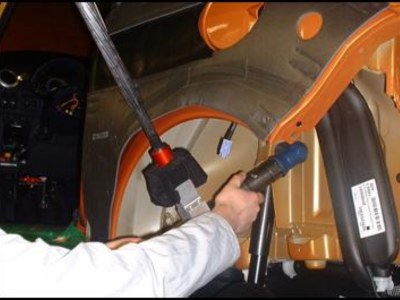
Torque arms are one option for supporting tool handling in assembly. They hold compatible electric or pneumatic tools in a perpendicular position during fastening, which can help avoid side loading and cross-threading.
Summary: Adjustable workstations can better serve a varied workforce. Track fatigue, arm pain, injury claims, and safety reviews. Torque arms support perpendicular tool positioning for compatible assembly tools.
Why should assembly ergonomics be planned before production begins?
Planning assembly ergonomics before a production area is launched helps teams consider whether the workstation and assembly operation suit most intended operators. This approach can help identify issues that may otherwise emerge only after the new production unit is in use.
Workstations are not interchangeable because operators and tasks vary. A setup that is comfortable for one person may be unsuitable for another, so a higher degree of adjustability can be valuable even when it adds initial cost.
- Review the reach, posture, and tool-handling demands of the operation.
- Consider input from health and safety inspectors or ergonomic managers.
- Evaluate whether the setup can be adjusted for different operators.
- Address concerns before a later production-system redesign becomes necessary.
What questions help identify ergonomic risks in an assembly area?
A practical review starts with actual signals from the workplace: reports of fatigue or arm pain, injury costs, workers' compensation claims, and the frequency of health and safety reviews. These questions create a clearer basis for selecting ergonomic solutions for a specific application.
| Review question | Why it matters |
|---|---|
| How often do assemblers report fatigue or arm pain? | It indicates whether the task may be placing recurring physical demands on operators. |
| What is the cost of one injury? | It helps the organization understand the potential impact of an incident. |
| How many workers' compensation claims have been filed? | It provides a record of work-related injury outcomes. |
| How often is the application reviewed by health and safety personnel? | It shows how regularly ergonomic and safety conditions are assessed. |
| Which ergonomic solutions are under consideration? | It connects the review to the needs of the individual application. |
How do torque arms support assembly tool positioning?
Torque arms support assembly ergonomics by securely positioning an electric or pneumatic tool perpendicular to the work. Maintaining this alignment can help prevent side loading and cross-threading during assembly.
The benefit is not simply the presence of an arm; it is its fit with the tool, task, and workstation. Tool type, operator needs, and the application should therefore be reviewed together when considering this equipment.
Which tools can be used with EZ-Glider torque arms?
EZ-Glider torque arms are described as compatible with a range of assembly tools, including electric and pneumatic screwdrivers and several other powered tool styles. This range lets teams assess torque-arm support across different types of fastening and finishing operations.
| Tool group | Examples identified for compatibility |
|---|---|
| Screwdriving and fastening tools | Electric screwdrivers, pneumatic screwdrivers, angle nutrunners, pulse tools, pistol grip-style tools, impact wrenches |
| Drilling and surface-work tools | Drills, grinders, sanders, percussion tools |
Can torque arms eliminate repetitive-motion or injury risks?
No single device can be assumed to remove every ergonomic risk because each workstation, operator, and application has different variables. EZ-Glider torque arms are presented as an ergonomic design intended to reduce repetitive motion injuries and carpal tunnel syndrome, but their suitability should be assessed within the complete workstation.
Note: A torque arm should be evaluated alongside workstation adjustability, the assembly process, operator feedback, and health and safety review rather than as a stand-alone solution.
How should a team choose an ergonomic solution for an assembly task?
Choose an ergonomic solution by starting with the application requirements and the operators who will use the station. Determine the tool type, the need for perpendicular positioning, reported fatigue or arm pain, and the adjustments needed to support a broad range of users.
A structured assessment can help prioritize changes that improve operator comfort while maintaining assembly quality. For compatible applications, torque arms can be considered as part of that wider ergonomic and safety strategy.