Color is often evaluated in production through the color of a light source or the color of an object. Object-color work can further involve fluorescent and non-fluorescent materials. For many routine manufacturing applications, including electronics manufacturing, the focus is on evaluating non-fluorescent objects consistently.
Three color measurement methods are commonly discussed: visual assessment, photoelectric integration, and spectrophotometry. Each method approaches color information differently. Understanding the distinction helps teams select an approach that fits whether they need a quick visual comparison, a color-difference result, or spectral information for analysis and color matching.
1. Visual color measurement
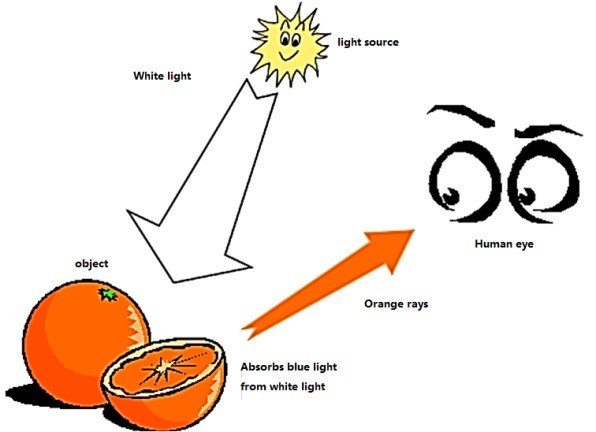
Visual color measurement relies on the human eye, the brain, and an observer's accumulated experience. Different wavelengths of visible electromagnetic radiation are perceived as different colors, and the observer evaluates how a sample appears under the viewing conditions.
This approach is straightforward and flexible. It can be useful when an experienced observer needs to make a direct appearance judgment. However, visual assessment is affected by the observer's experience as well as psychological and physiological factors. These variables make results difficult to express quantitatively and can limit repeatability between people or evaluations.
For that reason, visual assessment is often best understood as an appearance-based method rather than a complete substitute for instrument-based color measurement when objective comparison is required.
2. Photoelectric integration method
The photoelectric integration method is an instrument-based approach associated with precision color-difference measurement. Rather than measuring the color stimulus at one individual wavelength, it uses integral measurement across the measurement wavelength interval to obtain the sample's tristimulus values: X, Y, and Z. These values can then be used to calculate chromaticity coordinates and related color parameters.
In this approach, three photodetectors receive the light stimuli. Accurate matching between filters and photodetectors is important for measurement performance. The method is commonly associated with colorimeters and color-difference meters because it can be used to compare the color difference between two color sources.
As color workflows increasingly use CIE 1976 L*, a*, b* values, photoelectric instruments provide a more objective way to evaluate color differences than relying on visual judgment alone.
3. Spectrophotometry
Spectrophotometer measures the spectral components of a sample. A spectrophotometer compares reflected or transmitted light energy from a sample with standard reflected or transmitted light energy under the same conditions. This produces spectral reflectance information at each wavelength.
Using a standard observer and standard light source, the spectral data can be used to calculate tristimulus values X, Y, and Z. Those values can then support chromaticity coordinates and color parameters, including CIE Yxy and CIELAB values. A spectrophotometer may provide absolute X, Y, and Z values, color-difference values such as ΔE, and the object's spectral reflectance.
Because it captures spectral information in addition to calculated color parameters, spectrophotometry is widely used for color analysis and color matching. It can also be used to calibrate photoelectric integral color measurement instruments and to establish chromaticity standards. The source material cites
The right method depends on the required output. Visual assessment supports fast appearance evaluation but is observer-dependent. Photoelectric integration supports instrument-based color-difference comparison through tristimulus measurement. Spectrophotometry adds spectral reflectance data, making it suitable where deeper color analysis or color matching is needed. For electronics manufacturing, a clear measurement procedure should define the sample type, measurement conditions, and the color information required for the decision.