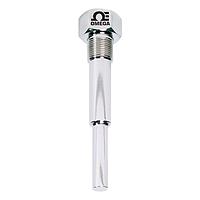
Thermowells, Protection Tubes and Heads
In demanding temperature measurement applications, the sensor itself is only part of the solution. Just as important is the hardware that shields it from pressure, flow, vibration, corrosion, and mechanical damage during installation and operation. Thermowells, Protection Tubes and Heads help create a safer and more serviceable measurement point in process lines, tanks, furnaces, and general industrial systems.
This category brings together the components commonly used to protect temperature probes and support reliable field installation. Whether the goal is easier maintenance, better durability in harsh environments, or a cleaner connection between the sensing element and the process, these products play a practical role in extending sensor life and simplifying replacement.
Why these components matter in temperature measurement
A temperature sensor exposed directly to the process can be vulnerable to wear, chemical attack, impact, or high-velocity media. A thermowell or protection tube creates a barrier between the process and the sensing element, allowing the instrument to measure temperature while reducing direct exposure to harsh conditions.
This approach is especially useful when maintenance access matters. In many systems, the sensor can be removed or replaced without opening the process line, reducing downtime and helping maintenance teams work more safely. For broader system builds, these products are often selected alongside other temperature accessories to complete a robust installation.
Understanding the difference between thermowells, protection tubes, and heads
Although these products are closely related, they serve different purposes. Thermowells are typically installed directly into the process connection and are designed to hold a temperature sensor while separating it from the fluid or gas being measured. They are common in pipelines, vessels, and general process equipment where mechanical protection is required.
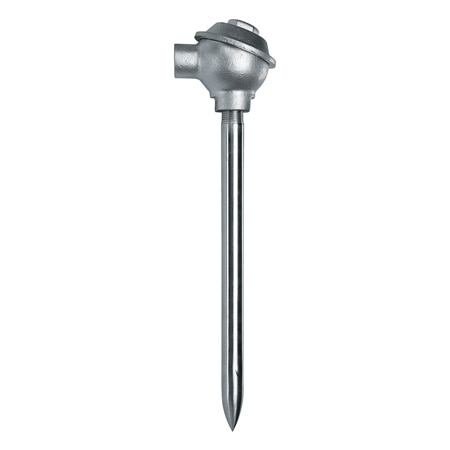
Protection tubes are often used in higher-temperature or specialized assemblies, including applications where the sensor is installed into a protective sheath connected to a head assembly. Protection heads, in turn, provide an enclosure for the connection point at the top of the assembly, helping organize wiring and protect terminations in field-mounted temperature measurement setups.
Material and construction considerations
Material choice has a direct impact on durability and suitability. In this category, representative products include brass, 304 stainless steel, 316 stainless steel, and black steel versions. The right material depends on the process media, operating temperature, corrosion risk, and mechanical stress expected at the measurement point.
For example, stainless steel options are commonly preferred when corrosion resistance is important, while black steel may be suitable in applications where temperature capability and general mechanical protection are priorities. Connection style and insertion geometry also matter, because the protective component must fit the process connection correctly and position the sensing element where the temperature reading is meaningful.
Examples from Dwyer and OMEGA
This category includes products from established temperature instrumentation brands such as Dwyer and OMEGA. On the thermowell side, models such as the Dwyer IT-W01, IT-W04, IT-W11, IT-W14, IT-W17, IT-W21, and IT-W24 illustrate common variations in material and insertion length for industrial temperature sensor protection.
For protection tube assemblies, OMEGA models such as 3/4-PTSS-12, 3/4-PTSS-18, 3/4-PTSS-24, 3/4-PTBS-18, and 3/4-PTBS-24 show how tube material, length, and operating temperature capability can vary by application. These examples are useful for understanding the range available, but final selection should always be based on process connection, immersion requirements, environment, and service conditions rather than model name alone.
How to choose the right option for your application
Selection usually starts with the process side. Confirm the required connection type, mounting size, and insertion or immersion length, then review the process temperature, pressure, and media compatibility. If the installation is exposed to vibration or flow forces, mechanical strength becomes more important, especially in process piping and industrial heating applications.
Next, look at the sensor assembly as a whole. The protective component should match the sensor dimensions and termination method while allowing practical maintenance access. In many systems, it also makes sense to consider the rest of the measurement chain, including temperature meters and indicators that will display or process the signal coming from the installed sensor.
Typical use cases across industrial environments
These products are widely used in manufacturing, utilities, OEM equipment, process skids, and thermal systems where temperature sensing points need added protection. Thermowells are common where a probe must be removable without stopping the process, while protection tubes are often used in elevated-temperature assemblies or where a more specialized mounting arrangement is needed.
They also support better lifecycle management. Instead of treating the sensor as a standalone component, engineers can design a more serviceable measurement point with separate protective hardware, enclosure elements, and wiring. Where extension wiring is part of the installation, compatible temperature wire and cable can help complete the sensing loop from field device to panel or control system.
What to review before ordering
Before purchasing, it is worth checking a few practical details: material, insertion length, stem dimensions, process connection standard, and expected operating temperature range. If the product is part of a head assembly, verify that the tube and head configuration align with the intended sensor and mounting arrangement.
It is also helpful to think about maintenance strategy. If rapid sensor replacement is important, a properly matched protective assembly can reduce disruption and improve long-term serviceability. That is often where the value of this category becomes most apparent: not only protecting the sensing element, but also improving how the full temperature measurement point performs in day-to-day operation.
Built for more reliable temperature sensing
Choosing the right protection hardware can make a meaningful difference in measurement stability, maintenance efficiency, and sensor lifespan. From compact thermowells in brass or stainless steel to longer metal protection tubes for head assemblies, this category supports a wide range of industrial temperature measurement needs.
If you are comparing options, focus on process fit, environment, material compatibility, and service requirements first. A well-matched combination of sensor, protective hardware, and supporting accessories will usually deliver a more dependable installation than selecting the sensing element alone.
Get exclusive volume discounts, bulk pricing updates, and new product alerts delivered directly to your inbox.
By subscribing, you agree to our Terms of Service and Privacy Policy.
Direct access to our certified experts